![[Re]Group: A Playbook for Turbulent Times](https://substackcdn.com/image/fetch/$s_!PUHU!,w_120,h_120,c_fill,f_webp,q_auto:good,fl_progressive:steep/https%3A%2F%2Fsubstack-post-media.s3.amazonaws.com%2Fpublic%2Fimages%2Ff2fb4256-d509-4e61-827b-2ee678efbba9_256x256.png)
![[Re]Group: A Playbook for Turbulent Times](https://substackcdn.com/image/fetch/$s_!OvcZ!,e_trim:10:white/e_trim:10:transparent/h_182,c_limit,f_auto,q_auto:good,fl_progressive:steep/https%3A%2F%2Fsubstack-post-media.s3.amazonaws.com%2Fpublic%2Fimages%2Fa2653539-a634-4ef5-9aab-bc4a7546ebc9_1344x500.png)

In this week’s digest: four scenarios as we reach a critical point in the race to Secretary-General, UN reform gets smarter but falls prey to IMBYism, what particle physics at CERN can teach us about the invisible ROI from multilateralism, and why citizens need a seat at the table on AI governance.
The SG Roundup
“Something is happening here, and you don’t know what it is, do you, Mister Jones?”
Another week with nothing to report on the race to be Secretary-General. Read our update from the last straw poll a couple of weeks back and you’ll have the latest.
Except for the sense that maybe something is happening here, it’s just happening behind the scenes.
As we noted at the time, the second straw poll was a grumpy affair, with average “Encourages” dropping from 6.4 per candidate to 4.9, and “Discourages” jumping from 3.5 to 5.3. The three frontrunners have 3, 4, and 6 “Discourages” each, with just one enough to sink their candidacy if it is from a P5 country that is determined not to back down.
France holds the Presidency of the Security Council this month. Precedent suggests it will hold a straw poll before UNGA and then move to color-coded ballots afterwards, as the P5 take control of the contest. The Presidency then moves to Greece in October, either to wrap things up or to try and find a way out of deadlock.
Four scenarios for you:
Fortune Rewards the Patient. Give the system time to work and one of the eight candidates will rise to the top of the pile. Late entrants join the fray and take their chances.
Anointed in the Shadows. Behind closed doors, the P5 are cutting a deal for an undeclared candidate. Once announced, the dark horse quickly wins the race.
The Botched Plot: A failed version of the above, as a backroom deal unravels in the cold light of day. After all, plotters often overestimate their acumen (case study: Gianni Infantino).
Into the Abyss. There is no plan, plot, or route to consensus. The Mr. Joneses — fifteen of them — sit on the Security Council. Cue more deadlock speculation.
Away from the action, the policy wonk in each candidate team will be keeping an eye on the grind to wrap up the UN80 reform process, and wondering what will be left for 2027. Both positive reforms to build on and unresolved messes that will need to be cleared up.
This week saw some good news in the former camp, as the General Assembly approved the merger of the UN’s staff college into its training body to create the snappily-named United Nations Institute for Capability and Learning Innovation (UNICLI).

Earth-shaking? No. But at [Re]Group we endorse the current Secretary-General’s argument that knowledge, learning, and innovation must become strategic drivers if the UN is to deliver impact in an increasingly complex multilateral system.
Pause, though, to note an outbreak of a disease that is peculiar to the UN: IMBYism. The EU praised the merger for “rationalizing structures, reducing duplication and making the best possible use of available resources.” But in the same statement insisted on the “maintenance of the geographical footprint and institutional presence.”
Translated: We fully support your cost-cutting reform, just as long as you don’t close any offices in Geneva, Turin, Bonn, or Madrid.
The Ultimate Cheat Sheet

Everything you need to know about the candidates, Security Council straw polls, debates and public appearances, and the process to get the UN’s top job (Last updated: August 27, 2026).
A CERN for Multilateralism
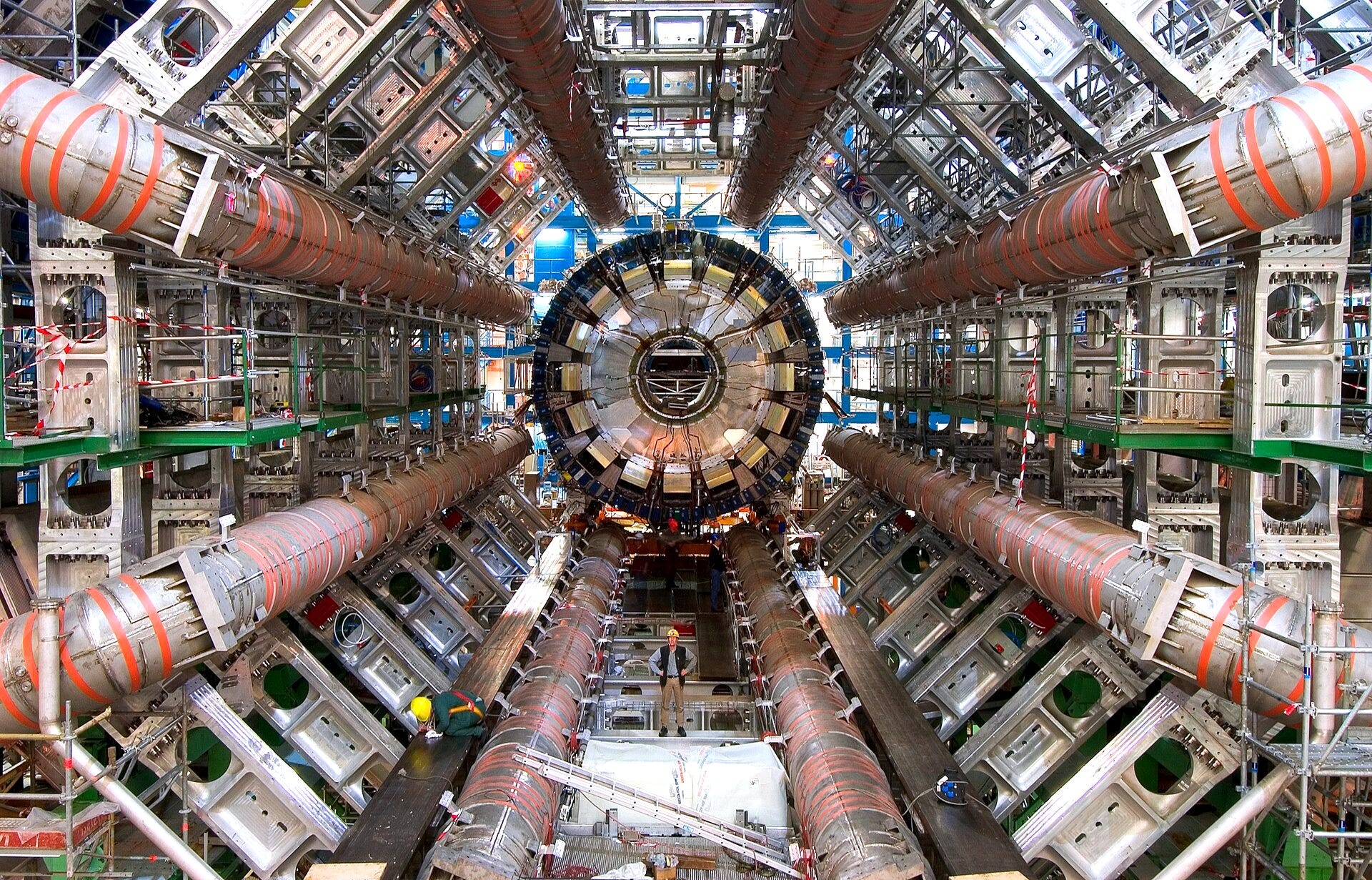
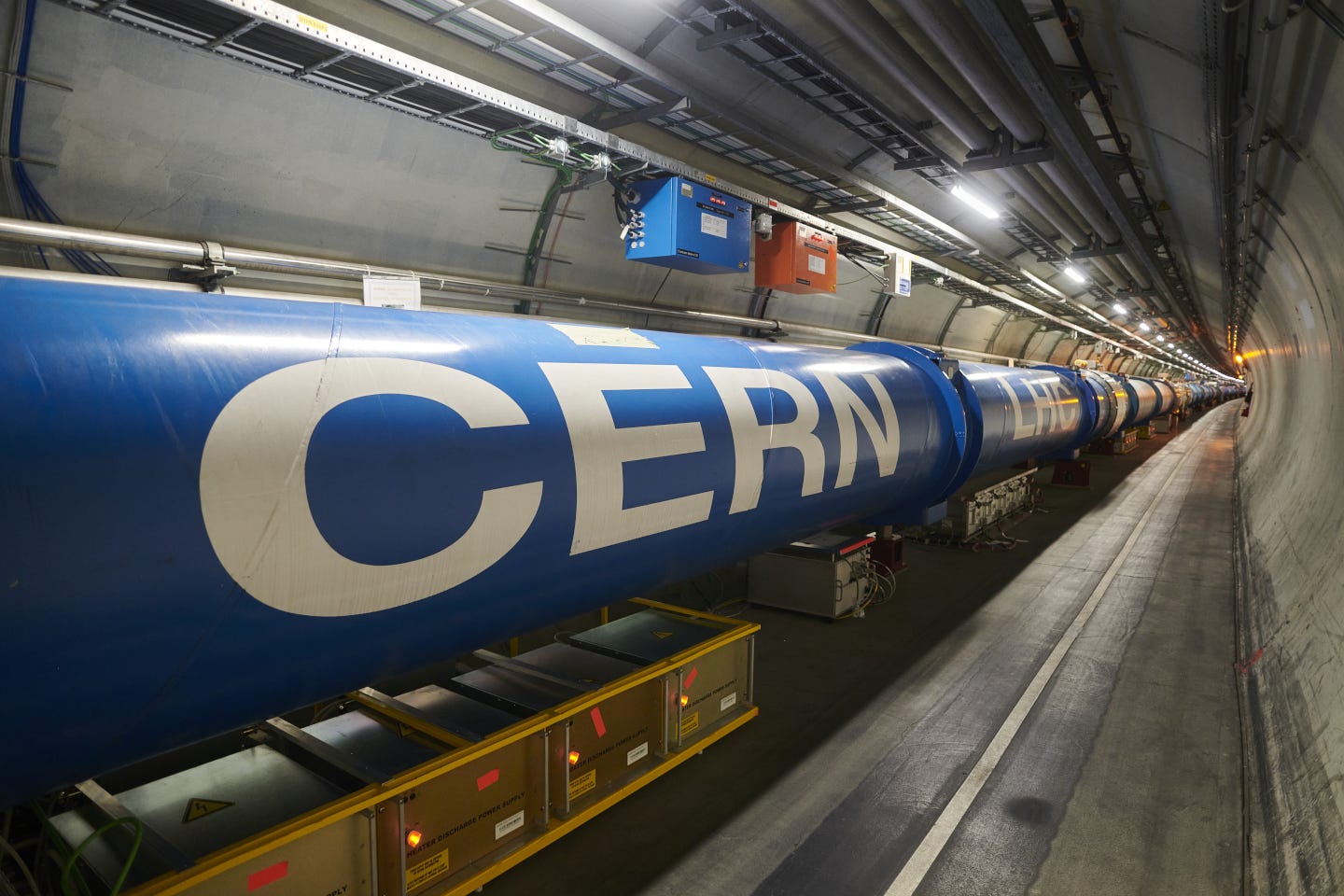
You visit CERN on the French-Swiss border and take a guided tour.
You are shown around a subterranean shrine to particle physics and the place where the computer scientist Tim Berners-Lee invented the World Wide Web to share data with his international peers.
You probably already knew that. But what surprises you is that CERN is an intergovernmental organization (one of 350 or so in operation today). The Large Hadron Collider, the world’s most powerful machine, is the brainchild not just of physicists and engineers, but of diplomats and multilateralists.
At the end of the tour, you ask your guide if you can see a photograph of the Higgs boson, the fundamental particle whose discovery was announced on July 4, 2012. Your guide gently shakes her head. There are no photographs, for no one has ever “seen” one.
Physicists searched for this ripple in an energy field — without which nothing in the universe would have mass — for fifty years.
When they found it, it was not through direct observation. It was by detecting a signature in the data: a bump in the background noise that could not be explained by chance, as two detectors independently identified the statistical trace of an invisible event.
When the Escalator Breaks
I was thinking about CERN’s mission to “uncover what the universe is made of and how it works” when we published Stephanie Fillion’s essay on [Re]Group this week.
Stephanie, the editor of Envoy magazine, is part of the band of specialist reporters who keep the spotlight on the United Nations as traditional newsrooms gut their international desks. PassBlue and Devex also work this beat.
For editors, “if it bleeds, it leads,” Stephanie writes. When international institutions make headlines, it is because something is broken. “Another deadlock in the Security Council, another corruption scandal, another diplomatic confrontation or, during the General Assembly High-level week at the worst possible time, an escalator breaks.”
Why Do Journalists Only Cover the UN When It Fails?

Award-winning journalist Stéphanie Fillion argues that as mainstream news retreats from UN coverage, the answer is not less scrutiny of the institution, but more.
She worries about what happens when the world only hears about multilateralism failing, and neglects the achievements the UN highlights in its annual report: the tens of thousands of peacekeepers deployed, the hundred million people helped while fleeing catastrophe, and the billions raised for those in need.
But this is just the more visible side of the UN’s impact: more like the Jura Mountains that rise above CERN than the particles it searches for 100 metres underground. They are also symptoms of failure more than success. You don’t have to run when you have rights. Or flee in the second year of peace.
Largely hidden from view is an invisible return on investment. By triangulating diplomatic histories, quantitative counterfactuals, and the “magnetic pull” of international norms and laws, we can detect the signal of bad things that never happened because multilateralism performed as it was designed to.
It is from these hidden successes that much of the value of the international system derives.
Detecting the Invisible ROI
We've been collecting examples of this invisible ROI in the historical series that accompanied World’s Toughest Job, our podcast co-production with Foreign Policy. This work built on analysis that fed into Our Common Agenda, the Secretary-General’s vision for the future of multilateralism.

Gathering these examples together for a colleague recently, I started wondering whether we could create a typology of the hidden impact of the international system. So, here is a first attempt to do just that, using a model with four dimensions.
1. De-Escalation
The international system can’t make adversaries see eye to eye, but it can stop them pretending the other doesn’t exist. Forced proximity keeps channels of communication open, reducing the risk of miscalculation and providing opportunities for de-escalation.
The UN has delivered extraordinary value through its role as a firebreak. We found that if Secretary-General U Thant is assigned just 1.7% of the credit for mediating a peaceful end to the Cuban Missile Crisis, the averted economic destruction covers every dollar spent on the UN from 1945 up to 1962.

The international system can also find unexpected opportunities for adversaries to cooperate. In our forthcoming essay on global goals, we cover how the multilateral effort to eradicate smallpox in the 60s and 70s — a rare example of U.S.-Soviet cooperation — yielded a return of $159 for every single dollar spent.
Given today’s geopolitical tensions, these case studies emphasize why de-escalation should again become core business for the UN under new leadership.
2. Prevention
The world relies on a set of norms and institutions that run in the background, managing conflict before it triggers violence, reducing access to the weapons of war, and limiting damage from complex global shocks.
We quantified the value of this international architecture of restraint. The Nuclear Non-Proliferation Treaty prevented at least nine countries from becoming nuclear powers between 1970 and 2000, while UN peacekeeping operations stopped an estimated three to four major civil wars in the early years of this century, preserving up to $216 billion in economic value.
The international system also plays a mitigating role once a crisis hits, minimizing damage and accelerating recovery. For Our Common Agenda, our modeling showed that upgrades to the global health security systems completed since the turn of the century averted 8 to 15 million deaths in the first year of the COVID pandemic.
Even imperfect defenses deliver incredible value for money, we concluded.
3. Global Public Goods
As we argued in the last [Re]Group Weekly, global public goods might seem out of fashion in an era where powerful nations believe they can go it alone.
But this retreat is creating pent-up demand for the systems required to stabilize the climate, control the risks of frontier technologies, keep the global economy from falling over, and safeguard other interconnected systems.
We have strong evidence of what is delivered when we invest in global public goods. As we showed last week, forty years of international climate diplomacy are pushing us from a 4°C trajectory towards a 2°C world. Even though we are far from averting catastrophic climate change, the dividend from international cooperation is already substantial.
This builds on the foundation of the UN’s environmental governance of the 1980s, above all the Montreal Protocol, which phased out 99% of CFCs. This single agreement is projected to avert roughly 2.5°C of warming by 2100, saving trillions in economic destruction.
Translating pent-up demand into new global public goods requires a Secretary-General who can spot an opening early and rally the world behind a moonshot. Progress will be blocked, until it isn’t.

4. The Operating System
Perhaps the most hidden of all is the plumbing that allows global markets and systems to function, an operating system that runs in the background, creating the standards, rules, and interoperability without which the modern world cannot work.
This system is poorly mapped, but you find evidence of it whenever you dig below the surface. Take the Global Basic Observing Network, which generates an estimated $5 billion in annual economic gains simply by standardizing weather data across borders. It is not glamorous, but it is necessary. And it delivers.
There are flashier items in this space, such as the UN’s “Net Zero” target, which provided the organizing principle to redirect trillions of dollars into the low-carbon transition. As we wrote last week, no two words in human history have ever moved so much capital so quickly.
Everything from global trade to civil aviation, from shipping to telecommunications, and from food safety standards to the allocation of satellite orbits, depends on this infrastructure. It is the ultimate hidden investment: an operating system so effective that we only notice it when it begins to break.
What’s Load Bearing?
So where does this take us?
It forces us to have a proper conversation about what works, what matters, and what needs to be preserved. To explore what is “load-bearing“ in the multilateral ecosystem, and where these load-bearing struts are getting weaker, or risk crumbling outright.
These are questions we have been exploring in a piecemeal fashion on [Re]Group. But imagine what a more systematic effort could accomplish over a six-month period. A CERN for multilateralism, if you will.
To “uncover what contemporary multilateralism is made of and how it works.”

From the Archive
As anger grows about unchecked AI development, Nur Laiq has a new piece in the FT on the need for deliberative approaches to give citizens a stake in this technological revolution:
If you missed it: our interview with Nur on [Re]Group.
Listen to our World’s Toughest Job episode on AI.
Claire Melamed tackled the question: who will save AI from itself?
Read our brief on the need for “a robust and representative deliberative mechanism” to give citizens a seat at the global governance table.
Nur’s FT piece is primarily about the United States, but it’s worth also checking out the citizens track on AI governance at a global level.
Governing the Machine

The dominant narrative in Silicon Valley is that tech companies innovate in a vacuum while slow-moving governments struggle to catch up.
ICYMI
UN Development — A Problem with Six Faces

A new Secretary-General must decide what the UN’s development system is for.