

By Nudhara Yusuf and Jack Toole
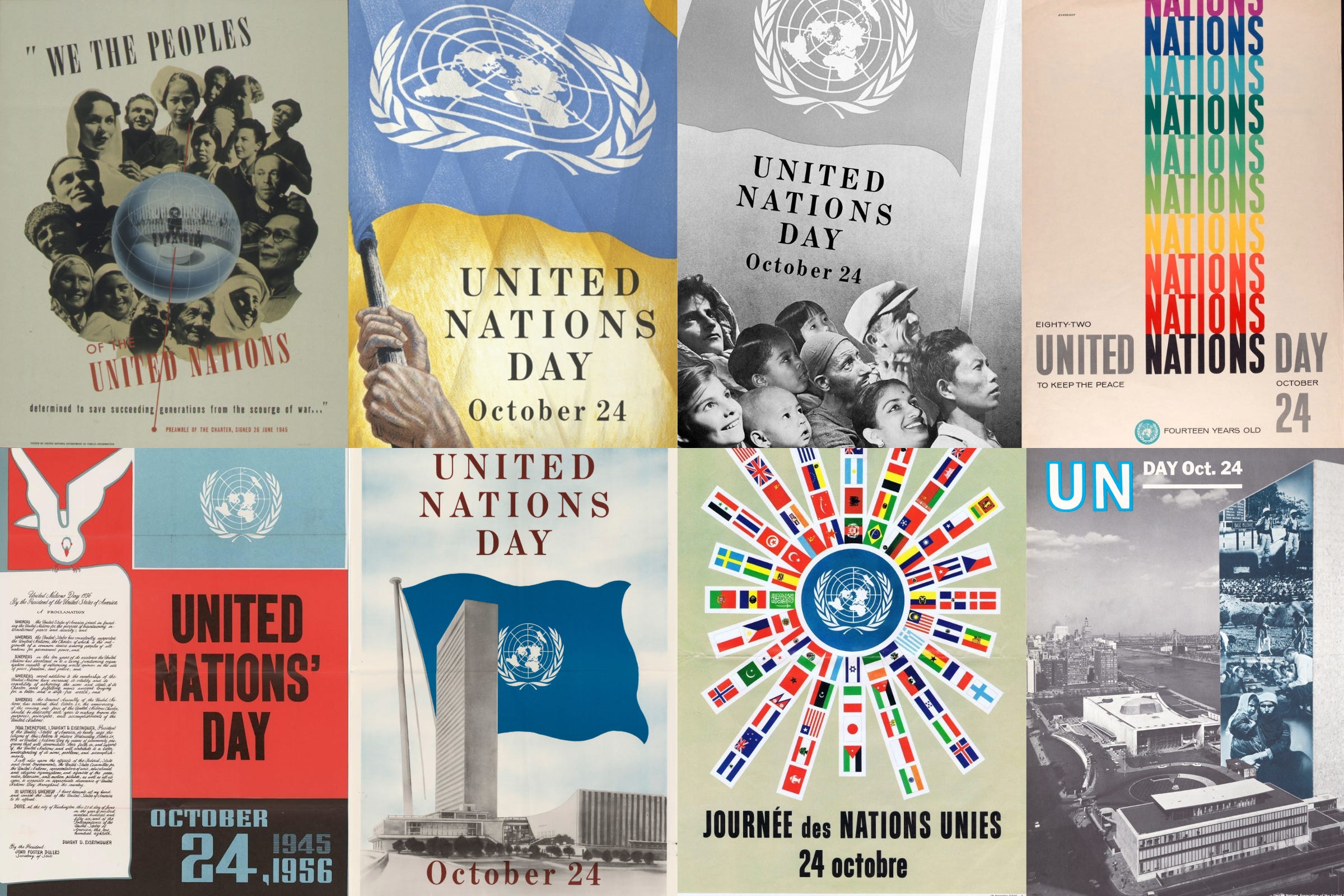
We have been reforming the United Nations for most of this decade.
In 2020, Member States promised to “upgrade the United Nations” for its 75th anniversary. Four years later, the Pact for the Future set out a plan to “transform global governance and reinvigorate the multilateral system.” Now we have UN80, launched to deliver “a paradigm shift in how the UN system organizes its work and collaborates for greater impact.”
On paper, it reads like a steady march toward renewal, as each reform package builds on the one that preceded it. Once the Sustainable Development Goals (SDGs) were “about the what” and the Pact for the Future was “about the how.” Then, the Pact became “the what,” serving as a compass for the UN80 reform process that is now expected to deliver “the how.”
But the world surrounding the UN is fragmenting faster than its reform vocabulary can keep up. Amid intensifying geopolitical competition and growing skepticism of multilateralism, the degradation of the liberal international order has left the organization increasingly exposed.
That brings us to an uncomfortable question. Why should this institution, in this form, remain at the heart of global governance for the rest of the century?

Your answer to that question will depend on where you sit, both politically and professionally. But we should agree on one thing: The answer cannot just be that the UN is indispensable. Institutions do not become indispensable simply by declaring themselves so.
When multilateralism is under attack, it can be tempting, above all for those who bleed blue, to avoid being clear about where the UN adds value and where it falls short. But if the institution’s believers fail to make the case for what it does best, its skeptics certainly won’t do it for them.
As a UN civil society advocate and a U.S. defense analyst, we approach this question from different starting points. So we decided to set out our answers side by side, showing where our views diverge and where they align.
Nudhara Yusuf: Upgrade the Operating System
So, why do we still need the UN?
First, to confront threats against which no state can stand alone. The UN was built around one of them: catastrophic conflict between great powers. Today, the danger goes beyond nuclear war and traditional security threats. Climate change, pandemics, and artificial intelligence all mean that what happens inside one country’s borders is increasingly unlikely to stay there.
The UN’s job is not to micromanage every transnational threat, but to provide a mechanism for states to identify and understand risks, negotiate who is responsible for tackling them, and coordinate a shared response.
Second, to set baseline rules that benefit all states, and that no single country can establish on its own. While great powers often use their economic and technological dominance to set standards, and smaller coalitions may do so through first-mover advantage, neither can write rules that apply across geopolitical blocs.
That is where the UN comes in, giving competing interests a forum to hammer out common ground. It is hard to be excited by endless meetings and resolutions, and by painstakingly negotiated language. Yet we rely on this steady grind to upgrade the operating system on which the modern world depends.
Third, to give states the space to strike the political bargains that make collective action possible. The Pact for the Future may have been imperfect, but it is hard to imagine any other arena that could have united almost every government around a vision for how to reform global governance.
While the UN too often treats convening as an end in itself, the real value of bringing everyone into the same room lies in widening the deals that can be struck. That matters when we need all states to agree, but also when small countries want to pool their weight to negotiate with larger ones, or when adversaries find they have no other channel to talk.
Finally, to make global agreements meaningful by helping countries put them into practice. Here, the UN’s field presence and technical expertise offer something few others can match: the ability to turn global commitments into action on the ground.
That should not mean substituting indefinitely for states or elbowing aside other actors who are better equipped to help. Instead, the UN’s job is to coordinate international support where it is needed, while strengthening national institutions until they can stand on their own.

We can use these functions to test any proposal for reform. If the UN stepped back from one of its roles tomorrow, what would we miss? Who would pay the price? And what new dangers would the world face?
This is not just a technocratic exercise, but invites us to think more clearly about where power now lies. For most of the UN’s history, debate has centered on the influence of the great powers. Today, however, the international system is increasingly shaped by states that refuse to pick a permanent side between rival geopolitical blocs.
For middle powers, the UN provides the platform they need to make sovereign choices. But they have become more than just another constituency to be consulted, offering the UN a new type of engine for driving collective action. The UN now relies on them to build coalitions across divides, broker compromises that great powers cannot initiate on their own, and create momentum when the five permanent members are deadlocked in the Security Council.
We can already see this shift in action. From Barbados spearheading the Bridgetown Initiative to overhaul the global financial system, to the recent launch of Partners for Multilateralism, a coalition of more than two dozen governments led by Brazil, Kenya, Canada, and the EU, states are organizing in new ways. Rather than displacing the UN, these agile groupings rely on its platforms and convening power. In return, they offer the system fresh ideas, momentum, and room to experiment.
Choosing the next Secretary-General is about more than who should manage the institution from January 2027. Candidates all agree that the UN faces a crisis of credibility and delivery, though they differ on the cure. The test for the next leader will be whether they can turn that diagnosis into action, focusing the UN on roles no one else can play, and mobilizing the middle-power coalitions it needs to perform them.
Jack Toole: When Everyone Is in the Room
U.S. Defense Analyst. The opinions expressed are the author’s own and do not reflect the policies and positions of the United States Government or any of its components.
The UN matters because everyone is there. Every ally, adversary, and trading partner. This is where the next Secretary-General should start when defining the organization’s identity and charting its future role.
Put any state on stage in front of every country that matters to its interests, and it faces immense pressure to articulate its aims, air its grievances, and explain where it stands. This encourages compliance with norms and generates information that helps ward off miscalculation, while revealing where space exists to make deals or build coalitions.
The UN also creates room for states to meet quietly on the sidelines, which is particularly important for engaging pariah states. The United States and North Korea cannot talk on the margins of Davos, because the North Koreans are not invited; but they can in New York.
The Black Sea Grain Initiative is a good example of how the UN has served as a venue for engagement, with the Secretary-General acting as a trusted mediator. Room for a deal existed because neither Russia nor Ukraine wanted to be held responsible for a global famine. The Secretariat, working with Turkey, was able to broker an agreement that reduced the war’s impact on countries far from the battlefield, at least for a while.
Acting as an honest broker requires the Secretariat to be more selective about campaigning for new global norms than it has been in recent years. The UN’s leverage depends on the backing it has from Member States. When it lacks their support, but still spends political capital on declaratory stances, it damages its credibility without delivering results, as has happened with the push for an autonomous weapons treaty by the end of 2026.
This does not mean the UN should limit itself to hosting talks and mediating disputes. But when it goes beyond diplomacy, it needs a clear rule of thumb for where to focus its resources. Not every problem is best solved through a universal body.
Having every country at the table is essential when the goals are clear and unified action is required. Take the Montreal Protocol, which phased out chlorofluorocarbons and set the ozone layer on course to recover. The treaty needed universal participation to work, because any country left outside could have served as a haven for CFC producers and users.
Technical governance is another area where the UN’s universal reach pays off. The more states that participate in a technical regime, the more valuable it becomes. Organizing the radio spectrum, surveilling the world for disease outbreaks, and harmonizing conduct at sea are triumphs of international cooperation. The UN should lean heavily into this kind of practical work.
Universality can also lend legitimacy to peacekeeping and humanitarian aid. Channeling support into sensitive areas under the UN banner is often more palatable to host nations than seeing it arrive under a national flag. Yet the politics of assembling a UN peacekeeping mission often work against its effectiveness. Security Council bargaining produces overly broad mandates, while troop-contributing countries impose debilitating operational restrictions. Rather than treating its peacekeepers as a first resort, the UN should ask whether a universal flag is truly mission-critical, or whether a smaller coalition of states could handle the job more effectively.
By contrast, universality stops being an asset when it is used to force consensus among states whose needs, values, and aims legitimately diverge in ways that do not violate the UN Charter. In recent decades, the UN has damaged itself with aspirational initiatives on development and the future of the world, even when states hold vastly different views on what either should look like.
Flagship blueprints like the 2030 Agenda reach consensus through addition rather than trade-off. The result is a convoluted wish list, exemplified by the 17 SDGs and their 169 targets. While celebrated in UN circles for their ambition, they make little difference to development trajectories or state policy. Tying the UN’s reputation to high-visibility, low-impact exercises of this kind only erodes its credibility and legitimacy.

Where We Agree — And Where We Don’t
We started from different places, but have arrived at the same point: the UN will not recover its credibility by trying to do everything.
If it wants to be more resilient, the UN needs to be leaner and more disciplined. It must concentrate political attention and institutional capacity where its universality, neutrality, convening power, and reach make the most difference. Reform should be measured less by how much of the existing architecture survives, and more by whether the UN excels at functions that cannot be replicated elsewhere.
Where we differ is on how expansive those functions should be.
Nudhara
Sees greater value in using the UN to forge ambitious political bargains.
Believes it can govern global public goods, give middle powers a platform to bridge geopolitical divides, and build shared frameworks that organize action even when consensus is difficult.
Jack
Feels more skeptical that aspirational agendas pay off.
Would reserve the UN’s political capital for when universality is strictly necessary. That means keeping adversaries in contact, brokering deals, coordinating technical regimes, and solving collective-action problems when objectives are clear.
That disagreement is central to the strategic choice facing the next Secretary-General. When does ambition create political space for cooperation? And when does it dilute credibility by promising more than Member States will deliver?
Whatever the answers to these questions, both the new leader and Member States must decide where the UN is uniquely useful, where others can do the job better, and where its scarce political and financial capital should be spent.
The greatest danger is further inertia.
If the postwar international system disappeared tomorrow, the world would probably not agree to build it again. When institutions are irreplaceable, we should neither freeze them in amber nor gut them under the guise of reform. That is why the incoming Secretary-General needs to decide what the UN is for, and have the discipline to use it for that purpose, and for that alone.


