![[Re]Group: A Playbook for Turbulent Times](https://substackcdn.com/image/fetch/$s_!PUHU!,w_120,h_120,c_fill,f_webp,q_auto:good,fl_progressive:steep/https%3A%2F%2Fsubstack-post-media.s3.amazonaws.com%2Fpublic%2Fimages%2Ff2fb4256-d509-4e61-827b-2ee678efbba9_256x256.png)
![[Re]Group: A Playbook for Turbulent Times](https://substackcdn.com/image/fetch/$s_!OvcZ!,e_trim:10:white/e_trim:10:transparent/h_182,c_limit,f_auto,q_auto:good,fl_progressive:steep/https%3A%2F%2Fsubstack-post-media.s3.amazonaws.com%2Fpublic%2Fimages%2Fa2653539-a634-4ef5-9aab-bc4a7546ebc9_1344x500.png)

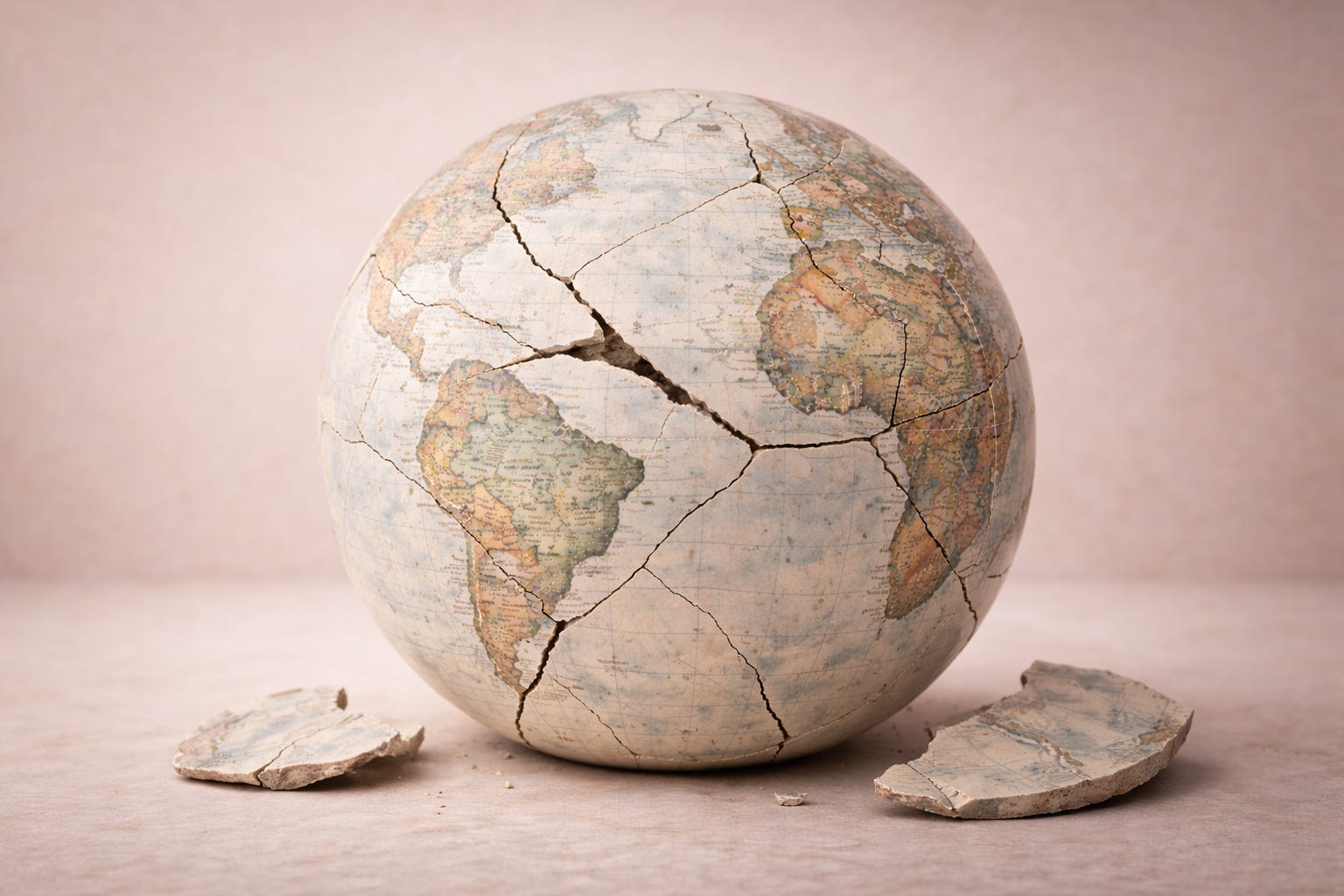
History shows that geopolitical stress need not freeze global cooperation — it can also drive innovation. While “wrecking ball” politics is putting the foundations of the multilateral system under unprecedented strain, its effects may be better approached as what Joseph Schumpeter described as “creative destruction.”
Schumpeter, writing during the war from which the UN was born, believed that a “gale” of destruction could create new structures, even as it destroyed old ones. Today, the next UN Secretary-General will find that, even as an old order is dismantled, demand for a new one is surprisingly high.
Citizens and governments generally support global cooperation and generally have a clear view of what it is supposed to deliver. However, for some time well before the disruptions of the past year, they have been skeptical that formal multilateral machinery is up to the task.
That gap creates a strategic opportunity for the UN and other bedrock institutions to reassert their core purpose while developing a new playbook for agile and hard-nosed cooperation in a turbulent age.
From Blue Helmets to the Black Sea
As we navigate today’s geopolitical friction, we can learn from how the multilateral system has previously improvised solutions, especially when the formal machinery jams.
Take the 1962 Cuban Missile Crisis, when the entrepreneurial UN Secretary-General U Thant helped the Soviet Union and United States climb back from the atomic brink. He had no mandate, instructions, or permission, but he saw an opportunity for diplomatic creativity to defuse the most dangerous flashpoint of the nuclear age and took it. Every time the Cold War came close to turning hot, the international system played a circuit-breaking role, especially in the hands of adroit leaders.
Or consider UN peacekeepers. Peacekeeping isn’t in the UN Charter but it was invented on the fly by Secretary-General Dag Hammarskjöld to help solve the Suez Crisis in 1956. The fix was so urgent at the time that the first peacekeepers wore borrowed helmets spray-painted blue. Since then, UN boots on the ground have helped stabilize war-torn settings around the world, saved millions of lives, and cut the risk of civil wars recurring by more than half.
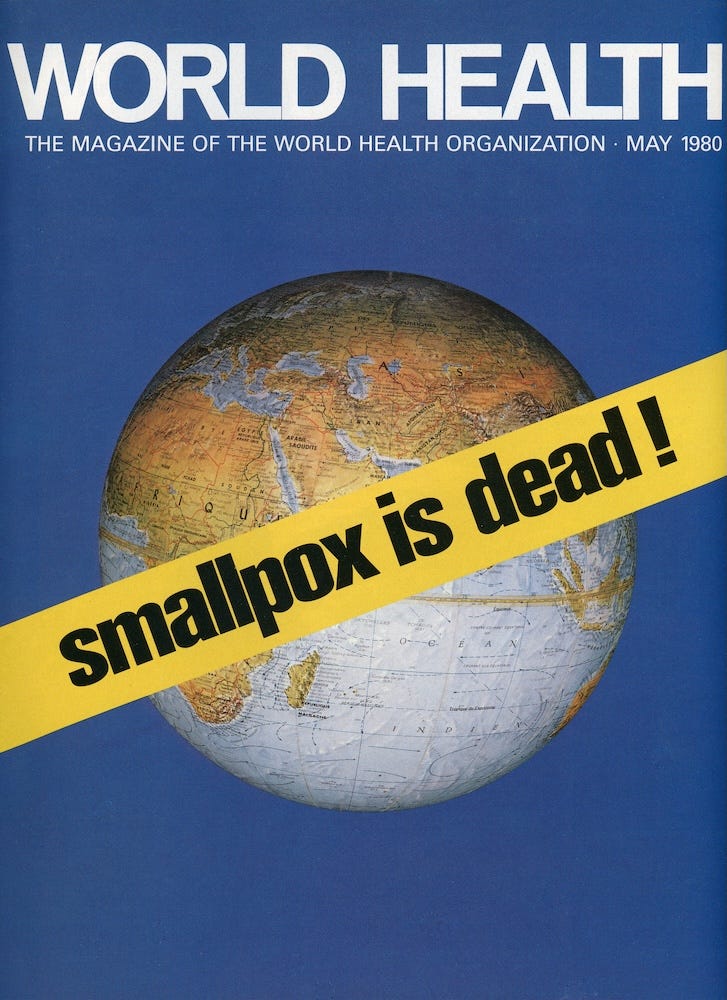
The eradication of smallpox by 1980 was also achieved through innovation: a campaign inspired by a Soviet proposal, backed by American money and expertise, that succeeded because a Brazilian-led World Health Organization provided the platform to sustain a worldwide effort. The return on investment was staggering. The United States spent just $32 million globally on a permanent solution to a disease that had previously cost that much every month, simply to keep smallpox outside of its own borders.
Fast-forward to the UN’s Global Crisis Response Group, created to tackle the global economic fallout from Russia’s 2022 invasion of Ukraine. The UN was able to stand up an immediate response despite Security Council gridlock, mobilize a coalition of nontraditional partners, and then disband as soon as the work was done. The resulting Black Sea Grain Initiative is credited with saving up to 100 million lives by stabilizing global food prices. It is just one example of the type of “pop-up” multilateralism that will be increasingly needed to deal with shocks to fragile global systems.
A New Playbook
These successes, and many others, share a DNA: They demonstrate that when geopolitical tensions run high, the international system can mobilize to deliver results.
Drawing inspiration from experience, we can begin to construct a playbook for our age of geopolitical turbulence. Here are six lessons to start.
1. Don’t wait for approval
The multilateral system defaults to inaction when powers disagree, as today’s record low output from the Security Council shows. But even when the door is locked, creative diplomats can open a window. Consider again the war in Ukraine, when Zaporizhzhia, Europe’s largest nuclear power plant, became an active combat zone. Instead of waiting for instructions, an enterprising team from the International Atomic Energy Agency leveraged the body’s technical authority to send inspectors across an active war zone front line and establish a monitoring presence that remains to this day.
2. Set goals that drive action
Don’t underestimate the galvanizing power of a well-designed goal. Eradicating smallpox was the ultimate surgical strike: a clear finish line for a vast network of public health actors. Yet even more aspirational goals can spur change. The multilateral push for girls’ education in the 2000s provided a measurable catalyst that enrolled 180 million more girls into schools worldwide, even in a diffuse sector. The concept of “net zero” — for all the political friction it has generated — gave a sprawling global economic transition a single organizational concept. Arguably, no two other words in history have been as influential at changing decisions or reallocating capital, with more than $2.3 trillion directed toward the low-carbon energy transition in 2025 alone. Get the goal right, and you don’t need an institution to direct the traffic; the target itself becomes the organizing principle.
3. Keep it simple
Global crises are complex, but solutions can be simple, and overengineered strategies often fail. Look at the trajectory of UN peacekeeping. The improvisation of the Suez Crisis gave way to sprawling and expensive missions burdened with “Christmas tree mandates.” From Mali to the Democratic Republic of the Congo, missions of this type became prey to rising costs and diminishing returns, whereas today’s security landscape demands agile, mission-specific capabilities with unambiguous exit strategies. The 1999 International Force East Timor is an early illustration of this philosophy: a targeted and time-limited effort authorized by the UN and led by Australia that mobilized necessary capabilities, stabilized the environment, and handed over control before it became a permanent fixture. Well beyond peace and security, in a world where political windows may open only briefly, the UN needs to be geared more to rapid response than to permanent presence.
4. Balance agility with investing in capabilities
Few multilateral solutions will succeed without prior investment in a threshold of core capabilities and leadership. The smallpox campaign, for example, worked only because it was built from a high-functioning World Health Organization boasting expertise, relationships, and trust. While the greatest impact has often come from problem-driven, purpose-built inventions, these have always required some bedrock of reliable capacity. The OPCW-UN Joint Mission in Syria in 2013–14 drew on the best skill and talent of two vital institutions to devise a novel mission that could dismantle a regime’s chemical weapons without establishing a permanent presence. The 1996–97 Ottawa Process leapfrogged traditional global disarmament processes to mount a successful campaign to ban land mines, but the result was eventually a treaty. The key is to focus on systems that enable agility versus those organized for routine or permanent functions.
5. Don’t be an app, be the App Store
The international system is awash with alliances, networks, and ad hoc coalitions. Given the scale of unmet demand for new types of solution, the diversity of “variable geometry” multilateralism is likely to grow. In this networked world, the UN has unparalleled convening power and a comparative advantage in being the platform that allows collaboration to happen. It and other bedrock institutions should embrace the opportunity to “crowd others in” while recognizing their unique role in setting ground rules, defining goals, aligning strategies, and mobilizing political and financial support for delivery — irrespective of who executes the work.
6. Redefine multilateral leadership
No playbook works without effective leadership to read the field and call the plays. In today’s world, we need to elevate leaders adept at navigating geopolitical fracture while bringing an innovator’s mindset to wicked problems. That means spotting fleeting openings, building uncommon coalitions, and attracting the political, financial, and human resources to deliver results. On their watch, these leaders can prove that legacy institutions can be renovated for evolving conditions and reignite new interest in multilateral solutions. International leaders will rarely have hard power, but they have unique moral and political voice to champion the value of having a system with core principles and guardrails in the first place.
The next UN Secretary-General will inherit an inbox of cascading crises and a system struggling to supply solutions, but history proves that the most effective solutions come from hard, not easy, times. A new Secretary-General can restore and remind the world of the UN’s mojo as a platform for problem-solving and be a leader who sees opportunities for progress and takes them.
In 1945, world leaders understood the stakes. They created the UN not for sentiment but for survival. Today, our choice is the same.


