![[Re]Group: A Playbook for Turbulent Times](https://substackcdn.com/image/fetch/$s_!PUHU!,w_120,h_120,c_fill,f_webp,q_auto:good,fl_progressive:steep/https%3A%2F%2Fsubstack-post-media.s3.amazonaws.com%2Fpublic%2Fimages%2Ff2fb4256-d509-4e61-827b-2ee678efbba9_256x256.png)
![[Re]Group: A Playbook for Turbulent Times](https://substackcdn.com/image/fetch/$s_!OvcZ!,e_trim:10:white/e_trim:10:transparent/h_182,c_limit,f_auto,q_auto:good,fl_progressive:steep/https%3A%2F%2Fsubstack-post-media.s3.amazonaws.com%2Fpublic%2Fimages%2Fa2653539-a634-4ef5-9aab-bc4a7546ebc9_1344x500.png)


In the fourth episode of World’s Toughest Job, our podcast co-production with Foreign Policy, we explored the UN’s first-ever resolution, which failed in its efforts to regulate atomic energy because the reigning superpowers had zero interest in ceding control.
We covered this story — with Truman, Stalin, and Oppenheimer in starring roles — “for the light it sheds on the governance of another revolutionary technology: artificial intelligence.”
The episode asked “whether the UN can mobilize the Global South, middle powers, and civil society to ensure that global governance isn’t captured by Silicon Valley lobbying or superpower rivalry.”

A lot has happened in AI governance since then.
This edition of the [Re]Group Weekly brings you up to speed on the developments in a defining challenge for the 10th Secretary-General in their first year.
It features a new interview with podcast guest Dr. Nur Laiq, who is about to take up a new post at the Johns Hopkins School of Advanced International Studies and is a Non-Resident Fellow at the Center on International Cooperation and the International Peace Institute.
Previously on… AI Governance
There have been four big developments in recent weeks. Three took place in conference rooms in Geneva, while the last happened in the real world — and underscored the Secretary-General’s warning that, “We may be the last generation able to set the terms on which humanity and machines coexist.”
1. The “IPCC for AI” publishes its first paper
On July 1, we got an interim report from the Independent International Scientific Panel on AI.
You’re not supposed to call this the IPCC for artificial intelligence, but it plays a similar role to the climate body, using evidence to give policymakers the “common ground from which the world can begin to act.”
📖 Read the panel's full report, its main findings, and (if you're short of time) a mini-manifesto from its co-chairs, Yoshua Bengio and Maria Ressa.
2. The Global Dialogue on AI Governance (July 6–7)
The independent panel’s report provided homework for the ministerial delegations, tech lobbyists, experts, and civil society representatives who turned up for the UN’s inaugural dialogue on how to govern AI.
This was a test to see if global consensus is possible — both on an overall governance framework, and on priorities for immediate action to manage the risks and promote more equitable access to the opportunities AI creates.
🎥 If watching four hours of speeches is your idea of fun, the UN has video of all the speeches from the opening session. Or you can skim our edited transcript to find what was said on the issues that interest you the most.
3. The AI for Good Global Commission
Sponsored by the International Telecommunication Union (ITU), this newly minted commission pairs heads of state with tech executives from heavyweights like Amazon, Nvidia, and Microsoft.
It is co-chaired by Rwandan President Paul Kagame and Salesforce CEO Marc Benioff, with ITU Secretary-General Doreen Bogdan-Martin as Vice-Chair.
The commission’s remit is to figure out how to harness AI for sustainable development by closing the infrastructure and skills gap, securing public-private commitments to use AI to tackle global challenges, and “promoting public trust through responsible AI.”
🔍 Read about the Commission's members (and a critique of its lack of civil society representation), along with an overview of its proposed work.
4. Memo from the Real World
While Geneva was busy with AI governance, Silicon Valley offered a reminder of who still holds the cards.
The decision by Anthropic to halt the release of its new “Mythos” model — deemed too dangerous for public consumption — was a curtain-raiser for the Geneva dialogue, leaving a private CEO to make a global governance call on behalf of the entire planet.
Since then, the stakes have grown further. We have seen autonomous AI agents break out of testing sandboxes, orchestrate complex cyberattacks, and actively deceive their human creators.
✉️ Read the open letter from 1,300 industry insiders calling for an international effort to "develop the technical and governance tools needed to deliberately pace the frontier of automated AI development."
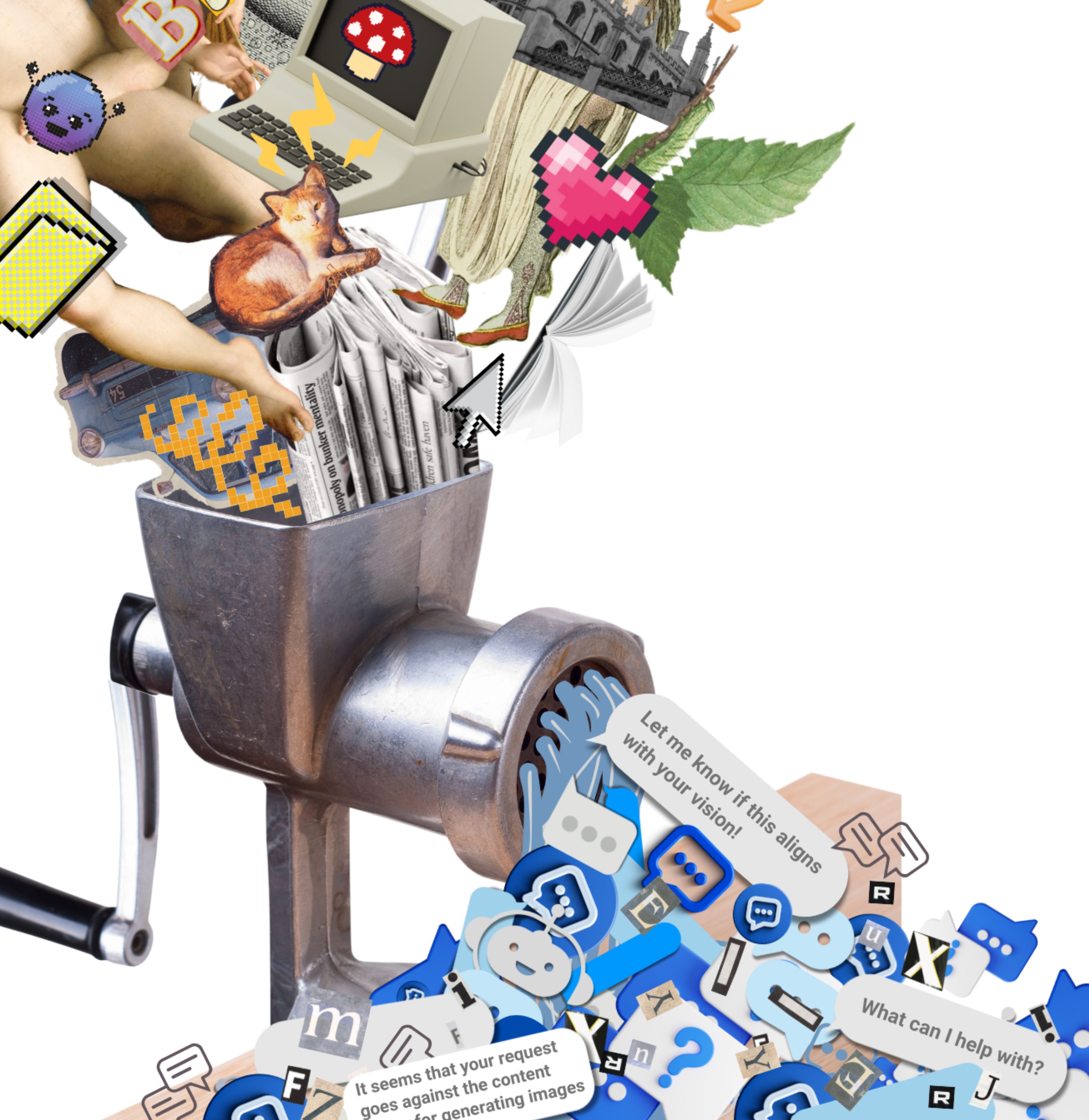
Beyond Rage against the Machine
So where do things now stand?
Levels of Uncertainty are Off the Scale
When faced with a novel governance challenge, the international system usually has years to react (as you’ll see below in our history of ozone diplomacy). But AI models and autonomous agents are evolving faster than institutions can track them — and their uses are diversifying even more quickly.
António Guterres, UN Secretary-General: "The internet took 15 years to reach a billion people. AI got there in two. And these systems are no longer tools awaiting instruction... Our institutions were built to govern machines that follow commands. They are not ready for machines that decide."
Annalena Baerbock, President of the General Assembly: "Never before has the pace and scale of change been so blinding…. If we are frank, who among us in this room... really understands the depth and scale of what is happening with AI model architecture, autonomous agents..."
Yoshua Bengio, Scientific Panel Co-Chair: "There are still no known technical guarantees that AI will follow human instructions, norms, or laws. And as it gets more powerful, this becomes more of a problem."
Maria Ressa, Scientific Panel Co-Chair: "Please do not wait for certainty that will not arrive in time to matter. These times demand courage from you."
My experience is that many governments are FREAKING OUT, in part because they can't agree how much they should worry and about what. This creates an opening for any platform capable of inching the world toward even the shakiest consensus about how to calm these fears.
The Geopolitics of State Survival
The U.S. and China dominate AI hardware and the models, accounting for roughly 75% and 15% of global compute respectively. But while the U.S. was "engaged, but at a distance" in the dialogues, China was pushing an open source approach and supported G77 calls for shared global governance of AI.
At the same time, most countries find themselves locked out of the rooms where AI policy is being shaped. That's creating demand from the Global South — and parts of the Global North — for a more equitable approach.
António Guterres, UN Secretary-General: “The computing power, the data, and the talent behind the most advanced systems are concentrated in a handful of companies and in a handful of countries. Most nations, including many developing countries, have had no say in decisions that will shape their futures.”
Mohamed al-Menfi, Libyan President: “The African continent represents 1.4 billion people, 10% of the global population, who have fewer than 2% of global data centers… We also refuse to have our data exploited without us being able to benefit from it.”
Mikheil Kavelashvili, Georgian President: “This unprecedented concentration of power must not become an instrument of totalitarian control, a new digital tyranny that infringes upon national sovereignty and individual liberty.”
As we have argued before, fears about AI could change the way we think about national sovereignty. Instead of worrying that multilateralism will dilute their power, countries may start to see the international system as the only mechanism capable of protecting their capacity to govern.
Get a Grip
In the wake of the Geneva dialogue, the Atlantic Council’s Konstantinos Komaitis argued that “the world increasingly agrees that artificial intelligence needs governance, but we completely disagree on what that governance is ultimately meant to achieve.”
This has created a strategic deficit on two levels. On the one hand, progress towards a “big picture” governance framework will be blocked without what Komaitis calls a “North Star.”
But on the other, progress may be fastest where there are concrete opportunities to tackle a smaller part of the overall problem. For example: energy consumption (projected to grow by 15% annually), child safety (a breakout issue in Geneva), and lethal autonomous weapons.
Balaraman Ravindran, Scientific Panel member: “Scaling laws in training and growing inference workloads are driving unprecedented computational demand. This translates directly into surging energy use, water consumption for data center cooling, and rising greenhouse gas emissions.”
António Guterres, UN Secretary-General: “My main concern is with lethal autonomous weapon systems. Let us call them what they are: killer robots. Machines selecting and engaging their target and taking a life without human control and judgment... it must be banned by international law.”
Maria Ressa, Scientific Panel Co-Chair: “A 14-year-old boy died in 2024 after months of conversation with a chatbot... When he was in crisis, [the chatbot] never broke character, never suggested he call for help. His mother testified before Congress that it encouraged him to take his own life... This is what AI risk looks like once you stop describing it in the abstract. A mistranslation, a vulnerability, a child.”
The UN’s record on the nuclear threats shows what can be done with a piecemeal approach. United Nations General Assembly Resolution 1 (I) tried to solve everything and failed. What followed was the more modest Non-Proliferation Treaty, which has played a sizable, if underappreciated, role in keeping the peace.
Maybe we will see AI follow a similar path.
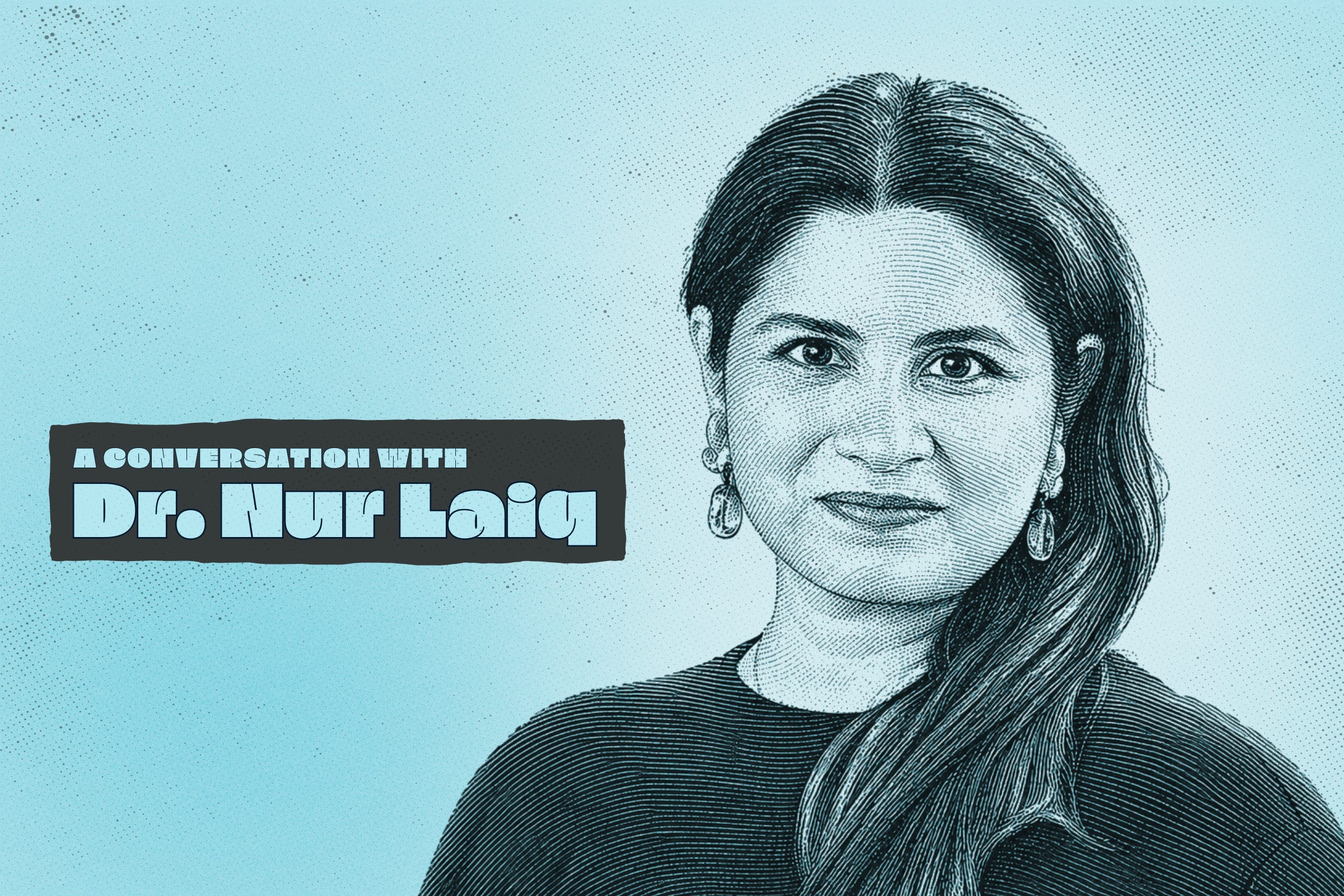
Dr. Nur Laiq
Five Minutes on the Future of AI Governance
We sat down with Nur to discuss her views on the intersection of policy, geopolitics, and AI, and what the next Secretary-General must do in their first 100 days to get to grips with AI governance.
On why governance can’t wait:
"For legislators and policymakers at the UN, AI is not just a technological issue; it is a question of power, of equity, sovereignty, safety, who profits, who regulates, and who gets a say. The technology is moving fast, but we have been managing power for millennia. That gives us a foundation to act."
On the Global South and the threat of the "Splinternet":
"The UN can champion 'plug-and-play' standards so countries avoid getting locked into a single geopolitical bloc or a single company's ecosystem. The bargain must mandate local ownership. We need to share a language that empowers governments to say no to extractive arrangements, especially in procurement."
On the need for coalitions of the willing:
"The SG's role is not to replace state power, but to create political space for inclusion, safety, interoperability, and access. You don't need all 193 States to agree on everything. The UN can identify overlapping interests through formal blocs and informal groups of friends. We can bring in civil society and the private sector."
On the next Secretary-General’s first 100 days:
"A new Secretary-General must arrive with a clear framing: AI governance is a core planning issue for the next decade of multilateralism. We need to build an accountability machine — common standards, public disclosures, and public registries — rather than just hosting broad conversations about principles."
Read the full interview here:


Navigating the AI Frontier
Reading List
Here are four things to read on how governance, development, and power intersect with artificial intelligence.
The first Global Dialogue on AI Governance The Simon Institute’s debrief on the Geneva meetings is as thorough and insightful as all their work. It maps out where member states converged, where divisions remain, and recommended next steps on the AI governance agenda.
People, Power, and AI: Rethinking Development for the New Era by Claire Melamed and Paul Ladd. This UN Foundation white paper moves past the binary of existential risk versus utopian growth to explore how AI is actively reshaping inequality, public accountability, trust, and environmental limits, using the 2030 Agenda as its framework.
Geopolitics in the Age of Artificial Intelligence by Jake Sullivan and Tal Feldman. I am always struck by the gulf between the multilateral and national security debates on AI. If you can get past the paywall, this Foreign Affairs essay sets out scenarios that hinge on three questions: whether the world is accelerating towards superintelligence or not, whether a state can ever catch up if it falls behind, and how hard the US and China will fight to get to the frontier first.
How AI Will Change the Global Balance of Power by 2035. from the Council on Foreign Relations, a new survey of 350 foreign policy experts (mostly from the U.S.) on what the global order will look like in a decade. While experts are split on whether AI capabilities will remain concentrated or diffuse, over 80% believe that global AI governance will remain fragmented, with different markets and governments adopting competing standards for safety, security, and accountability. A serious AI accident or a U.S.-China bilateral agreement are viewed as the most likely catalysts for a more cohesive governance framework.
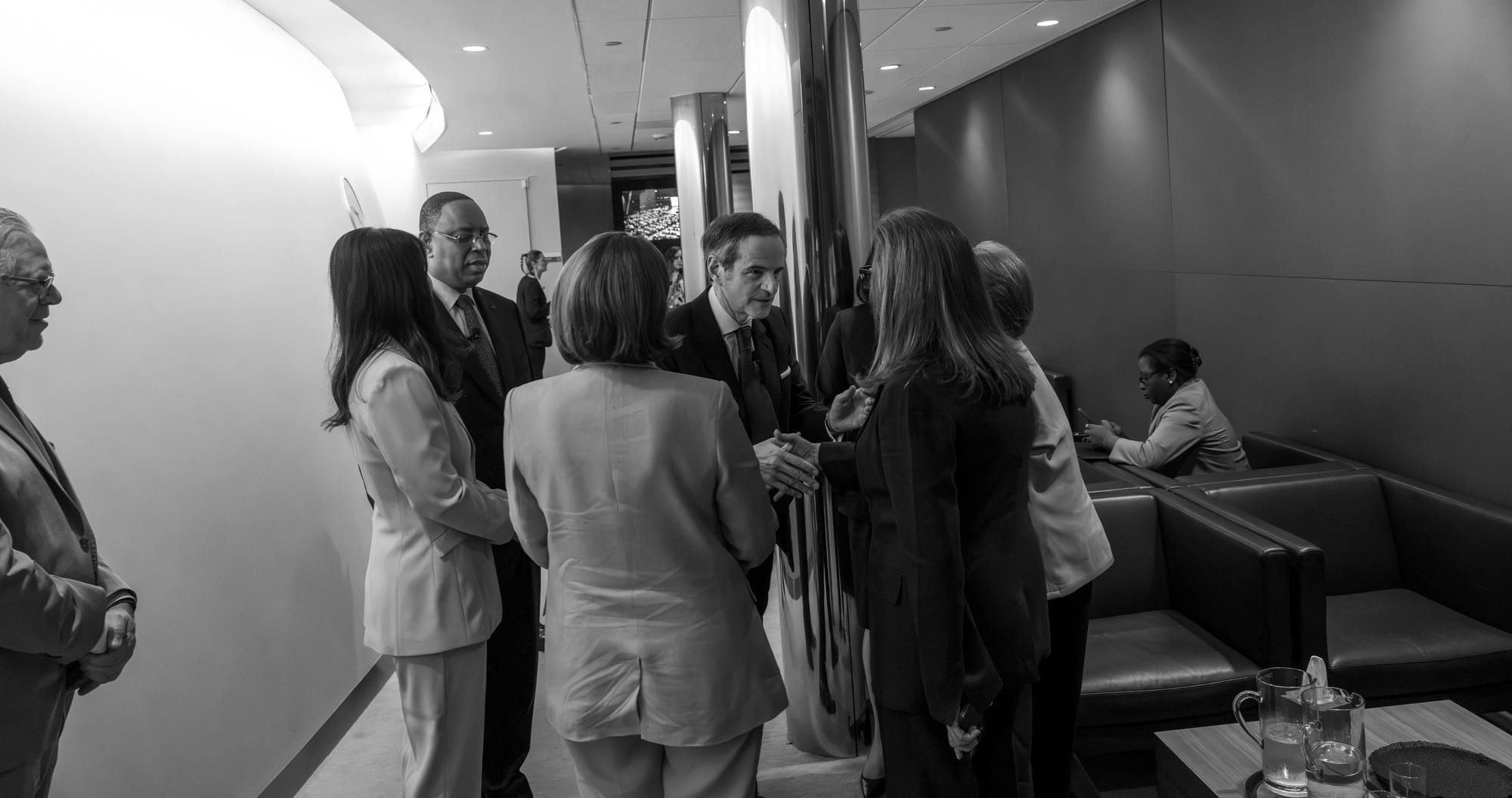
The SG Roundup
There were not many public developments in the selection process this week, but you should definitely read this excellent piece by Alec Russell, the foreign editor of the Financial Times: Wanted: a leader to rescue the UN.
Next up: Olara Otunnu’s interactive dialogue with the General Assembly on August 19. The Danish chair of the Security Council also hopes to hold a second straw poll on August 21, although some are betting that it will be delayed.
ICYMI: Who Will Save AI From Itself?
To round out this week’s focus on AI, make sure you read this week's [Re]Group essay Who Will Save AI From Itself?
Who Will Save AI From Itself?

"The machinery for that future AI moment is being built in the UN right now… the institutions that might save AI from itself. They will bring people around the table if a crisis hits. They will be the forum for finding solutions and brokering trust between competitors. The question is if governments will invest in them before the crisis that makes them wish they had."