![[Re]Group: A Playbook for Turbulent Times](https://substackcdn.com/image/fetch/$s_!PUHU!,w_120,h_120,c_fill,f_webp,q_auto:good,fl_progressive:steep/https%3A%2F%2Fsubstack-post-media.s3.amazonaws.com%2Fpublic%2Fimages%2Ff2fb4256-d509-4e61-827b-2ee678efbba9_256x256.png)
![[Re]Group: A Playbook for Turbulent Times](https://substackcdn.com/image/fetch/$s_!OvcZ!,e_trim:10:white/e_trim:10:transparent/h_182,c_limit,f_auto,q_auto:good,fl_progressive:steep/https%3A%2F%2Fsubstack-post-media.s3.amazonaws.com%2Fpublic%2Fimages%2Fa2653539-a634-4ef5-9aab-bc4a7546ebc9_1344x500.png)

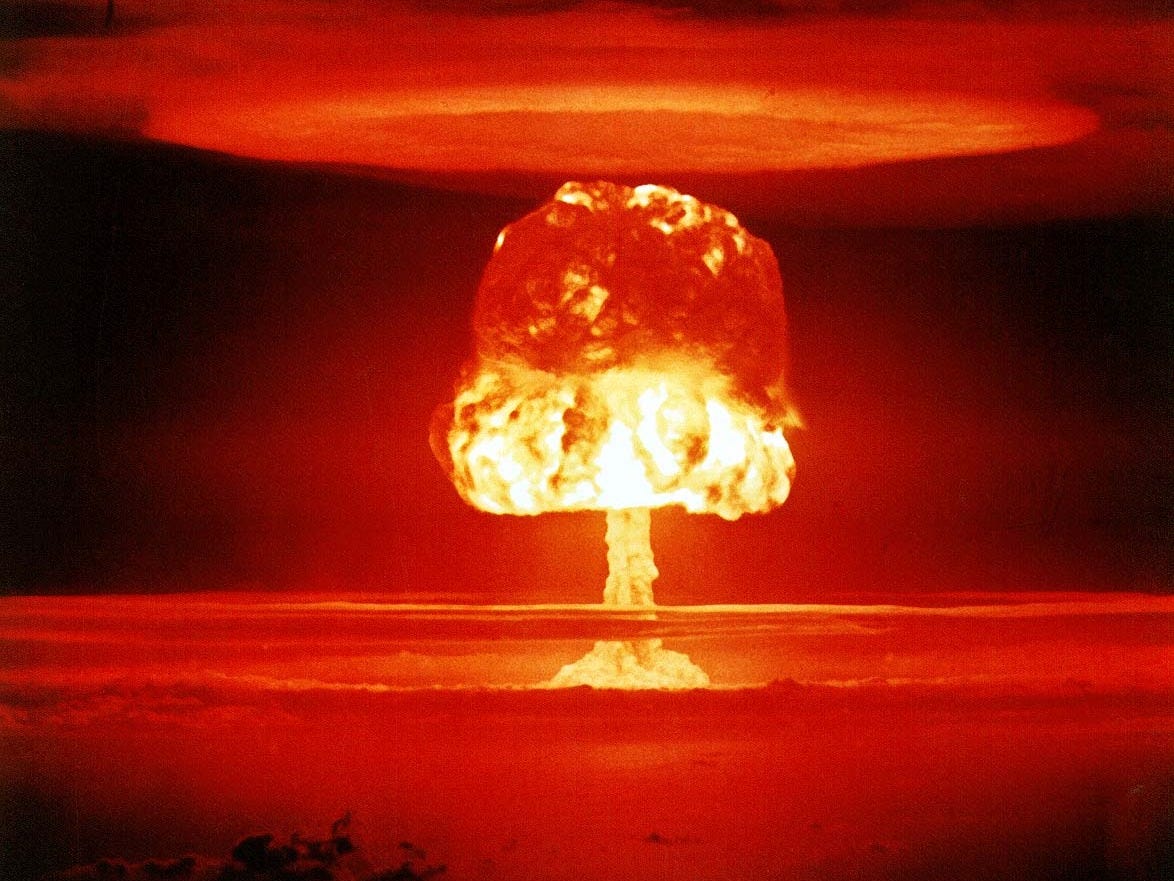
The first United Nations resolution promised to “establish a Commission … to deal with the problems raised by the discovery of atomic energy and other related matters.” But right from the beginning, it was a fix without a fix.
Resolution 1 was agreed Jan. 24, 1946, during the General Assembly’s inaugural session at Methodist Central Hall, just across from London’s Westminster Abbey. It was a bitterly cold winter, and delegates sat shivering through the discussion of an immediate threat to the UN’s mission to “save succeeding generations from the scourge of war.” But it wasn’t much of a debate. “The general attitude of the Assembly was that members could not change it without antagonizing the powers that controlled the atomic secrets,” the New York Times reported, “so they did not try.”
On behalf of the leader of those powers, U.S. Secretary of State James F. Byrnes told the Assembly that “we entered this race not to destroy, but, on the contrary, to save civilization, but if the race continues uncontrolled the civilization we hope to save may be destroyed.” The United States had already caucused with its collaborators in the Manhattan Project — the United Kingdom and Canada — and then hashed out with the USSR the wording of what would become Resolution No. 1. The fix was in.
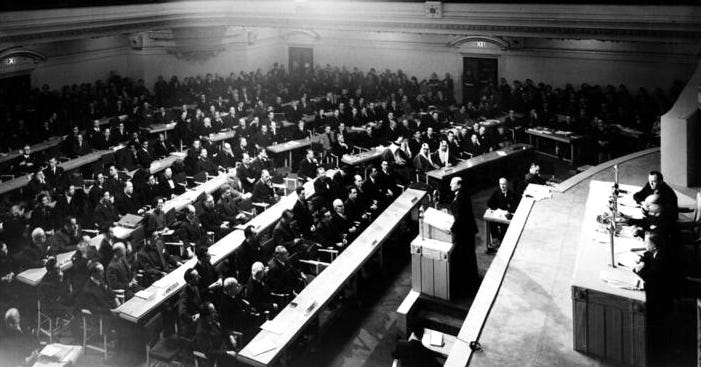
Pushback came on two fronts. From Poland’s delegate, the plea to focus not just on the risks from nuclear weapons, but on “the use of atomic energy and other conquests of science for the good of humanity.” And from Pedro Lopez, representing the Philippines, a furious reaction to the idea that the Commission would be under the full control of the UN Security Council.
After getting somewhat lost in a metaphor about how this left the General Assembly “in the same awkward predicament as a woman who gave life to a child and yet was not permitted to fondle it,” Lopez addressed the victorious Great Powers directly: “If you grant to this General Assembly the power to create the Commission, then by all means you should be prepared to meet the logical and legal consequences by conserving to the Assembly the power to alter, modify, control, or abolish altogether, that which it has created.” The resolution, however, was adopted by a show of hands. Lopez did not dissent.
The Illusion of a Nuclear Monopoly
Back in Washington, a second tussle between right and might was moving toward its preordained conclusion, as Kai Bird, the Pulitzer Prize–winning biographer of Robert Oppenheimer, tells the fourth episode of World’s Toughest Job.
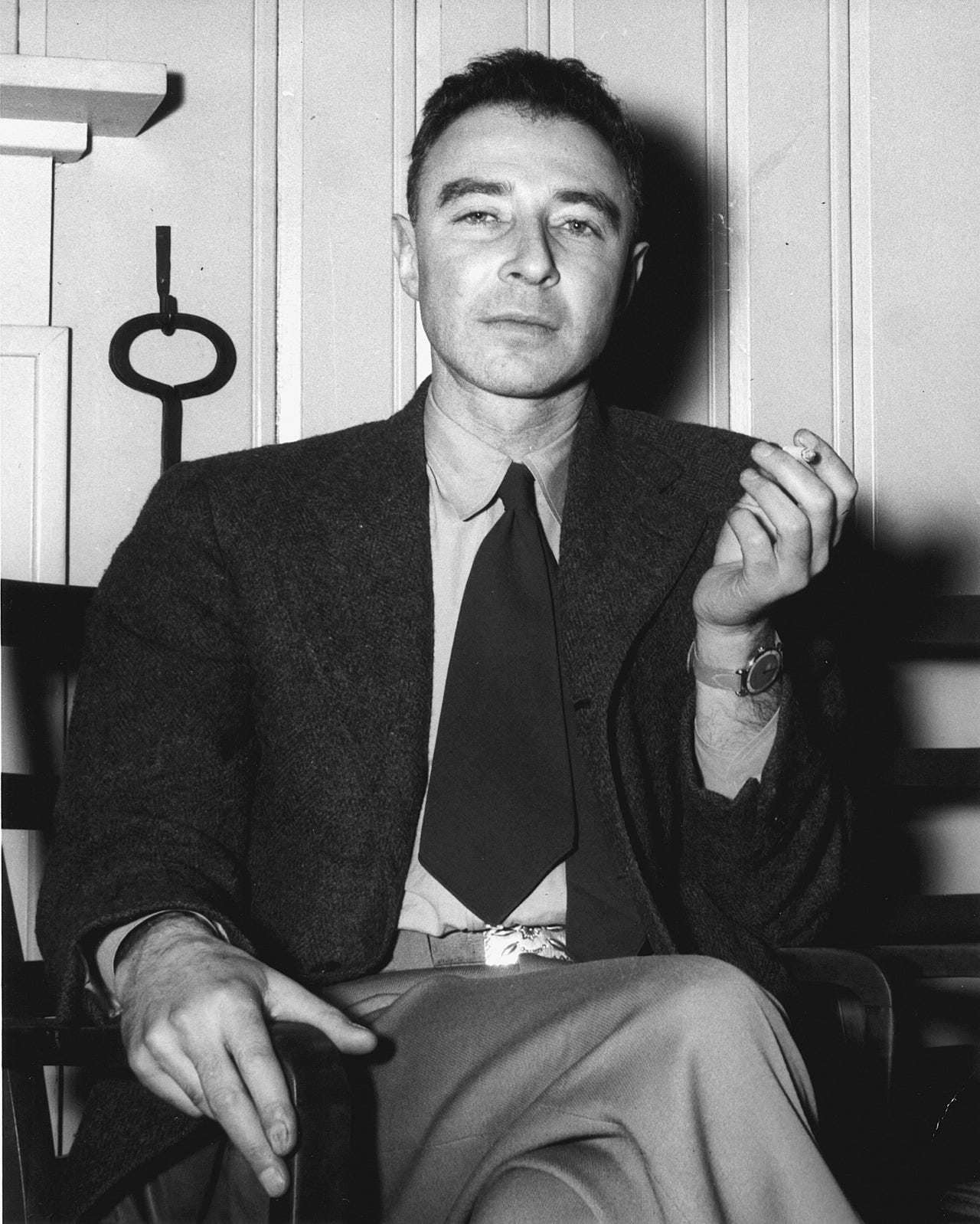
Oppenheimer’s government, however, saw the issue differently. According to Bird, the physicist and President Harry S. Truman disagreed about whether the United States had a lasting nuclear monopoly. The President thought it did and that it should use the leverage this provided. Oppenheimer believed that scientific discoveries always flow across borders and that a USSR bomb was inevitable.
This clash led to an American position that was a bit of a mishmash. The United Nations Atomic Energy Commission had been created at its behest. Now it formed a brain trust to develop a proposal for what the Commission should do, with Oppenheimer the only nuclear physicist on board. The result was the Acheson-Lilienthal blueprint , which argued that a UN body — the International Atomic Development Authority — should be given a global monopoly over dangerous nuclear material and the operation of any reactor capable of breeding significant amounts of plutonium. Only “safe” nuclear activities would remain under national control.
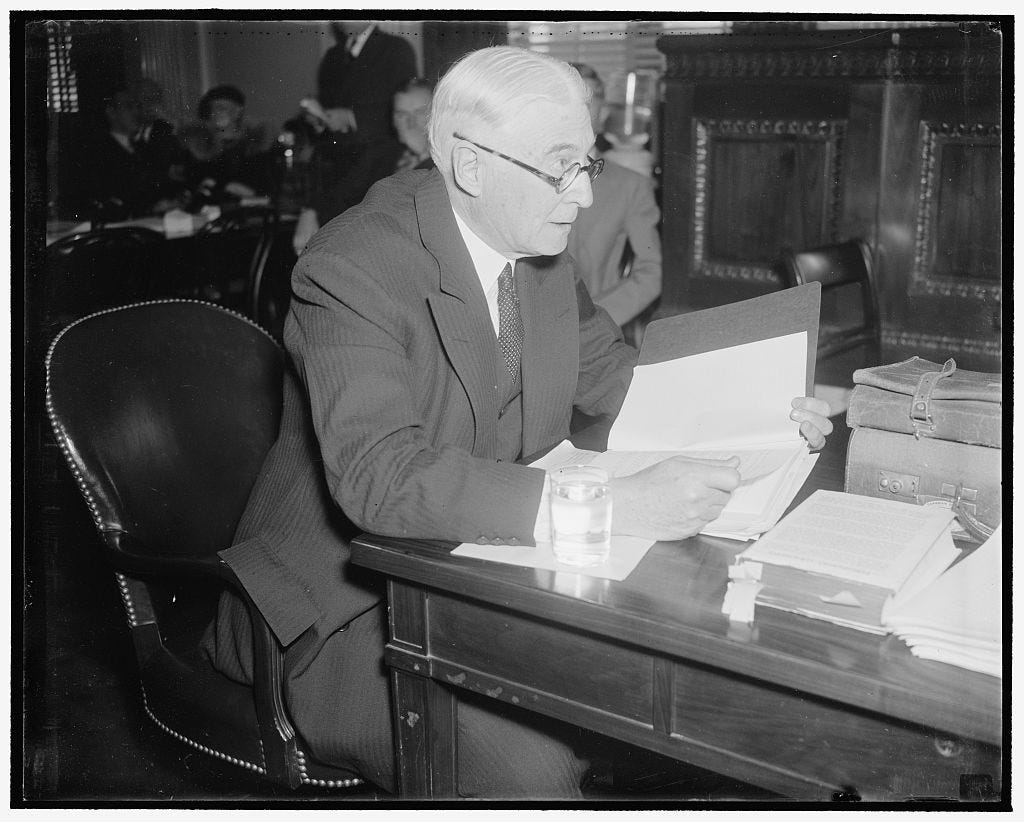
This seemed like a big concession, but Washington was banking on its latent nuclear capability. If any other state ever attempted a nuclear breakout, the United States assumed it could rely on its industrial and scientific lead. For the realists in the Truman Administration, however, this assumption wasn’t enough. As Bird recounts, Truman passed the blueprint to Bernard Baruch, a Wall Street speculator who pops up advising every American president from Woodrow Wilson to John F. Kennedy. Truman secretly loathed Baruch. But he wanted someone with the credibility to turn what many conservatives believed was a naive giveaway of America’s greatest weapon into something that could be sold to the U.S. Senate.
The Poison Pill
Baruch demanded — and was given — a free hand, and he made full use of his mandate. Labeling the Soviets as obstructive and untrustworthy, his plan demanded they give up their UN veto on nuclear matters and accept intrusive inspections long before the United States would surrender a single bomb. It was a deal designed to protect American supremacy, and an offer the Soviets couldn’t possibly accept. As Cold War historians Joseph L. Nogee and John W. Spanier have written, the Baruch plan was “a superb tool of psychological warfare: If the Soviets agreed to it, they would place themselves in a position of permanent military and, therefore, political inferiority to the United States; and if they turned it down, they would be spurning America’s gesture of good will and assuming the responsibility for the Cold War.”
The Soviets were supposed to veto, and they did. Their counterproposal reversed the sequence, demanding immediate destruction of all American atomic weapons before any international control mechanisms were established. But it was all shadow play. Stalin’s nuclear program was in full swing, and the Soviets would test their first weapon In 1949. Truman initially refused to believe what had happened. A nuclear monopoly had evaporated in just a couple of years.
In World’s Toughest Job, we tell the story of Resolution 1 — and all it failed to accomplish — not because of what it tells us about nuclear competition, but for the light it sheds on the governance of another revolutionary technology: artificial intelligence.
Does the UN Have a Seat at the AI Table?

In the United Nations’ early years, Secretary-General Trygve Lie negotiated with governments to stop the nuclear arms race. But today, the code that could reshape civilization is owned by private companies.
From the Atom to the Algorithm
Eighty years after Truman assumed the United States could maintain a monopoly over the atom, today’s great powers are fighting for control of the algorithm. The geopolitical dynamic is uncannily similar to the early years of the Cold War. As former U.S. National Security Adviser Jake Sullivan recently argued, analysts disagree on whether AI is charging toward superintelligence or whether it will follow a “less dramatic path.” And they also disagree on how important it is to be first out of the gate. But those who believe the pace of innovation is rapidly accelerating and who think that leadership matters are concluding that “the lead may become self-reinforcing, making meaningful catch-up not merely difficult but effectively impossible.” In this scenario, it is worth doing almost anything not to be second.
Of course, only a handful of nations are competitors in this race. It is a contest driven primarily by the United States and China, with perhaps a few others poised to play supporting roles — much like the secondary nuclear powers of the early Cold War. Other governments are just as much onlookers as the vast majority of UN Member States were in 1946. Many are genuinely terrified — palpably panicking — both about how fast AI technology is moving and what that could mean for a U.S.-China showdown. Yet, just like Poland’s delegate in 1946, a second group of countries is focused more on the opportunities. As the UN Foundation’s AI lead, Claire Melamed puts it, they hope that AI will prove to be the “next electricity” rather than the “new nuclear.” And a third group echoes the frustration of the Philippines during that first UN debate: They look at the power concentrated in Washington, Beijing, and Silicon Valley, and wonder if the global majority will get any say over developments that will shape their future.
In Search of an AI Foothold
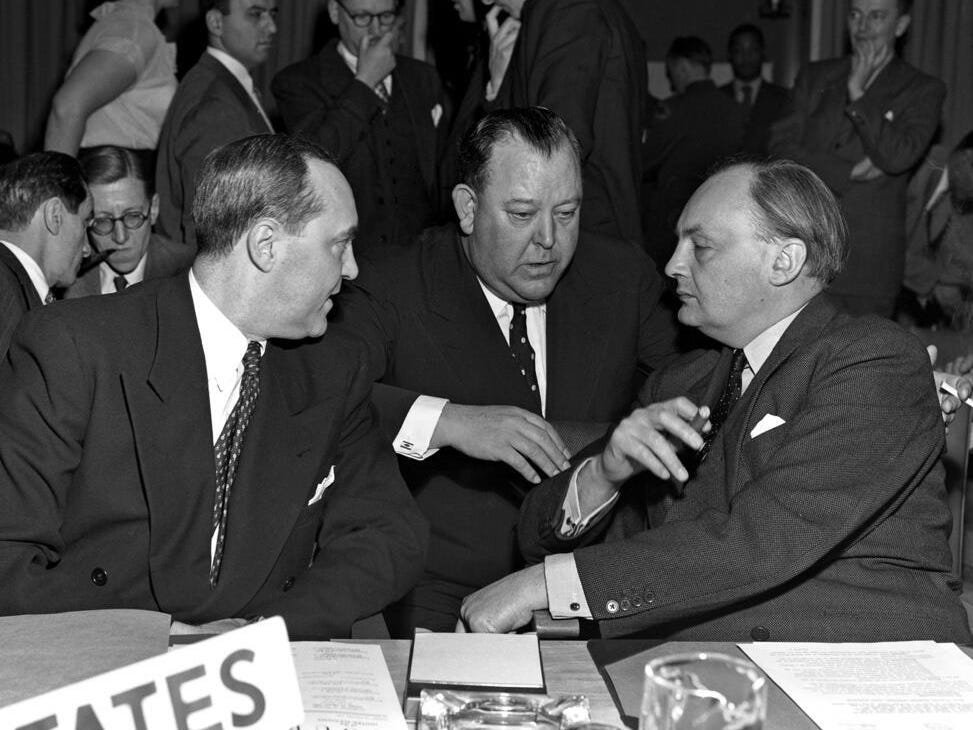
Which brings us to the role of the international system and the challenge facing its next leader. The UN’s first Secretary-General, Trygve Lie, viewed global peace not just as a policy challenge, but as a “sacred mandate” from the victims of World War II. When Resolution 1 failed and the Cold War intensified, Lie refused to let the multilateral system be sidelined. He launched a “Peace Tour,” traveling to Washington, London, Paris, and Moscow while trying to create diplomatic space by reaching beyond governments to scientists and the global public. But the superpowers froze him out and, as he became increasingly marginalized, he resigned, handing Dag Hammarskjöld the leadership baton.
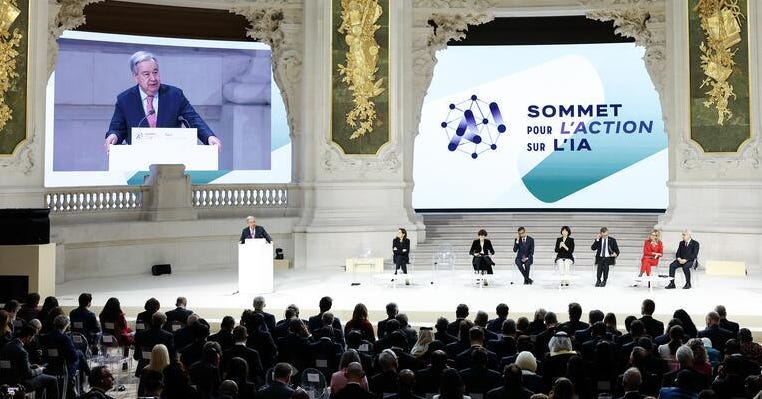
With AI, the UN is once again scrambling to find a foothold. The current Secretary-General has pushed for the launch of the Independent International Scientific Panel on AI and the Global Dialogue on AI Governance, which will bring together Member States, industry leaders, and civil society for the first time in Geneva in July. As our podcast roundtable discussed, these initiatives are building some kind of foundations, although it will not be until the watch of a new Secretary-General that we see whether the UN has a substantive role to play in AI governance or if the future will be carved up by superpowers, tech billionaires, and invite-only summits.
The Governance Long Game
But let’s not assume from the failure of Resolution 1 that the UN simply gave up on the nuclear issue. In the 1950s, Hammarskjöld worked tirelessly to champion the creation of the International Atomic Energy Agency and bring it under the UN’s aegis. Following the “near-death experience” of the Cuban Missile Crisis (a story told in episode 2), nonproliferation came back on the agenda, as President Kennedy worried that there could be as many as 25 nuclear-armed nations by the 1970s. That fear was given form by a secret experiment that showed a viable nuclear weapon could be designed in less than three years by a part-time team of young physicists using only public information.
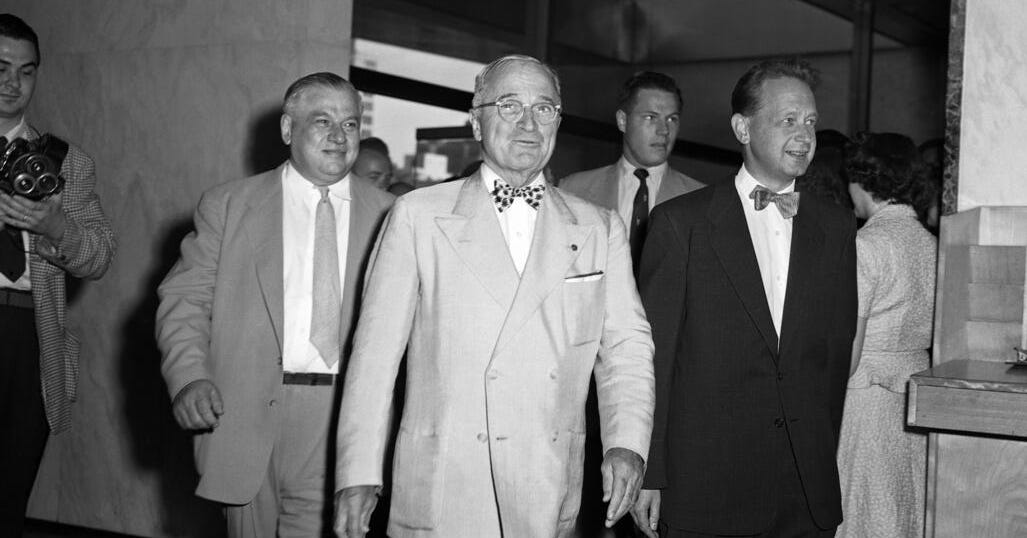
The breakthrough came when Secretary-General U Thant threw the UN’s full weight behind the Nuclear Non-Proliferation Treaty. It relied on a formula that Oppenheimer had once doubted: a diplomatic treaty backed by a rigorous inspection regime. But this new architecture of restraint actually worked. Between 1970 and 2000, it curbed global proliferation, even when factoring in countries hiding under NATO’s nuclear umbrella. For states most likely to develop a nuclear program, joining the treaty slashed the annual probability of pursuing a bomb from 6.65% to just 1.14% — meaning the NPT likely prevented at least nine countries from becoming nuclear powers by the turn of the century.
That’s quite a return for multilateral diplomacy, given that every additional nuclear power moves the risk of miscalculation, accident, or aggression closer to a certainty. Not a safe world, but a safer one. It is a reminder to the next Secretary-General that global governance is a long game. The UN may be outgunned on AI today, but its first job may simply be to stay in the game.
Does the UN Have a Seat at the AI Table?

In the United Nations’ early years, Secretary-General Trygve Lie negotiated with governments to stop the nuclear arms race. But today, the code that could reshape civilization is owned by private companies.