![[Re]Group: A Playbook for Turbulent Times](https://substackcdn.com/image/fetch/$s_!PUHU!,w_120,h_120,c_fill,f_webp,q_auto:good,fl_progressive:steep/https%3A%2F%2Fsubstack-post-media.s3.amazonaws.com%2Fpublic%2Fimages%2Ff2fb4256-d509-4e61-827b-2ee678efbba9_256x256.png)
![[Re]Group: A Playbook for Turbulent Times](https://substackcdn.com/image/fetch/$s_!OvcZ!,e_trim:10:white/e_trim:10:transparent/h_182,c_limit,f_auto,q_auto:good,fl_progressive:steep/https%3A%2F%2Fsubstack-post-media.s3.amazonaws.com%2Fpublic%2Fimages%2Fa2653539-a634-4ef5-9aab-bc4a7546ebc9_1344x500.png)
![[Re]Group's avatar](https://substackcdn.com/image/fetch/$s_!w0DV!,w_108,h_108,c_fill,f_webp,q_auto:good,fl_progressive:steep/https%3A%2F%2Fsubstack-post-media.s3.amazonaws.com%2Fpublic%2Fimages%2F0517e9f8-af1c-41a5-b83c-2630660e4517_256x256.png)
Jump to:
Interactive Dialogues • Independent Debates • UN Town Hall • Upcoming Events
What is Debate Season?
Ahead of the Security Council’s straw polls (read our guide, Less Solid Things), candidates made their pitch to the General Assembly and took to the road to build support for their vision for the future of the UN.

Debate season opened in April with the UN General Assembly’s Interactive Dialogues, where candidates presented their vision statements to Member States. It reached a crescendo on July 23 with the UN Town Hall in New York — a presidential-style debate bringing candidates together on the same stage.
In between, candidates engaged in a series of independent debates and forums organized by think tanks and civil society across London, Geneva, and Jeju Island, and are expected to continue presenting their ideas at other public events as the straw polls continue and if new candidates enter the race.
The Ultimate Cheat Sheet

Read The Ultimate Cheat Sheet for everything you need to know about the selection of a new Secretary-General.
How to Use This Guide
This page serves as a complete archive of the candidates’ public campaigns ahead of the straw polls.
For each major event below, we have compiled:
Event details and participant lists
Links to video recordings and full transcripts so you can do your own analysis
Candidate-authored op-eds and interviews
Key news coverage and analysis from this stage of the race
Use this resource to review the race so far and hear the candidates in their own words. Also, check out section 4 for upcoming public engagements from candidates.
1. Interactive Dialogues in the General Assembly
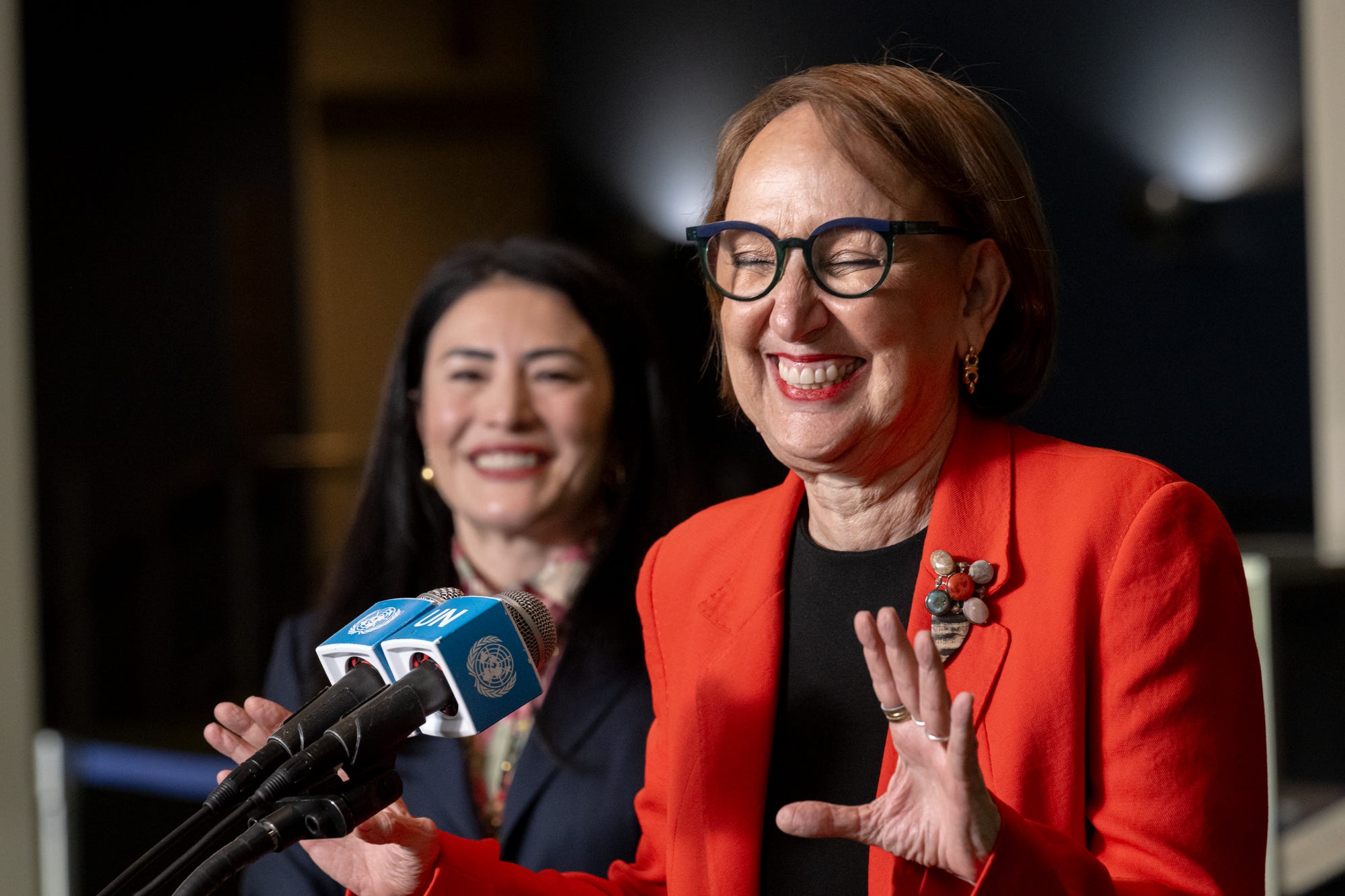
The Interactive Dialogues gave each candidate the opportunity to present a vision statement and take questions from Member States and civil society.
Each session lasted for three hours, split into segments on leadership and UN 2.0 reform, as well as peace and security, development, and human rights. There were around 230 interventions and more than 600 questions. Half the questions came from regional blocs, just over a third from individual Member States, and the rest from civil society.
Our analysis shows that major themes (in order of prominence) were: UN 2.0 reform and financial liquidity; peace and security and preventive diplomacy; the international financial architecture and sovereign debt; development and vulnerable geographies; climate, oceans, and small island developing states; and human rights and international law.
Michelle Bachelet (April 21, 10:00 a.m. – 1:00 p.m. EDT)
Vision Statement | Video | TranscriptRafael Grossi (April 21, 3:00 p.m. – 6:00 p.m. EDT)
Vision Statement | Video | TranscriptRebeca Grynspan (April 22, 10:00 a.m. – 1:00 p.m. EDT)
Vision Statement | Video | TranscriptMacky Sall (April 22, 3:00 p.m. – 6:00 p.m. EDT)
Vision Statement | Video | TranscriptMaría Fernanda Espinosa (June 15, 3:00 p.m. – 6:00 p.m. EDT)
Vision Statement | Video | TranscriptCarolyn Rodrigues Birkett (June 18, 10:00 a.m. – 1:00 p.m. EDT)
Vision Statement | Video | TranscriptOlara Otunnu (August 19, 3:00 p.m. – 6:00 p.m. EDT)
Vision Statement | Video | TranscriptIvonne A-Baki (August 20, 10:00 a.m. – 1:00 p.m. EDT)
Vision Statement | Video | Transcript
Bloomberg: Race for next UN chief heats up with first round of interviews
2. Independent Debates and Hustings
After the official UN General Assembly Interactive Dialogues in New York, the race for Secretary-General moved onto the public stage through a series of independent hustings and forums co-hosted by civil society networks, think tanks, and international platforms. The main events were in London, Geneva, and the Republic of Korea.
The public debate season opened in Central Hall Westminster (where the first General Assembly met in 1946), with a civil-society-driven event that grilled candidates on integrity pledges, UN structural reform, and whether the world needed more of a “General” or a “Secretary.”
Next up, a debate brought together the “International Geneva” ecosystem, with questions centered on international humanitarian law, human rights, global governance reform, and elevating female leadership in multilateralism.
In South Korea, finally, former UN Secretary-General Ban Ki-moon invited candidates to “write an epic chapter in the history of the United Nations” before they fielded questions on hard security, nuclear non-proliferation, AI governance, and climate resilience.
London: The Leader the World Needs
The Leader the World Needs was hosted by the United Nations Association - UK (UNA-UK), with support from RELX. on May 28 from 6:30 to 9 p.m. BST. The event took place at the Methodist Central Hall Westminster in London.
After a high-level panel, BBC Chief International Correspondent Lyse Doucet interviewed each candidate.
Introduction and panel (with Margarita Gómez, Executive Director of Southern Voice; Mark Malloch-Brown, former UN Deputy Secretary-General; and Thant Myint-U, Writer and Historian)
Video | TranscriptMichelle Bachelet
Video | TranscriptMaría Fernanda Espinosa
Video | TranscriptRafael Grossi
Video | TranscriptRebeca Grynspan
Video | Transcript
After her entry into the race on June 25, Carolyn Rodrigues-Birkett spoke with the BBC’s Mark Lobel on Thursday, July 16:
Carolyn Rodrigues-Birkett
Video | Transcript
Devex: The nominees for UN secretary-general have spoken. What did we learn?
Geneva: The Candidates Debate 2026
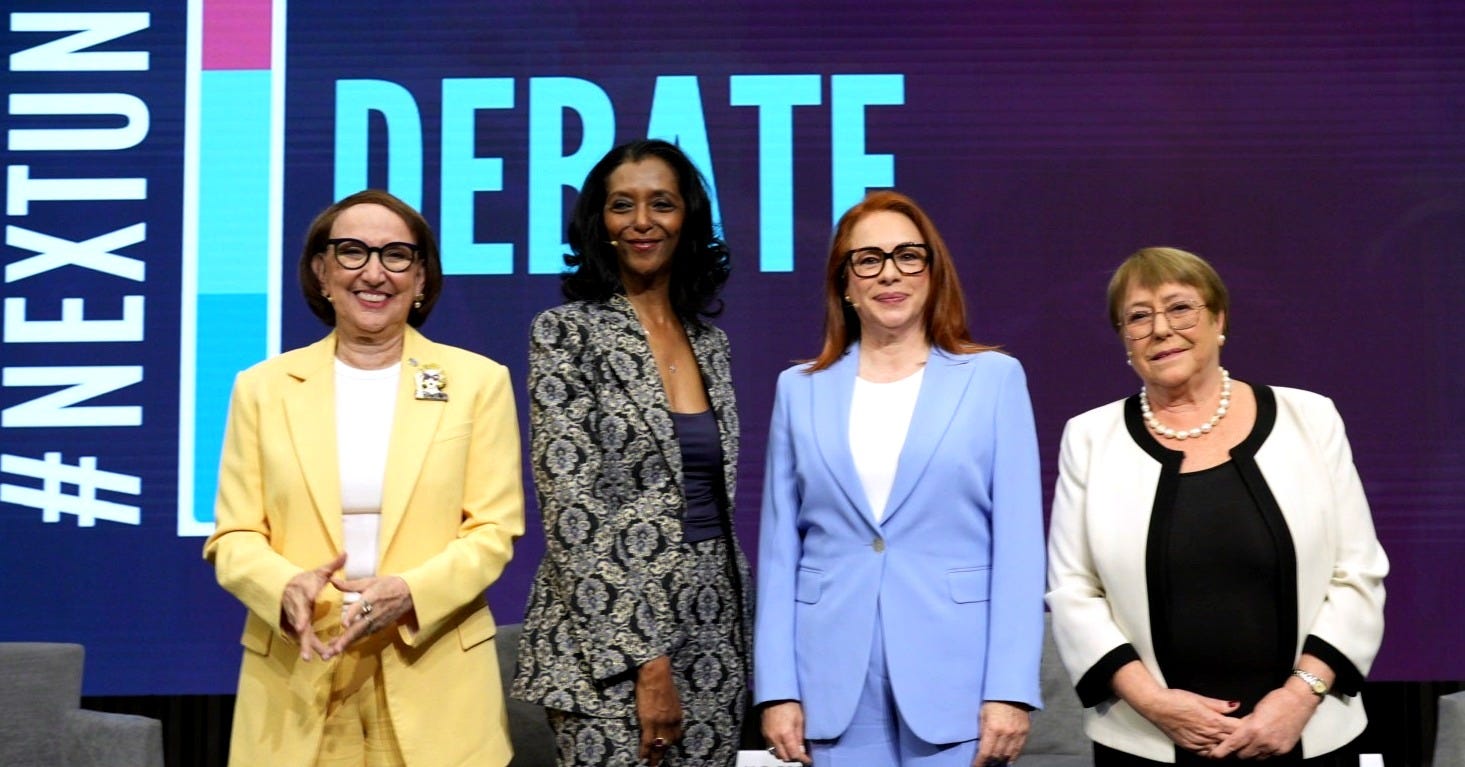
The Candidates Debate 2026 – #NextUNSG was hosted by GWL Voices, in collaboration with the United Nations Foundation, on June 9, 2026. The debate took place at the Ivan Pictet Auditorium at the Maison de la Paix in Geneva.
Michelle Bachelet, María Fernanda Espinosa, and Rebeca Grynspan spoke with journalist Zeinab Badawi, while Macky Sall appeared on video:
Video | Transcript | Trailer | Photo Library
Pass Blue: Fact-checking a UN Secretary-General candidates’ debate in Geneva
Republic of Korea: Reimagining Multilateralism
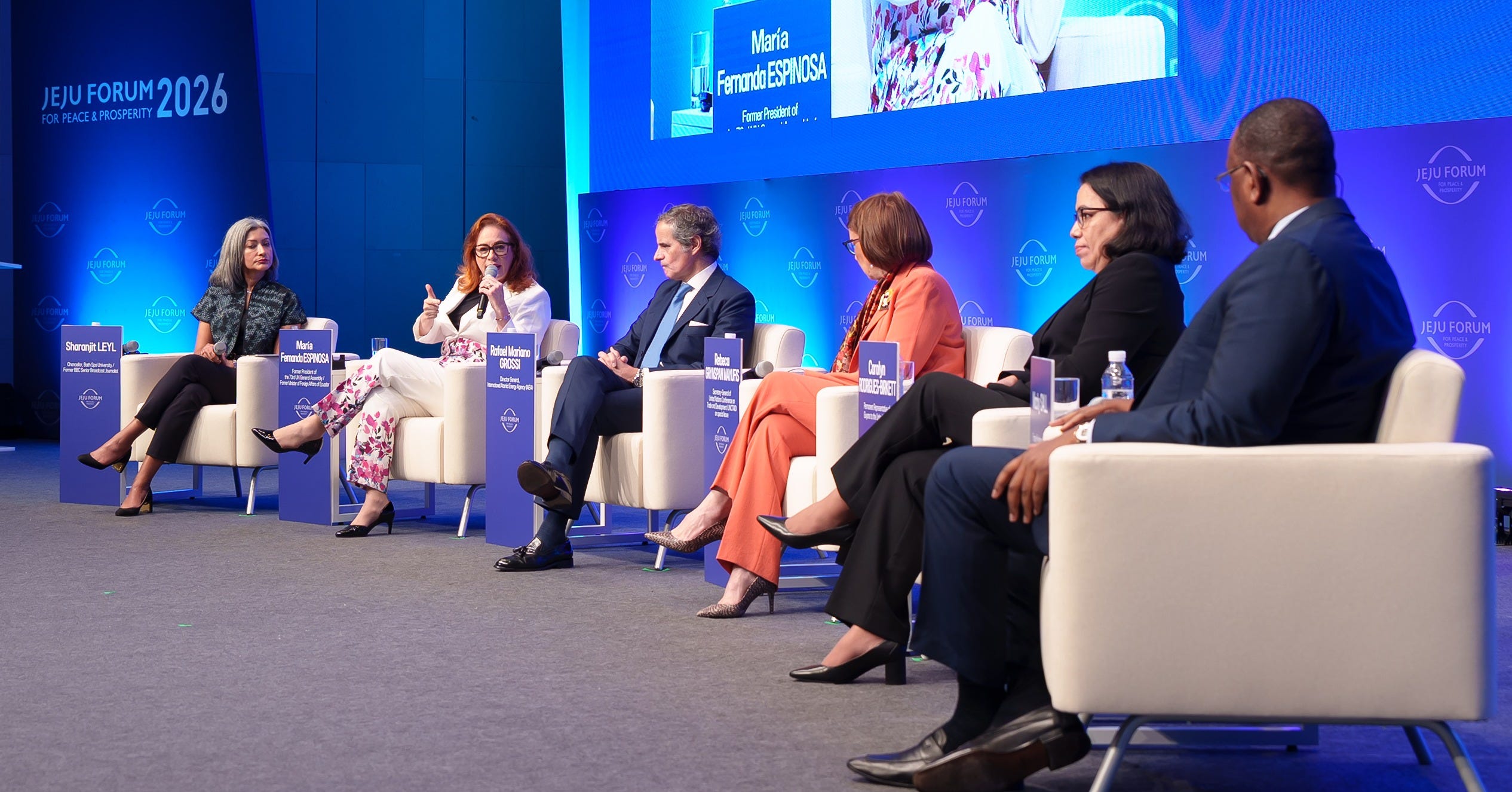
Reimagining Multilateralism – A Dialogue with UN Secretary-General Candidates was co-hosted by the Jeju Peace Institute, Ban Ki-moon Foundation for a Better Future, United Nations Foundation, and GWL Voices, as part of the annual Jeju Forum. The debate took place on Thursday, June 25 from 1:30 to 3 p.m. KST.
Ban Ki-moon, eighth UN Secretary-General, and Cho Tae-yul, Foreign Minister of the Republic of Korea were distinguished guest speakers.
María Fernanda Espinosa, Rafael Grossi, Rebeca Grynspan, Carolyn Rodrigues-Birkett, and Macky Sall spoke with journalist Sharon Gale. Michelle Bachelet participated via a pre-recorded video message.
Yon Hap News Agency: At Jeju Forum, UN chief candidates vow to reclaim relevance
Latin America: Regional Dialogue
The Regional Dialogue on the Future Leadership of the United Nations, hosted by the Government of Uruguay (in its capacity as Pro Tempore Presidency of CELAC), the GQUAL Campaign, and CEPEI, took place on August 3. This dialogue brought regional candidates together to share their visions and proposals for the future of the UN. Michelle Bachelet, María Fernanda Espinosa, and Rebeca Grynspan attended in person, while Rafael Mariano Grossi and Carolyn Rodrigues Birkett were virtual.
Journalist Carmen Aristegui moderated the conversation, while various ministers from the region asked the candidates questions.
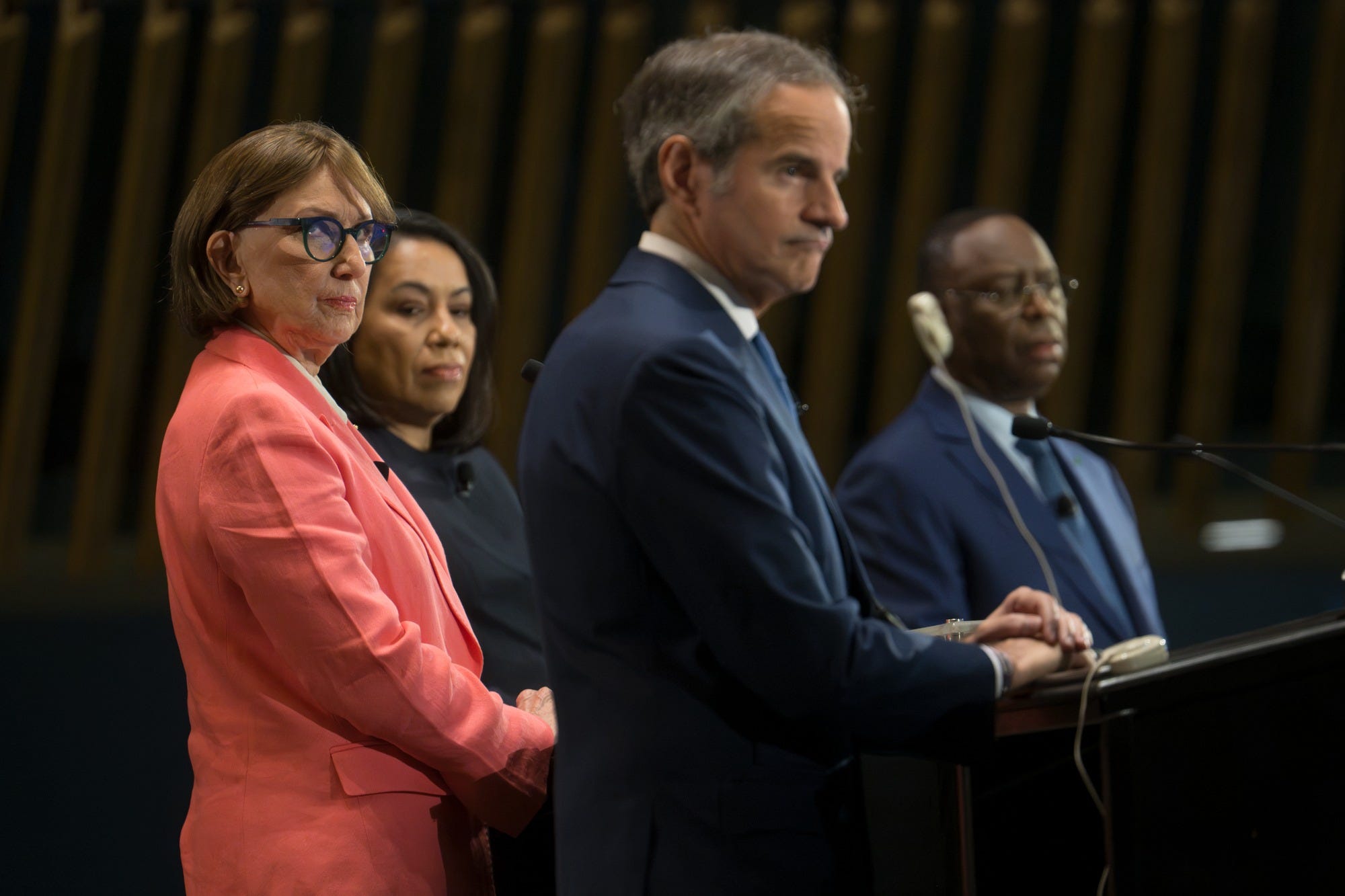
3. UN Town Hall
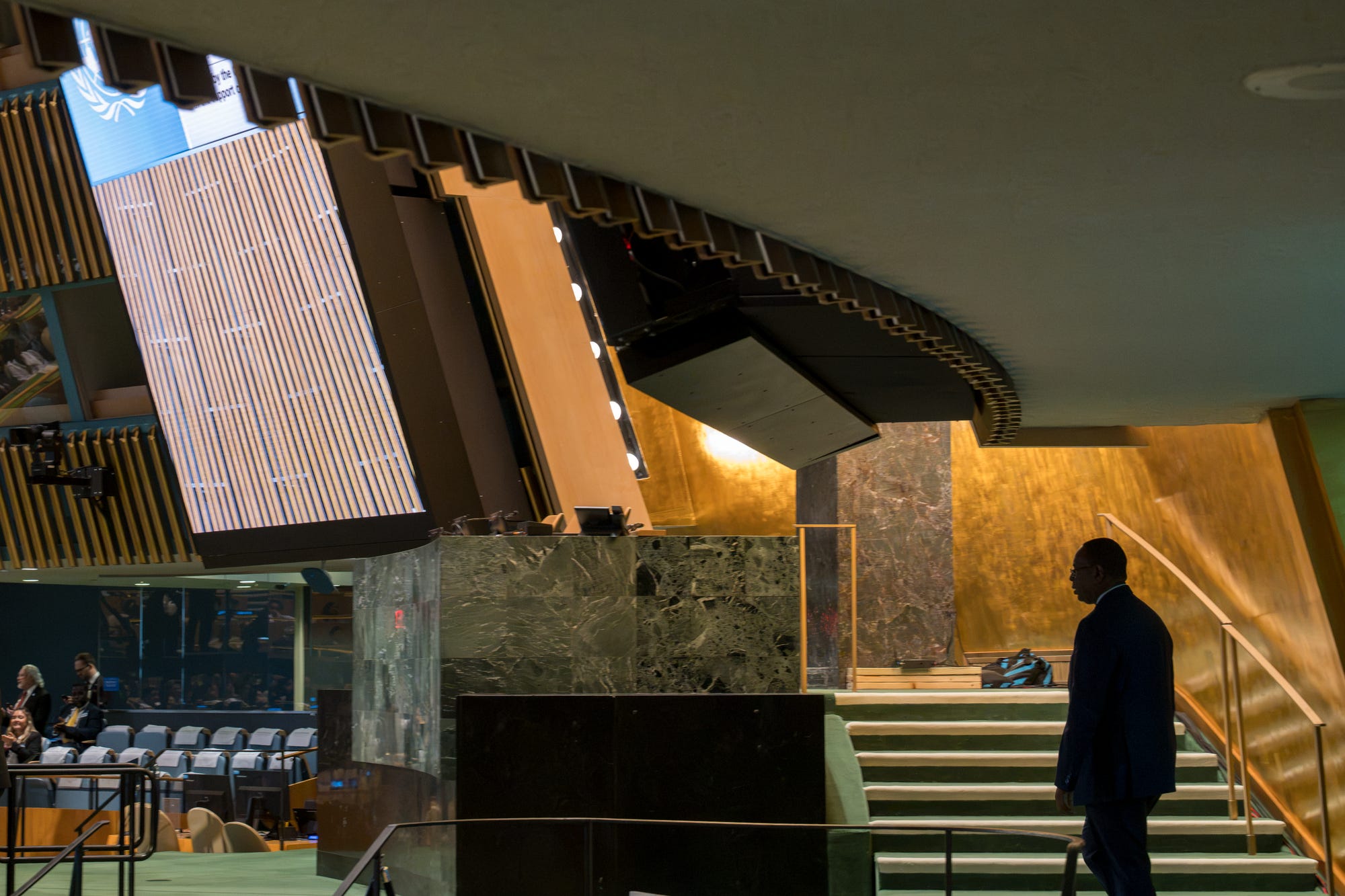
Hosted by the Office of the President of the General Assembly (Annalena Baerbock), in partnership with Bloomberg, the UN Town Hall was held on July 23 in the General Assembly Hall, New York.
All six candidates formally nominated at the time participated in person — Michelle Bachelet, María Fernanda Espinosa, Rafael Mariano Grossi, Rebeca Grynspan, Carolyn Rodrigues-Birkett, and Macky Sall. The moderators were Bloomberg’s Haslinda Amin and Romaine Bostick.
UN TV | YouTube | Transcript
Structured like a presidential-style debate, the format featured two-minute opening statements and a series of timed thematic rounds. Discussions focused primarily on navigating Security Council paralysis, reforming the UN and addressing the UN’s liquidity crisis, modernizing the global financial architecture, and responding to cross-cutting threats such as the security impacts of climate change and the establishment of governance frameworks for artificial intelligence.
During their closing statements, candidates outlined their priorities for their first 100 days in office.
Macky Sall: Focuses on appointing a diverse leadership team, strengthening preventive diplomacy, reviewing UN mandates and structures under the UN 2.0 initiative, addressing the liquidity crisis, and launching consultations on the post-2030 development agenda to “restore trust and put the UN on a path to become more agile”.
Carolyn Rodrigues Birkett: Prioritizes deploying a high-competence senior team with gender and geographical balance, advancing Secretariat reforms, applying mediation tools, addressing humanitarian logistics, and engaging financial institutions on concessional funding, “in partnership with Member States... not speaking to the IFIs from a pedestal”.
Rebeca Grynspan: Plans to establish a high-level Good Offices Support Unit to return peacemaking to the UN’s core, overhaul internal incentive structures, and stabilize finances through Resolution 78/270, declaring that “momentum is set on day one.”
Rafael Mariano Grossi: Focuses on establishing a direct dialogue with staff and Member States while separating executive action from legislative mandate, insisting on “brutal honesty to recognize what we can do” over “statements, speeches, good intentions.”
María Fernanda Espinosa: Prioritizes forming a cabinet based on “competence, competence, competence, plus one — integrity,” accelerating UN 2.0 implementation, addressing unpaid member dues, and establishing an early action hub, vowing to be visible in crisis zones “carrying the UN flag.”
Michelle Bachelet: Focuses on balancing senior appointments, securing assessed financial contributions, reviewing Chapter VI peacemaking mechanisms, and expanding development and climate financing to make the UN “leaner but muscled.”
France 24: UN leadership candidates outline their visions ahead of Secretary-General race
Bloomberg: Pre-debate commentary by the UN Foundation’s Elizabeth Cousens (transcript)
4. Upcoming Events
We will add upcoming events as we hear about them and update with video/transcripts after they end. Get in touch if there is anything we’re missing.

