![[Re]Group: A Playbook for Turbulent Times](https://substackcdn.com/image/fetch/$s_!PUHU!,w_120,h_120,c_fill,f_webp,q_auto:good,fl_progressive:steep/https%3A%2F%2Fsubstack-post-media.s3.amazonaws.com%2Fpublic%2Fimages%2Ff2fb4256-d509-4e61-827b-2ee678efbba9_256x256.png)
![[Re]Group: A Playbook for Turbulent Times](https://substackcdn.com/image/fetch/$s_!OvcZ!,e_trim:10:white/e_trim:10:transparent/h_182,c_limit,f_auto,q_auto:good,fl_progressive:steep/https%3A%2F%2Fsubstack-post-media.s3.amazonaws.com%2Fpublic%2Fimages%2Fa2653539-a634-4ef5-9aab-bc4a7546ebc9_1344x500.png)

"As take a Straw and throw it up into the Air, you shall see by that which way the Wind is, which you shall not do by casting up a Stone. More Solid things do not shew the Complexion of the times so well."
The Table-talk of John Selden, (compiled by Richard Milward, 1689)
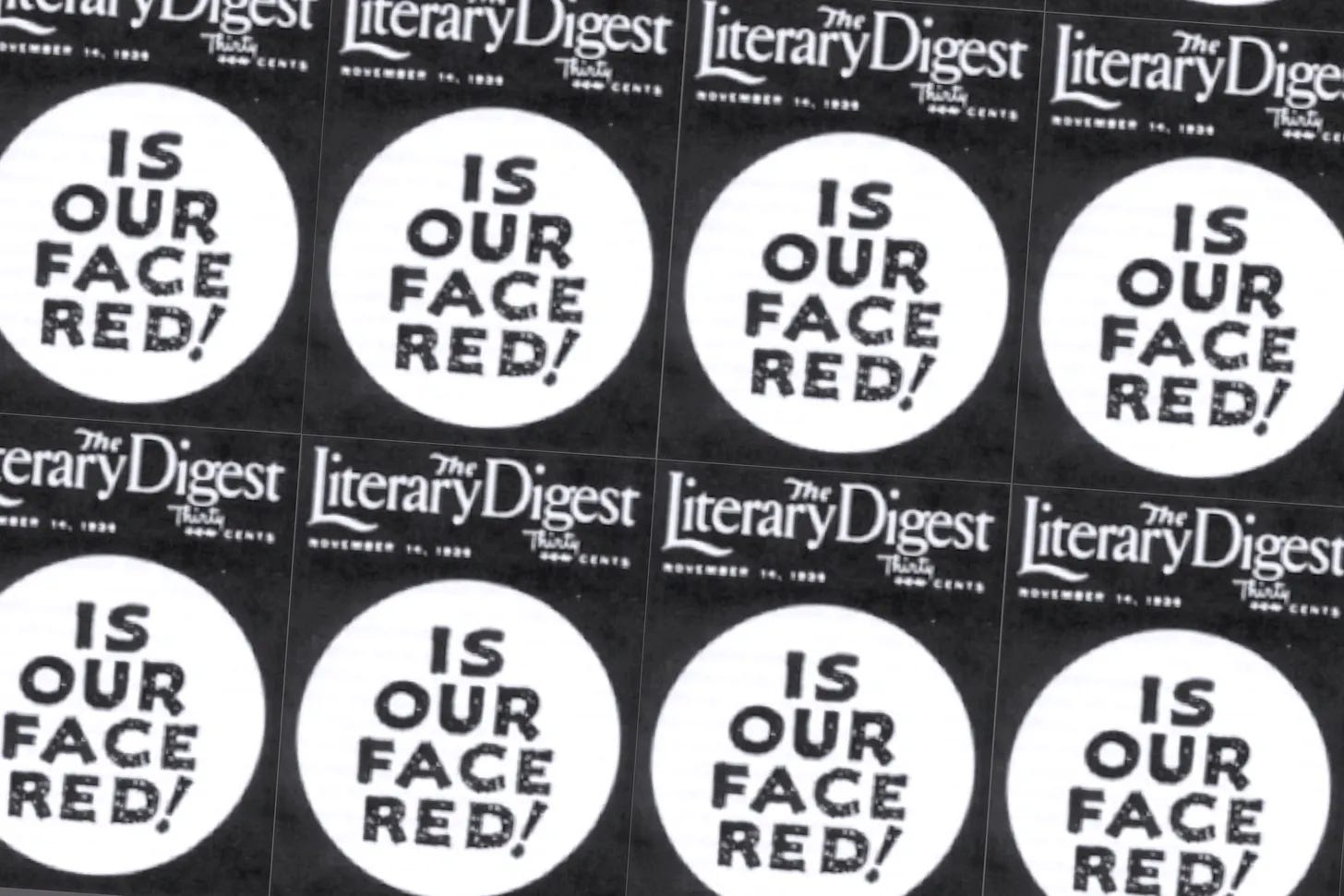
Literary Digest may be the only magazine ever to have died of embarrassment.
Its straw poll was one of the largest in history, with 2.4 million returned ballots. It predicted that Franklin D. Roosevelt would lose the 1936 U.S. presidential election by a landslide, but in fact he won handsomely with 60.8% of the popular vote. Is Our Face Red! was the response printed in the magazine’s next issue. Its credibility destroyed, the magazine folded in 1938.
Statisticians are still arguing about what went wrong (the dominant theory is non-response bias — Roosevelt voters were simply less motivated to mail their postcards back). But a certain George Gallup had other ideas, and spent the rest of his life comparing the magazine’s lax approach to his own more “scientific” sampling.1
Straw polls have not been taken seriously since for predicting elections, but they remain a very American thing, a staple of the primary season, where they generate buzz and demonstrate candidate momentum.
But how on earth did a tool meant for millions of voters end up being used to sound out just 15 diplomats in a locked room? For that innovation, the United Nations has a Ugandan, not an American, to thank.
A Test Without Meaning
Ambassador Olara Otunnu was the Ugandan Permanent Representative and became President of the Security Council as the 1981 war of the vetoes culminated, with China opposing a third term for then Secretary-General Kurt Waldheim and the Americans blocking the Tanzanian diplomat, Salim Ahmed Salim.
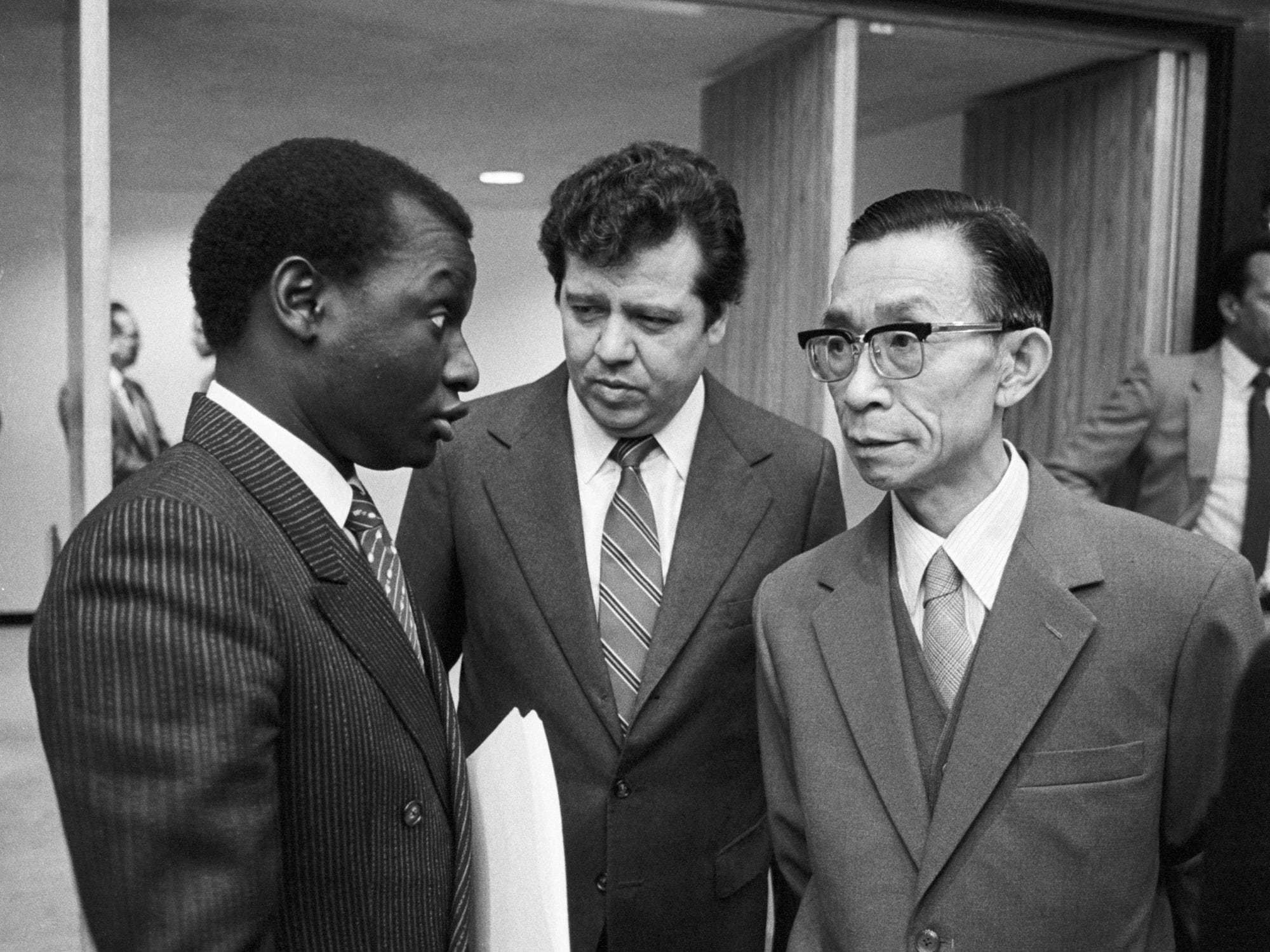
According to Otunnu, the never-ending round of failed public votes had driven the Council into a mood of despondency. Determined to rescue his colleagues from this slump, he persuaded Waldheim and Salim to step aside for a few days so the popularity of alternative candidates could be explored. This required something less formal than a full vote.
“I organized what one might call straw ballots,” Otunnu recalls. “I asked all of the Permanent Members and their deputies — no interpreters, no delegations, just the two of them — to meet in the consultation room. I explained to them what we were about to do, that I wanted to test the viability... They were informed that what I was testing had no meaning, [it was] only a very vague test.”
And thus the UN’s idiosyncratic version of the straw poll was born. It was codified in 1996 by Indonesian Ambassador Nugroho Wisnumurti, and has remained more or less unchanged ever since.
Wisnumurti even preserved Otunnu’s pleasingly quaint language. Security Council members fill in a ballot paper where they “encourage” or “discourage” each candidate (with “no opinion” added as a third choice in 2006).
The voting happens in secret, the results strictly confidential. And they always leak to the press within a matter of minutes.
(Update: this post was published just a few days before Otunnu was announced at this year’s surprise candidate to be Secretary-General.)
2006: Ban Ki-moon and the Art of Deduction
To see how this plays out, let us look at the selection of the last two Secretaries-General, beginning with the 2006 election of Ban Ki-moon.
Former U.S. Ambassador John Bolton’s memoir provides a blunt account of his efforts to get Ban elected, in a process he saw as “essentially a Perm Five decision, expressed through the Security Council and presented to the General Assembly.”
When the Council gathered for the first straw poll in July, it engaged in the same theatre of secrecy that Otunnu had instituted in 1981.
Attendance was limited to two people per delegation, and the French Ambassador handed out identical UN pens so that no country could be identified by the color of its ink (Bolton joked that the pens should be returned for budget purposes, but noted several ambassadors pocketing them as souvenirs).
When the results leaked, Ban was leading, but not decisively. In the second straw poll in September, however, he received a commanding 14 “encourage” votes and only a single “discourage.”
This is where the intrigue of the straw poll shines through: reverse-engineering who voted how. Bolton thought the single “discourage” vote came from Japan, but Ban thought he was being blocked by Ghana. But no matter, by the fourth straw poll in October, the holdout had switched to “no opinion.”
“There was no doubt the race was over,” Bolton wrote. Ban was soon confirmed as the next SG.
2016: Guterres, Color Ballots, and the Battle of the E10
Bolton was open about American tactics in 2006: Encourage your chosen candidate, and discourage everyone else.
Ten years later, the selection of António Guterres demonstrated how powerful this strategy remains, even against countervailing pressure for greater transparency and openness. That is why the Council’s elected members often complain they had little influence on the result, while the rest of the General Assembly feels even further out of the loop.
But the 2016 selection did see attempts to encourage transparency. As the General Assembly held public hearings for candidates for the first time, Guterres capitalized on a stellar performance to build momentum as the race moved into the Security Council in July.
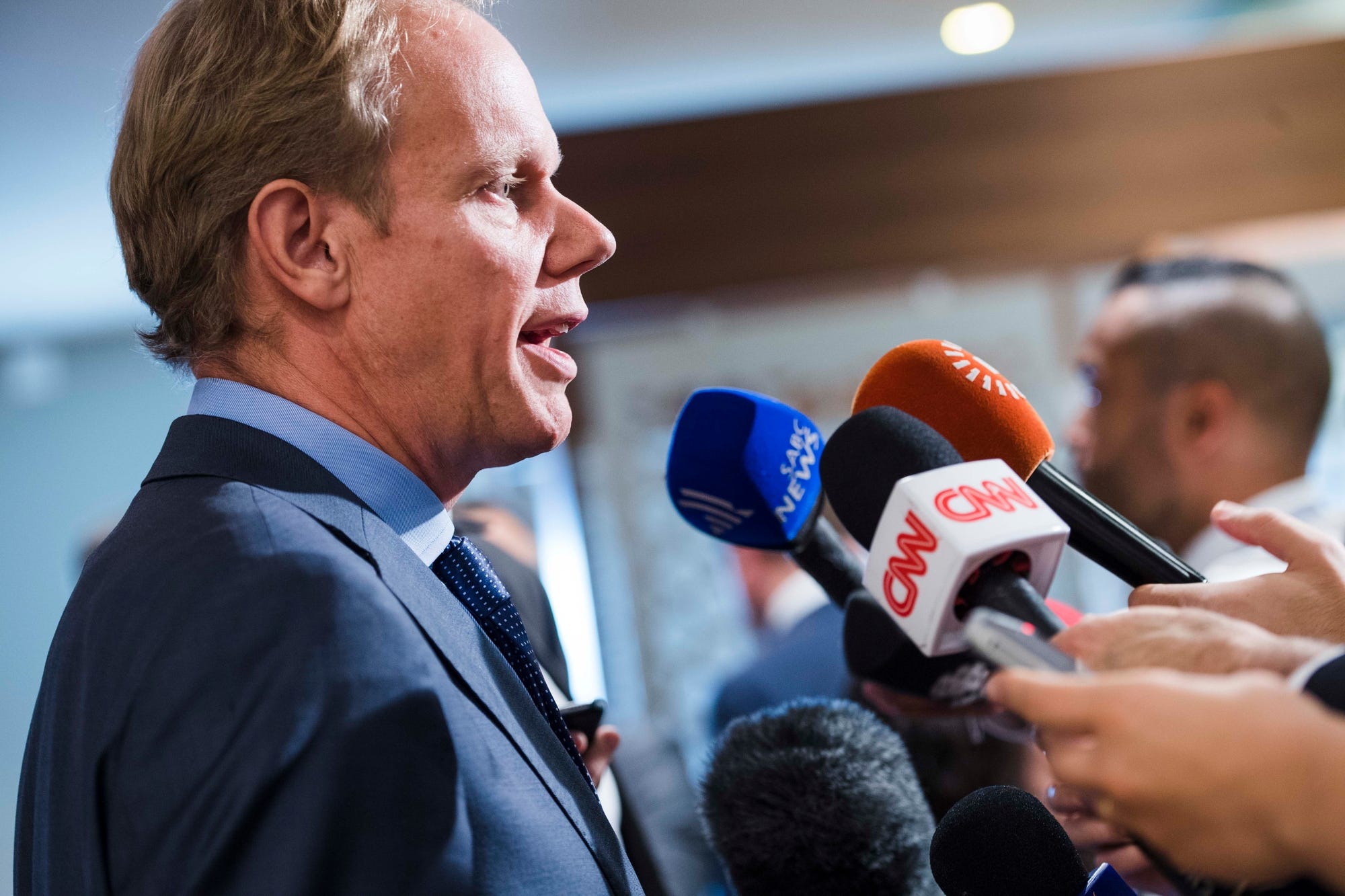
After consistently leading the field across five Security Council straw polls, the culmination came on October 5, 2016, when the Security Council’s members stood before a wall of press microphones to announce that there was no stopping Guterres.
“The crucial moment for me was when the fifth permanent member result for Guterres was announced which led to it being very clear that there was no ‘discourages,’ either from a permanent member or a non-permanent member for [him],” UK Ambassador Matthew Rycroft told the press.
Adding Color
This sixth, and final, straw poll had used color-coded ballots, where the ten elected members (E10) vote on white paper, while the five permanent members (P5) vote on red paper. A “discourage” vote from a P5 member signals a veto and demonstrates that some ballots matter more than others.
As a result, the P5 and E10 clash about when in the process color ballots should be introduced. As Japanese Ambassador Koro Bessho — who served as Security Council President during July 2016 — recalls, “Some members sought to introduce color-coded ballot papers at the fourth straw poll, as had been the case 10 years before, while others felt it was best left as late as possible in order for a clear winner to emerge before turning to color-coded ballot papers...”
Reading between the lines: The P5 want their vetoes out in the open as soon as possible; the E10 fight to level the playing field for as long as they can.
The Bessho Proposals
Ambassador Bessho made no secret of his frustration with the straw poll system. In a post-mortem memo sent to the Secretary-General and the Security Council President, he was scathing in his critique of the process he had overseen.
Bessho admitted that the Council had failed to meet the international community’s demands for greater transparency, but was equally infuriated by the routine leaks. It was “regrettable,” he wrote, that persistent breaches put the ambassadors who actually followed the confidentiality rules in an embarrassing and unfair position.
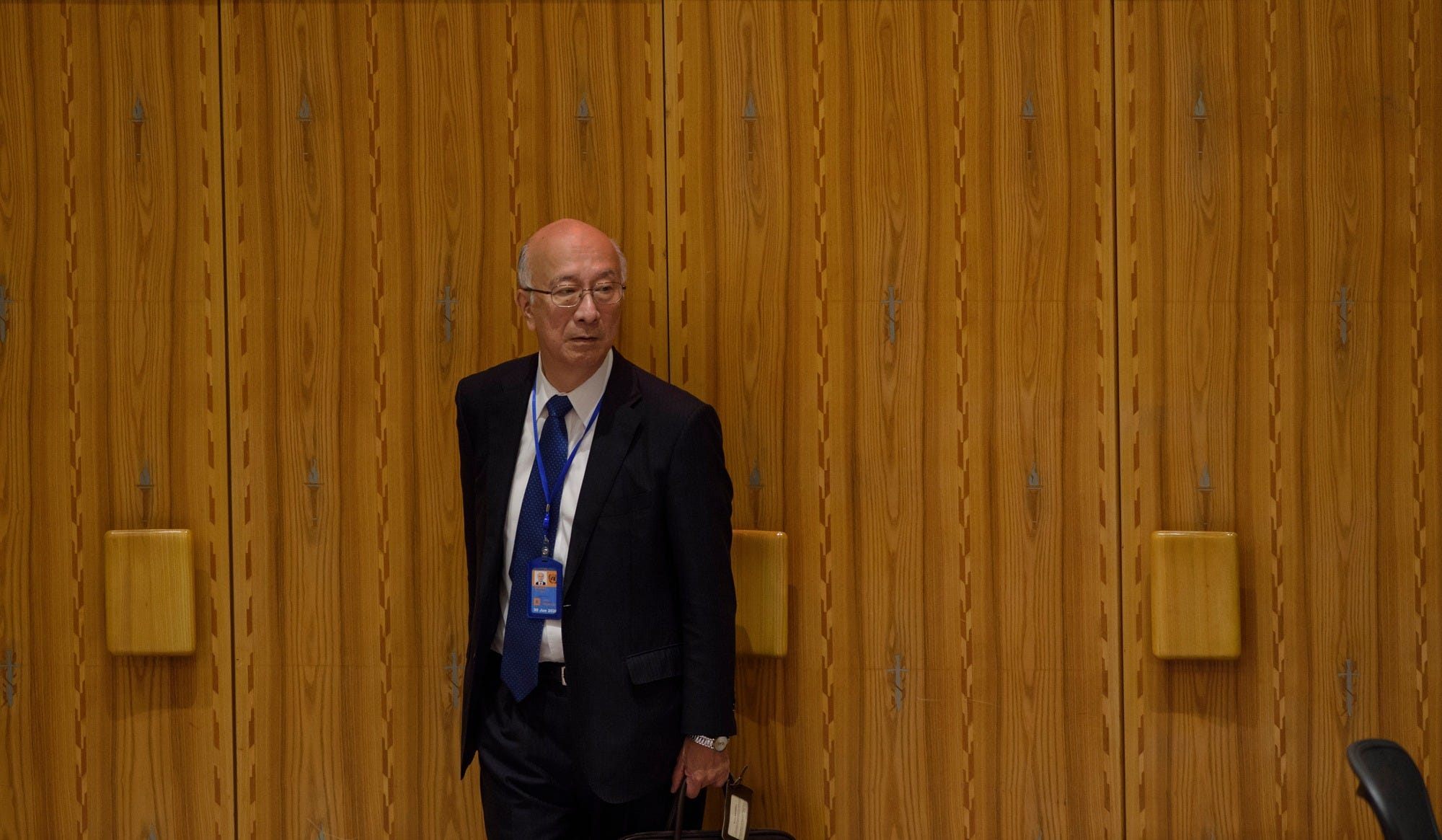
More fundamentally, Bessho argued that straw polls failed at their primary job: forcing unviable candidates to withdraw with dignity. Because the straw polls carried no formal consequences, ten candidates stayed in the race until the bitter end, bogging down the Council’s decision-making.
His remedy: Scrap the straw polls entirely.
“Straw polls should be replaced by official votes at a private meeting of the Security Council,” Bessho recommended, arguing that the Council President should make the results public after every round rather than allowing them to leak piecemeal to the press.
To stop underperforming candidates from lingering, he proposed a survival-of-the-fittest mechanism: eliminating the bottom two candidates after each round of voting until only five remained. He also suggested a rule that if a nominating government withdrew its support for a candidate, that candidate would be immediately disqualified.

The 2026 Race: The Game Begins Anew
Bessho’s recommendations have largely been ignored by the Security Council as it prepares to vote on a successor to Guterres; save for agreeing that candidates should be eliminated if their nominating country (or countries) formally withdraws support.
Otherwise, the Council has chosen to stick with the same flawed, but fascinating, system it has now used for five successive SGs. With the first 2026 straw polls scheduled to kick off between July 24 and 30, here is how the process will likely play out over the coming weeks:
A war of attrition: There have been as many as nine rounds of straw polls in the past. While a few weaker candidates may bow out early, history suggests many will refuse to leave the race. The longer it drags on, the higher the chance that a “dark horse” candidate enters the fray.
The theatre of secrecy: While the tallies will leak, the intrigue will remain in guessing who is opposing the front-runners.
Game theory over merit: Inside the Council chamber, do not expect much debate about a candidate’s merit. Instead, it will all be about working out who can win and who can’t.
The battle for color-coding: With every round, the P5 will tighten their grip on the contest. They will also push to introduce color-coded ballots so they can flex their veto power. The E10 will fight just as hard to delay them.
The deadlock wildcard: Remember that the straw poll system was a child of the deadlock of 1981. If this year’s race sees a similar stalemate, the conditions may again be ripe for unexpected innovations in the rules.
From Deadlock to Innovation
As the results filter out from each round of straw polling, only two things really matter: whether a front-runner is gaining momentum, and if they are, whether a P5 veto is lying in wait for them.
The former is easy to see. The latter is where the drama lies.
History shows that when every viable candidate finds their path blocked, deadlock sets in. And that is when the rules can change overnight. If the script flips this year, it will be because the Council has backed itself into a corner and has no choice but to write a new one.
Related Reading

Gallup would meet his own polling disaster in 1948, giving us one of the most famous photographs in American political history. A grinning, victorious Harry S. Truman holds up a copy of the Chicago Daily Tribune with the massive banner headline, "DEWEY DEFEATS TRUMAN." All based on a Gallup poll.