![[Re]Group: A Playbook for Turbulent Times](https://substackcdn.com/image/fetch/$s_!PUHU!,w_120,h_120,c_fill,f_webp,q_auto:good,fl_progressive:steep/https%3A%2F%2Fsubstack-post-media.s3.amazonaws.com%2Fpublic%2Fimages%2Ff2fb4256-d509-4e61-827b-2ee678efbba9_256x256.png)
![[Re]Group: A Playbook for Turbulent Times](https://substackcdn.com/image/fetch/$s_!OvcZ!,e_trim:10:white/e_trim:10:transparent/h_182,c_limit,f_auto,q_auto:good,fl_progressive:steep/https%3A%2F%2Fsubstack-post-media.s3.amazonaws.com%2Fpublic%2Fimages%2Fa2653539-a634-4ef5-9aab-bc4a7546ebc9_1344x500.png)


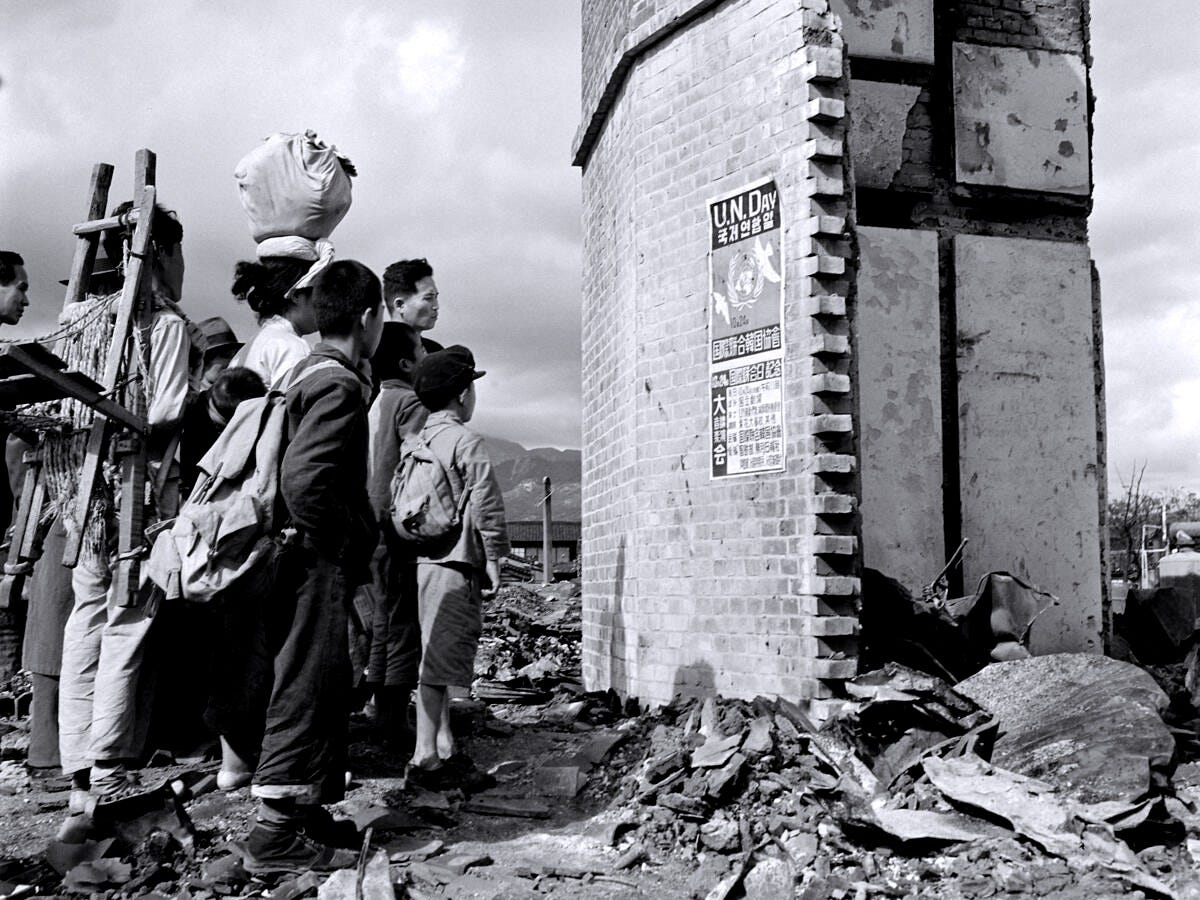
Eighty years on from its founding, the United Nations faces a paradox: The public demands international cooperation but doubts that the current system can deliver it. For the candidates pitching to lead the UN, the polling sends a clear message. People don’t need to be sold on ideals — they need to see results.
The candidates to be the next Secretary-General already perceive this sentiment. In a packed debate season, from the UNA-UK debate in London to the GWL Voices debate in Geneva to the Jeju Forum’s candidates’ session, and in the General Assembly’s Interactive Dialogues, every contender was pressed on how they would rebuild trust. Their answers often converged on a singular point: delivery.
Among their responses: In the Interactive Dialogues, María Fernanda Espinosa, a former Ecuadorean Minister of Foreign Affairs and former President of the UN General Assembly, told Member States that trust “is not declared, it’s earned;” at the Geneva debate, Rebeca Grynspan, Secretary-General of UNCTAD, argued that “you will rebuild trust when you will deliver;” and at Jeju, Rafael Grossi, Director General of the International Atomic Energy Agency, predicted that trust “is going to be rebuilt quite spontaneously the day they see that the UN is really solving issues.”

The gap between expectation and reality is where a new leader can deliver a fresh vision, new strategies, and improved performance. Under a new Secretary-General, the UN needs to demonstrate delivery in a way that creates support for the next phase of its mission.
To understand what the polls tell those running for the post, this analysis synthesizes recent global and national data from several leading research organizations.
The findings draw primarily on 2025 surveys: the Pew Research Center’s Global Attitudes Survey (25 countries, fielded January–April 2025), the Rockefeller Foundation’s Demanding Results (46,405 adults in 34 countries, August–September 2025), the 2025 Edelman Trust Barometer Global Report (28 markets, each fielded the preceding fall), Gallup (August 2025), and the 2025 Chicago Council on Global Affairs’ Chicago Council Survey (July 2025). To track how public trust and expectations have shifted over time, we also incorporate World Values Survey data through 2022, compiled by Our World in Data, and the FES–YouGov Global Census Poll (2023).
A Majority Invested, but Warning Signs Flashing
Globally, across the 25 countries surveyed by Pew, roughly 6 in 10 adults report a favorable view of the UN, while 32% hold an unfavorable view.
But a closer look at the data reveals where the institution’s support is strongest — and where it is being challenged:
Africa leads the pack: Support is highest in sub-Saharan Africa, where Nigeria (80%) tops all 25 countries surveyed, and Kenya (74%) ranks among the five most favorable. In contrast, it is weakest in Turkey (32%) and Israel (16%) (Pew).
A generational divide: Younger adults express higher trust. In Brazil, for example, 68% of adults under 35 hold a favorable view of the UN, compared with just 44% of those 50 and older (Pew).
Fairness comes first: Support is conditional on equity. Approval jumps nearly 18 points when people believe international cooperation benefits the vulnerable, and it falls when gains are seen as captured by the wealthy or powerful (Rockefeller).
The local link: Backing for the UN does not exist in a vacuum. It rises with economic optimism and trust in local institutions, and it fades when hope in the future declines (Rockefeller).
A modest decline: Historical tracking among countries surveyed in both waves indicates that, while average global confidence slipped slightly, from 43% in 2014 to 40% in 2022, there is no collapse in overall support (Our World in Data, based on World Values Survey).
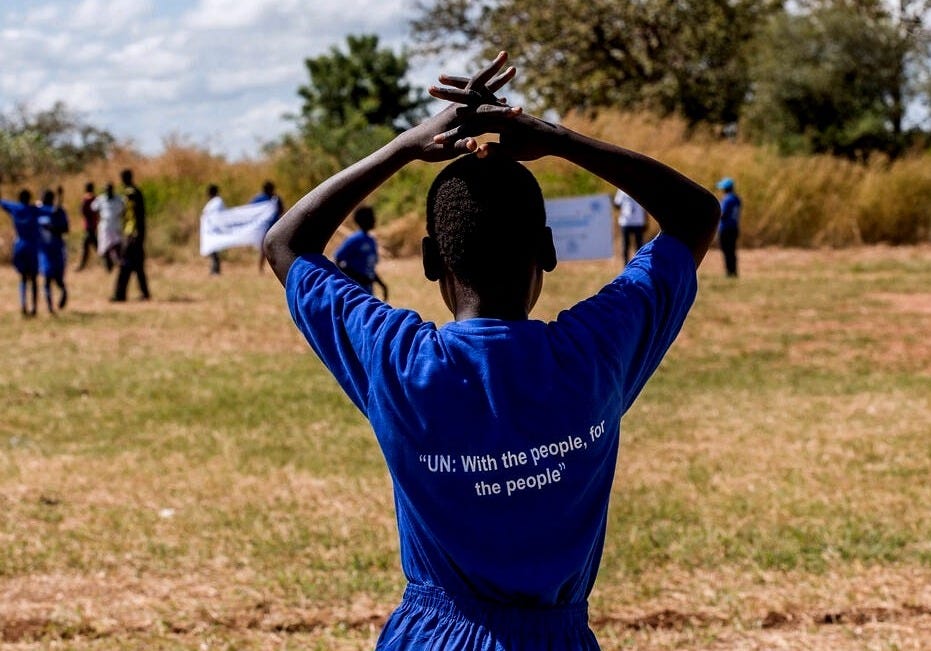
Ultimately, the core UN brand maintains the trust of 58% of the global public — trailing only the World Health Organization among the international institutions tested by Rockefeller. But the persistence of this support reflects a belief in the UN’s necessity, not an endorsement of its performance. While 55% of the global public backs international cooperation, that number jumps to over 75% when the public sees it delivering concrete results (Rockefeller).
A Crisis of Confidence: North and South
Some surveys paint a more pessimistic picture. Cumulative data from the Edelman Trust Barometer Global Report shows trust in the UN dropping in 23 of 27 surveyed countries between 2021 and 2024. In the 2025 report, the organization retains majority trust in just 10 of 28 markets. This tracks with a wider erosion of institutional trust reflected in Edelman’s Trust Barometer, with the UN under the same pressure as national governments and nongovernmental organizations.
In the Global North, trust fell by just over two percentage points between the 2022 and 2025 reports. While many populations remain neutral, Germany (45%) and Japan (39%) crossed into distrust in 2025 (Edelman). The core issue is relevance: In the 2023 FES–YouGov census, respondents in France (−23 points), Germany (−24), the United States (−24), and Japan (−18) disagreed on balance that the UN is “well prepared for the challenges of the next decade” — while publics in India, Brazil, and South Africa leaned the other way.
The Global South tells a more complicated story, with a steeper drop but from a higher baseline. While average trust fell by over five points — driven by a 17-point collapse in Saudi Arabia — Indonesia, Nigeria, and Colombia posted offsetting gains in the 2024–25 data. At present, nine of the 15 Global South markets surveyed still register majority trust, while others have drifted into the neutral range (Edelman).
The United States: Mission vs. Delivery
Despite the shift in U.S. foreign policy under the second Trump Administration, baseline public support for multilateralism holds steady. Rockefeller data finds that 61% of Americans support international cooperation, even if it requires compromising on national interests.
Just as in the rest of the world, however, the U.S. public affirms the UN’s mission while remaining skeptical of its ability to deliver. Two numbers capture the UN’s central paradox: 63% of Americans believe the organization is doing a poor job, yet 79% favor continued membership (Gallup).
Partisan differences are also clear.
The partisan gulf: While half of Republicans back international cooperation and only a quarter explicitly reject it (Rockefeller), 75% of Republicans rate the UN’s performance as poor, compared with 48% of Democrats (Gallup).
The MAGA factor: Half a century of polling shows partisan divides on international engagement at an all-time high, and the rift widens further when MAGA Republicans are separated from non-MAGA Republicans (Chicago Council Survey). The gap between Democrats and Republicans who call strengthening the UN “very important” now stands at 33 points (62% vs. 29%), the widest in the survey’s history dating to 1974.
Failure of Supply, Not Demand
The 2025 Rockefeller Foundation survey (polling over 36,000 adults across 34 countries) captures the opportunity for the UN to position itself as a platform for solving problems.
Three-quarters of the global public would support international collaboration if it was proven to solve global problems effectively, but only 58% currently trust the UN to lead it. As Elizabeth Cousens, the President and CEO of the United Nations Foundation, argues, “The crisis isn’t a lack of demand for global cooperation, but a failure of supply.”
When asked where the UN should focus that supply, the public points to the practical over the abstract. Issues that dictate daily life — food, jobs, health, and security — command the most urgency.
Bureaucratic and institutional concerns rank far lower. Even climate change reveals a disconnect: While respondents view it as personally important, they prioritize immediate, tangible risks when demanding global action.
The task awaiting the next Secretary-General goes far beyond better communications about the value of the UN. Global citizens understand that their fates are linked, but they need concrete evidence that multilateralism improves their lives at home and protects vulnerable populations.
A new UN leader needs to strengthen delivery, demonstrate effectiveness on the challenges people most care about, and make a case for the deeper reinvention that will equip the international system to tackle a new generation of global problems.
Peace: The Ultimate Delivery Test
Across all surveys, peace and security emerge as the defining test for the next Secretary-General. The global public views conflict prevention and peacekeeping as essential to international cooperation (92%), nearly matching the priority placed on food and water security and other basic survival needs (93%) (Rockefeller).
The demand for action is only increasing. The FES–YouGov Global Census shows public support for a stronger UN role in promoting peace significantly rising in at least seven of 15 surveyed countries, likely driven by Russia’s invasion of Ukraine. The United Kingdom, France, Germany, Poland, India, and South Korea registered the largest gains. Respondents in not a single country surveyed wanted the UN to scale back its peace efforts (FES-YouGov).
This surging demand comes in the area where the institution faces the most scrutiny. Peace is the issue cited most often in debates over UN reform: It drives public backing for Security Council reform (which FES publics also support) and fuels calls for the system to go “back to the basics.”
The opportunity for the incoming Secretary-General is clear. Rather than disengaging from a fractured world, the public wants the UN to step up and perform better on the core function that has always defined its legitimacy. Success will help bridge the delivery gap by proving the system can still execute on its foundational mandate.
A Leader Who Delivers
Underpinning this data is what happens if the UN cannot recover public confidence. In that case, the institution would not collapse. Instead, it would be bypassed. If populations continue to view the UN as necessary but ineffective, national leaders would look elsewhere, detouring around the system in favor of ad hoc coalitions and regional arrangements.
To prevent this drift into irrelevance, the next Secretary-General must identify and protect the so-called load-bearing parts of the system that deliver results that people and their governments care about most. These core functions are what sustain public trust.

That means a shift from documenting effort — goals set, resolutions passed, reports published — to measuring results and communicating them. It may also mean a greater focus on making the case not just directly to the public, but also to the trusted experts and commentators who influence the public.
The UN cannot rely on public relations to find its way out of a deficit of trust, because communications cannot substitute for action. Rebuilding confidence will require tangible performance, clear alignment with public priorities, and greater visibility for real-world successes.
In the end, the next Secretary-General may need to be less a visionary selling the ideals of cooperation, and more an operator who can deliver for a world in a crisis and prove that international cooperation, for all of its messiness, still works.

