![[Re]Group: A Playbook for Turbulent Times](https://substackcdn.com/image/fetch/$s_!PUHU!,w_120,h_120,c_fill,f_webp,q_auto:good,fl_progressive:steep/https%3A%2F%2Fsubstack-post-media.s3.amazonaws.com%2Fpublic%2Fimages%2Ff2fb4256-d509-4e61-827b-2ee678efbba9_256x256.png)
![[Re]Group: A Playbook for Turbulent Times](https://substackcdn.com/image/fetch/$s_!OvcZ!,e_trim:10:white/e_trim:10:transparent/h_182,c_limit,f_auto,q_auto:good,fl_progressive:steep/https%3A%2F%2Fsubstack-post-media.s3.amazonaws.com%2Fpublic%2Fimages%2Fa2653539-a634-4ef5-9aab-bc4a7546ebc9_1344x500.png)

In David Steven’s absence, I’m bringing you this week’s roundup.
I got my start in multilateral diplomacy in 2014, just a few years before the last changeover in UN leadership, from Ban Ki-moon to António Guterres. I remember the buzz of the 2015-16 process — 13 candidates, media swirl, and new ground broken in designing a more transparent process.
A decade later, media reaction to this contest remains muted. There’s been some strong analysis (read this in the Financial Times, for example) and the occasional breakthrough story (when Gianni Infantino was rumored for the job or when Olara Otunnu was a surprise late entrant), but the race has largely struggled to capture the world’s attention.
That may be about to change. As you read this, you’ll see a flurry of reports (here, here, here and more…) on the Security Council’s first straw poll, held yesterday, and on results that, predictably, leaked within hours to the press:
July 30 Straw Poll Results
In the last edition of roundup, we walked through the mechanics of the straw polls. Now, with the first round behind us, we turn to what the numbers might indicate and how to make sense of “encourage,” “discourage” and “no opinion” votes.
For David’s read on what these numbers mean, check out:
In an interview with Spanish news agency EFE, he described the first straw poll as primarily a chance to see whether or not we have a frontrunner. With the results in, we seem to have three, each with high levels of support and only one or two “discourage” votes.
Opposition to any of these candidates could melt away in future rounds or harden into a potential veto once the Council switches to colored ballots for its five permanent members. As David’s history of the straw polls shows, we have precedent for a P5 country discouraging all candidates apart from its preferred choice.
David also spoke to Devex’s Colum Lynch about Otunnu’s late entry into the race, amid complaints from both the PGA and civil society that his candidacy would go to the Security Council before receiving any public scrutiny. What matters here is the precedent it sets for a “ghost” or compromise candidate to be rushed into the Security Council if a deadlock stretches late into the year, bypassing wider scrutiny.
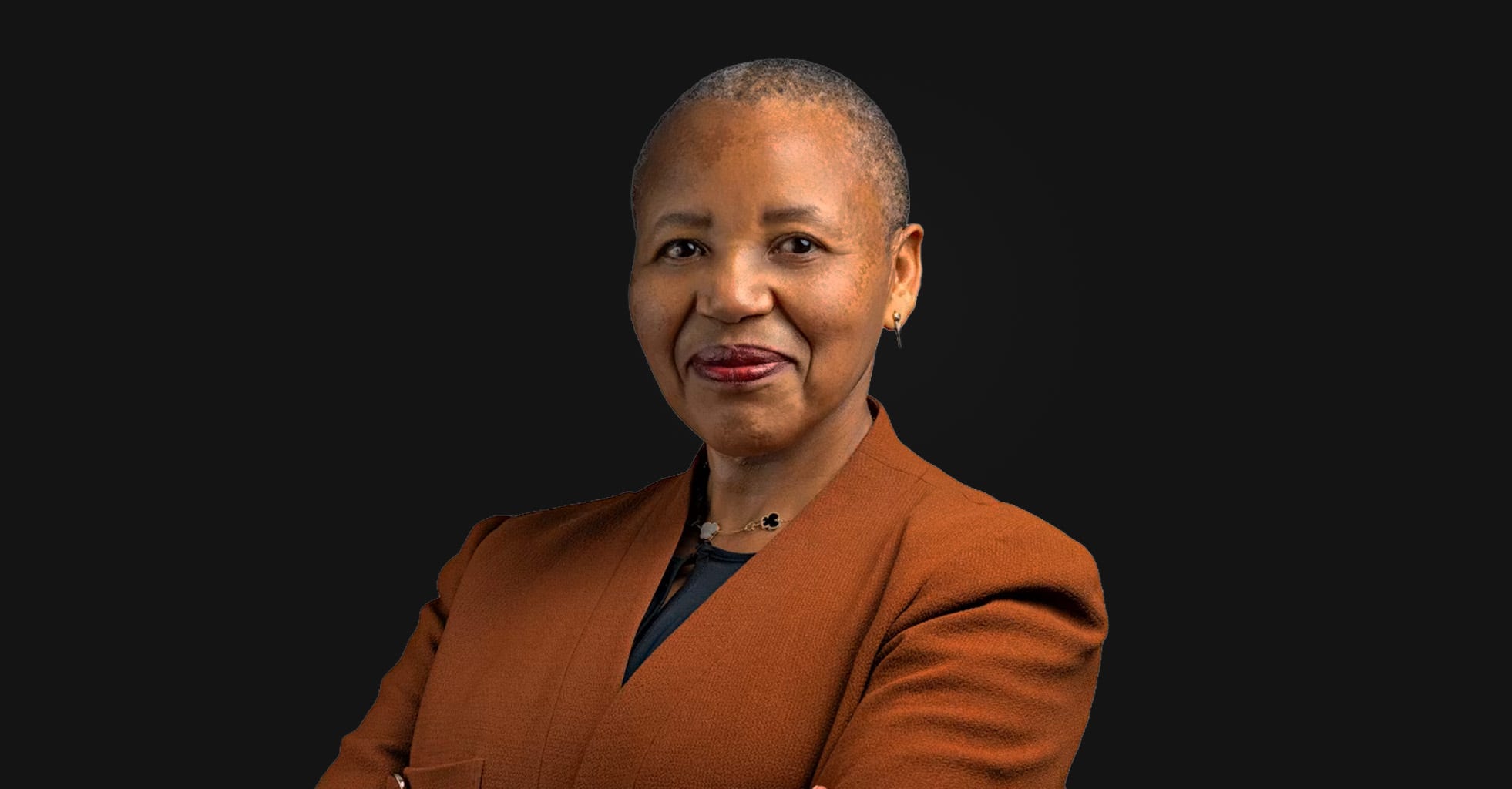
H.E. Ms. Mathu Joyini
Five Minutes on the First Straw Poll
To find out more about what happened in the first straw poll, I sat down with UN Foundation Distinguished Diplomat-in-Residence, Ambassador Mathu Joyini, former Permanent Representative of South Africa to the UN.
Ambassador Joyini isn’t just an observer of the Secretary-General selection process; she also helped design it. As co-chair of the negotiations that established the rules for this year’s race — including the General Assembly hearings and Interactive Dialogues — she has a great vantage point on how the race is now playing out.
“We may be closer to a first woman Secretary-General than at any point before!”
[Re]Group: If you were advising UN watchers on how to read these results, what would you tell them?
Amb. Joyini: The P5 seems to be observing regional rotation, even if it isn’t formally called that, with a gender dimension layered into that message: We may be closer to a first woman Secretary-General than at any point before!
[NB: this is the first time that a woman candidate has led in a first straw poll, while the leading candidates are all from Latin America and the Caribbean.]
[Re]Group: What does a “no opinion” result actually signal to a candidate, considering that a third of all ballots cast in this round of voting — 36 out of 105 — were no opinion?
Amb. Joyini: It’s not one message, and it depends on the candidate. For each one, it reads differently. From my experience as an Ambassador, sometimes “no opinion” (or in the context of voting, “abstain”) means a delegation hasn’t consulted the capital yet. Sometimes it means a Member doesn’t want to get pulled into a dynamic between major powers. Sometimes it’s genuine disengagement.
“It never means just one thing,” is what I would always tell my colleagues for years about reading abstentions the same way.
“A candidate with no strong opinion either way is often better positioned going forward than one carrying a real discourage number.”
[Re]Group: Where does that leave candidates sitting on “discourage” votes? Should they go find out who’s against them and court them?
Amb. Joyini: Yes. That’s exactly the advice I’d give: Figure out who’s against you, understand why, and see what’s possible. A candidate with no strong opinion either way is often better positioned going forward than one carrying a real discourage number.
[Re]Group: Are we likely to see more late entrants after this round?
Amb. Joyini: I’d be cautious if I were considering entering the race as a candidate. If this was, in effect, a test of whether a candidate could enter without going through the full process, it clearly hasn’t worked in Otunnu’s case.
[Re]Group: What should we expect next? Another straw poll, or will August be quiet?
Amb. Joyini: Expect another straw poll under Denmark’s Security Council presidency in August, likely by the end of the month, given that the PGA has indicated the next round of interactive dialogues (for newly entered candidates) is expected no later than August 24.
It’s good to see that the process we helped design is working as intended, and I need to give credit also to the President of the General Assembly, Annalena Baerbock, for that.
The SG Roundup
Uganda’s nomination of Olara Otunnu (read his vision statement and biography here), days before the first straw poll, has some asking why now, and why him.
The PGA has said she wants Otunnu’s Interactive Dialogue to happen as soon as possible and no later than the week of August 24. Candidates continue to meet with regional and thematic groupings of countries.
Straw polls were designed to push unviable candidates out of the race, but this was slow to happen last time around. Will any of the candidates who did badly in the first vote now drop out?
What happens next? In 2016, the Security Council held two further rounds of polling in August, but in 2006, there was a lull into the second week of September. Both these contests concluded in early October, but it took until December 13 for Kofi Annan to prevail in the 1996 selection.

From All Angles
Reading List
The Seven Parts the UN Secretary-General Must Play: Richard Gowan of the International Crisis Group borrows Shakespeare’s seven ages to lay out the roles any Secretary-General must play: Administrator, Mediator, Developer, Moralist, Communicator, Visionary, and Human. Read the rest of the summer issue of CIRSD’s Horizons for vision statements from five of the declared candidates.
Rethinking UN Leadership: A Global South Perspective: The latest report by Southern Voice draws on a survey of think tanks and civil society organizations across Africa, Asia, and Latin America to present priorities for the next SG and expectations of what the office should deliver. Read more of their publications in [Re]Group’s partner insights section.
Compromised Candidates: Drawing on more than 40 interviews with former diplomats, past candidates, and senior officials, this piece by Ben Donaldson of the 1 for 8 Billion campaign lays out how all five P5 countries have sought to compromise a candidate’s independence in exchange for support.
And, in case you missed it…
With the straw polls underway, get the full rundown on how the race to be Secretary-General works in our newly updated cheat sheet.

Take a deep dive on all the Interactive Dialogues, debates, and events with Secretary-General candidates in the 2026 UN Secretary-General Debates: A Complete Guide

The 81st Session of the UN General Assembly
This year’s UN General Assembly (UNGA 81) will bring leaders to New York to discuss solutions to the world’s most pressing global issues. Expect the race for the next UN Secretary-General to dominate the conversation.