


As the race for strategic resources intensifies, [Re]Group and Critical Raw Materials present an interview with Jojo Nem Singh, founder of the Critical Raw Materials Policy Lab, which launches this week.
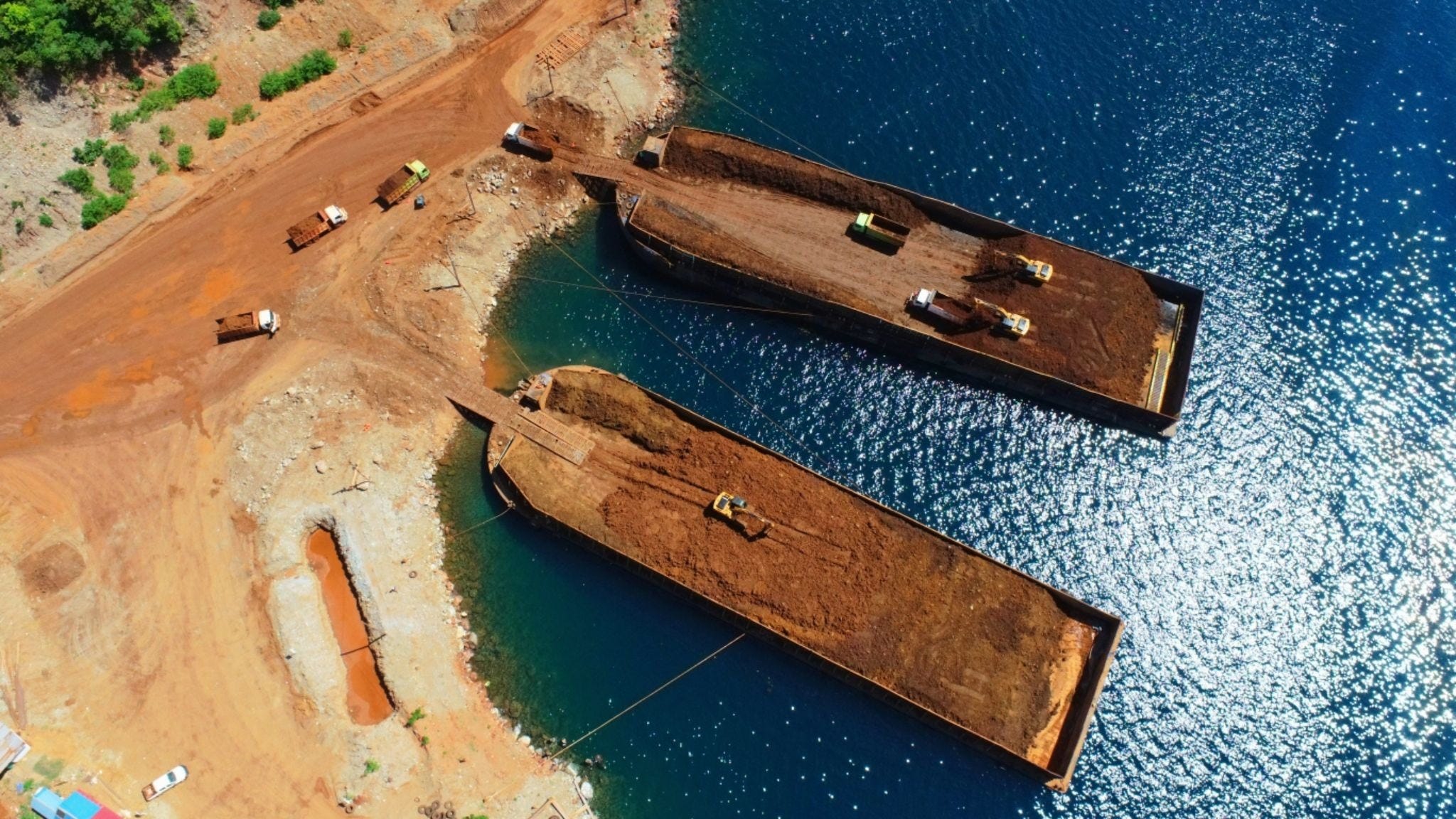
“Why do some mineral-rich states turn ore into industry while others keep shipping dirt?”
Shipping dirt. The phrase rattled around in my head until I tracked down the political economist behind this “deceptively simple question.” For five years, across eight countries and four continents, Dr. Jewellord Nem Singh, or Jojo, has studied whether and how states capture the value of the resources that lie beneath their feet, and who wins the battle for the industries they feed.
Co-editor of the Handbook of Resource Nationalism, Jojo is the author of Business of the State, an analysis of how mineral-rich nations have used state-owned companies to drive “sophisticated industrial strategies” while still “welcoming private sector participation in strategic industries.”
To put the findings of his five-year study into practice, he is now launching the Critical Raw Materials Policy Lab, which will bring governments, miners, financial institutions, and communities together to design more resilient supply chains.
Ahead of the launch, we spoke about how the race for raw materials has sparked a geopolitical standoff, and why it is creating demand for strengthened governance and new approaches to international cooperation.
How Fast the Ground Moves
Twelve years ago, I wrote a book with Bruce Jones on how the American energy boom was reshaping the global order.
Seemingly overnight, the U.S. had reemerged as an energy superpower, surprising both itself and its rivals. It had less exposure to geoeconomic risk, greater strategic latitude, and more room to play an assertive political role.
But as energy flows shifted away from the Americas and toward Asia’s growing economies, so did geopolitical exposure. China and India were finding that resource risk was the downside of their economic muscle, as they became reliant on distant regions over which they exerted minimal control.
Bruce and I explored the strategic challenges created by the interactions among energy, food, water, and land, with climate change sitting at their heart, “like the queen dominating a chessboard.” But look in the index of our book, and you won’t find lithium, cobalt, or rare earths. In the middle of the last decade, critical minerals were only just beginning to register as a strategic priority.
It was the queen that changed the game. The clean energy transition has accelerated beyond virtually every mainstream forecast made around the 2015 Paris Agreement, as the world moves from a fuel-intensive to a material-intensive system.
This has triggered a surge in demand for the minerals that flipped the script on the competition for energy. As the U.S. asserted its newfound dominance in oil and gas, China countered by using its industrial strategy to lock up the minerals that power the future.
When Jojo began his research into the green industrial revolution in 2021, he deliberately left the United States out of the design because American state intervention in mining seemed unthinkable. “That,” he now says, “is how fast the ground has moved.”
A Doctrine of Economic Security
According to the International Energy Agency, “2025 marked the year when the economic risks of highly concentrated supply chains materialized at scale.”
A wave of export controls has turned supply concentration “from a theoretical vulnerability into an immediate economic security challenge.” Full implementation of Beijing’s expanded rare earth controls alone could put an estimated $6.5 trillion a year of downstream production outside China at risk across the automotive, high-tech, defense, and energy sectors.
But despite efforts to diversify, markets have become more geographically concentrated, not less. Prices have see-sawed, creating risk that far exceeds the appetite of many investors. The market-led approach of the late 20th century has given way to a doctrine of economic security. Minerals are strategic now, just as energy has been throughout the postwar era.
In these conditions, consuming countries have struggled, but so have producers. Tracking more than a million mining patents between 1990 and 2023, Jojo and his colleagues found that China accounts for nearly three-quarters of the global total. The turning point came with the global financial crisis. “From 2008 onwards, the Chinese started patenting everything,” he told me, wresting control of the intellectual property once monopolized by the West.
“If you own the minerals in the ground but don’t have the technology to extract them, you don’t really own the minerals,” Jojo concludes.
The National Recipe
You know when you start cooking a dish from a recipe and, a dozen steps in, realize you should probably turn off the gas, train as a three-star Michelin chef, and only then take on three dozen more?
Producer governments face a similar problem. They are not passive, Jojo stresses. They value their resources and work hard to make the most of them. But his case studies show that the recipe for success is unforgiving, with many elements to get right and a razor-thin margin of error.
Take Indonesia. It laid the ground for state control through its raw nickel export ban, benefiting from cheap coal power and the private expertise and patient capital of Chinese Belt and Road consortia. This allowed it to capture around 90% of global refined nickel supply growth between 2020 and 2024. Although that success has been accompanied by environmental externalities and oligarchic capture, Jakarta had timing on its side, having mandated onshore processing in 2009 and banned raw exports in 2014. “Indonesia’s policy was in place before the strategic competition took off,” Jojo says, “which significantly influenced the space in which they could implement that policy.”
The Philippines considered a similar path for nickel, but realized that Indonesia’s decade-long head start had raised the barriers to entry. Faced by scarce capital, expensive power, influential anti-mining campaigners, and the absence of a state mining company since 1986, it dropped plans for an export ban after domestic miners made it clear they would not gamble on costly smelters unless the government shared the risk. “Indonesia’s political coalition was strong,” Jojo notes, “but that was not the case in the Philippines.”
Chile, meanwhile, created an effective hybrid of state control and private expertise when its state copper giant, Codelco, took a majority stake in the lithium operations of privately owned SQM (despite a court challenge from SQM’s Chinese shareholder, Tianqi Lithium). Rather than trying to build batteries from scratch, Chile has focused on the more realistic prize of upgrading lithium quality. Yet despite producing nearly 11% of the world’s key transition minerals, Jojo’s research shows that the country holds just 0.04% of mining patents. Even its flagship copper sector struggles to finance technological upgrades. “The Chileans told me they are still using copper extraction and beneficiation technologies from the 1980s, while the Chinese have come into copper extraction and smelting with vastly more advanced smelters,” he says.
And then there is Brazil, which “had all the institutions, the private sector, and the reserves, but there was no political will because mining is a contested sector for them.” Aside from niobium, where its national champion, CBMM, built a dominant position, the country arrived late to the game, paralyzed by the trauma of dam collapses and past corruption scandals. It is now hampered by an unwieldy 13-ministry bureaucratic structure and modest tax credits for processing that will not kick in until 2030. “There’s no such thing as minimal-impact mining,” Jojo points out (in neighboring Peru, nearly a third of recorded social conflicts involve the sector). Ambitious strategies stall unless governments build “a political bargain and a social contract between the citizens and the state” over how land is used and how risks are shared.
Put those cases together, and you see why so many governments fail to get the right recipe. To move beyond shipping dirt, you have to blend four ingredients: state control, private sector expertise, cheap energy, and plentiful access to patient capital. Yet one bad ingredient can ruin everything, whether that’s state capture, a predatory private sector, toxic environmental fallout, or capital that is too expensive and shortsighted.

Consumer Clubs
Consumers think they have the answer. Join a club. Or, even better, start one.
In The New Club Order, recently published on [Re]Group, Rob Muggah showed that critical minerals are ground zero for the recent surge in coalitions and alliances that surround the formal multilateral system. A decade ago, his dataset shows, only a single critical minerals club existed. Now there are nine rival alliances, alongside a proliferation of technology clubs that have critical minerals high on their agenda.
It is easy to see why consuming powers are clubbing together. Clubs offer a way to coordinate supply chains, screen investments, and pool demand faster than universal institutions ever could. Yet there is often a yawning gap between ambition and delivery. Take Europe’s Critical Raw Materials Act, which sets ambitious targets for 2030, has designated more than a hundred “strategic projects,” and is backed by a flurry of bilateral agreements with producer states. But unlike in Japan and South Korea, where private capital flows because it is “underwritten by Japanese and Korean diplomats and governments,” Europe has regulatory ambitions without the financial firepower to back them up. More broadly, Jojo argues, these bilateral deals and club initiatives are “written by the buyers, by whoever has the consuming power,” while cash-strapped producers sign them “because they need them, not necessarily because the terms are fair.”
The U.S. has taken a more transactional approach, replacing Biden’s Minerals Security Partnership with the Forum on Resource Geostrategic Engagement (FORGE), launched by Secretary of State Marco Rubio in February. It has also tied mineral access to tech and security clubs like Pax Silica and the Shield of the Americas. Unlike Europe, Washington is willing to write checks to push China out of its dominant position, backing domestic stockpiles, price guarantees, and overseas transport links like the Lobito rail corridor in Central Africa. But producer nations are suspicious of rail corridors that send raw ingredients toward subsidized American refineries. Nor are they enthusiastic about Washington “compelling countries to make choices,” as Jojo puts it, when they would prefer to “hedge the geopolitical competition and try to access both markets.”
There is, Jojo says, a “fundamental conflict of interest” at the heart of the new club order. “Consuming countries like the EU, Japan, Korea, and the U.S. talk about security and access to minerals. But when you enter policy negotiations and policy rooms with producers, they talk about development, structural transformation, and industrial upgrading.” As each side operates in a different reality, they end up talking right past each other.
Even when wealthy nations are willing to talk about mining or basic processing, he notes, “they don’t want to commit to investing in EVs, automotive, or wind turbines there.” What producers want is an engine of growth, but all consuming countries see is “a source of raw materials.”

Critical Minerals and the Multilateral System
If clubs move fast, the formal multilateral system will always be slower to respond. But buyers and sellers of critical minerals may still need a universal platform to reconcile their competing interests. “There is no point extracting if there’s no one who will buy them,” Jojo argues, “and there’s no point asking for security if the producing countries feel that they’re not getting anything from the bargain.”
As the UN does when it has more questions than answers, Secretary-General António Guterres set up a panel in 2024 to explore the issue, with South Africa and the European Commission as co-chairs. “A world powered by renewables is a world hungry for critical minerals,” Guterres said. “For developing countries, critical minerals are a critical opportunity: to create jobs, diversify economies, and dramatically boost revenues … The renewables revolution is happening, but we must guide it towards justice.”
The panel proposed seven guiding principles covering human rights, local value addition, fair trade, and anti-corruption. To put them into practice, it set out five recommendations: a UN-hosted body to drive multi-stakeholder dialogue, a global traceability and transparency framework, a legacy fund to clean up abandoned mines, an initiative to support artisanal and small-scale miners, and a push to boost recycling and material efficiency.
Implementation has been slow, though a UN task force is now working to turn the panel’s proposals into action and help developing governments negotiate fairer contracts. At the UN’s first high-level meeting on critical minerals in July, Deputy Secretary-General Amina J. Mohammed warned that developing countries remain “relegated to exporters of raw materials while others reap the profits,” and cautioned that bilateral deals trading “access for security, or resources for infrastructure” risk undermining sovereignty.
For Jojo, the promise of the UN is that it offers “the only forum available for mineral-producing countries to write the rules themselves.” Yet while the UN hosts dialogues, global trade rules still penalize developing countries that use export bans to build local industry. Meanwhile, new standards on due diligence and traceability often act as trade barriers in disguise, loading compliance costs onto producers without paying a premium for cleaner minerals.
“How is due diligence helping me as a producer create an industry with higher value-added activities, higher productivity, and better revenues?” Jojo asks. “It’s not a question of whether mining countries know what the right policies are. They have always known what is good for them, but the rules don’t allow them to do it.”

Priorities for 2027
Competition over strategic resources is not going away. When the 10th Secretary-General takes office in January 2027, they will have an opportunity to explore more durable governance arrangements that control risks and spread prosperity.
“The next Secretary-General doesn’t need new principles; we already have them,” Jojo says. “They don’t need a new panel. What is missing is delivery and implementation.” He suggests three priorities for the incoming leader:
Broker a bargain between producers and consumers. Jojo believes the UN should create a forum for a producer-consumer dialogue that unlocks the investment needed to make markets more resilient. “If you want clean energy and a green transition, you need these minerals, which means you need to enhance the legitimacy of mining,” he argues. “The most concrete way to do that is to support willing countries in processing the minerals domestically. You can’t just focus on putting investment into downstream clean energy, EVs, and wind turbines while ignoring conflicts in the upstream segment of the supply chain.”
Give countries the support they need to exert control. Jojo thinks the UN should provide practical advice to help producers upgrade their technology, because without it, sovereignty over resources is an illusion. Rather than waiting for foreign multinationals to hand over their know-how, the UN and its partners should help countries build homegrown research and processing capabilities tailored to their own geology. As he puts it, “Technology transfer really doesn’t work unless it is endogenously created. It has to be more indigenous to the country.”
Put China at the heart of these discussions. China is the leading refiner of 19 of the 20 most strategic minerals and owns much of the sector’s core technology, which means Western clubs built to exclude Beijing cannot hope to govern the supply chain. “The primary negotiation that needs to happen is between China and developing countries, as opposed to Western companies and producing countries,” Jojo says. “You can’t govern the supply chain without having the largest player in the room; whatever you agree on will not matter unless the Chinese agree on it anyway.”

The Defense Pact
“The promise of the UN system is supposed to be a way to rebalance power relations between weaker and stronger states, so that stronger states don’t just do whatever they want and rule-makers don’t impose everything on rule-takers,” Jojo tells me as we wrap up.
“We don’t need more representation of French, Chinese, or U.S. interests. That’s already built into the system through the UN Security Council. What is missing is a space, and a champion, for the rest of the world.”
That call echoes a broader shift in how many Member States want the UN to approach development. Rather than standalone projects, they are looking for a system that helps them rewrite unfair rules, build domestic capabilities, and counter the power of rich-country clubs, much as indebted countries are doing through the Borrowers’ Platform.
During the 1960 Year of Africa, Dag Hammarskjöld, the UN’s second Secretary-General, and his closest adviser, Ralph Bunche, used the organization to help a wave of newly independent countries build economic sovereignty and resist a squeeze by the Cold War superpowers.
Today, mineral-producing states are hardly alone in facing a 21st-century version of that squeeze: outspent by multinationals and state-backed consortia, blocked from using the technologies they need most, battered by cross-border market shocks, and pressured by rival great-power clubs to pick sides.
For the next Secretary-General, the governance of critical minerals (and of strategic resources more generally) may become a test case for a new form of intergovernmentalism. In a world where the strong write the rules to suit themselves, the UN’s role may be to help everyone else pool their leverage and protect their sovereignty: forming what we have called a “mutual defense pact for besieged states.”
Quotes have been edited for length and clarity.

Dr. Jewellord Nem Singh is the founder and director of the Critical Raw Materials Policy Lab. He is also a Non-Resident Fellow at the Stimson Center and Principal Investigator of a recently completed European Research Council project entitled Green Industrial Policy in the Age of Rare Metals (GRIP-ARM), which was hosted by the University of Sussex until it concluded in September 2026.


