![[Re]Group: A Playbook for Turbulent Times](https://substackcdn.com/image/fetch/$s_!PUHU!,w_120,h_120,c_fill,f_webp,q_auto:good,fl_progressive:steep/https%3A%2F%2Fsubstack-post-media.s3.amazonaws.com%2Fpublic%2Fimages%2Ff2fb4256-d509-4e61-827b-2ee678efbba9_256x256.png)
![[Re]Group: A Playbook for Turbulent Times](https://substackcdn.com/image/fetch/$s_!OvcZ!,e_trim:10:white/e_trim:10:transparent/h_182,c_limit,f_auto,q_auto:good,fl_progressive:steep/https%3A%2F%2Fsubstack-post-media.s3.amazonaws.com%2Fpublic%2Fimages%2Fa2653539-a634-4ef5-9aab-bc4a7546ebc9_1344x500.png)

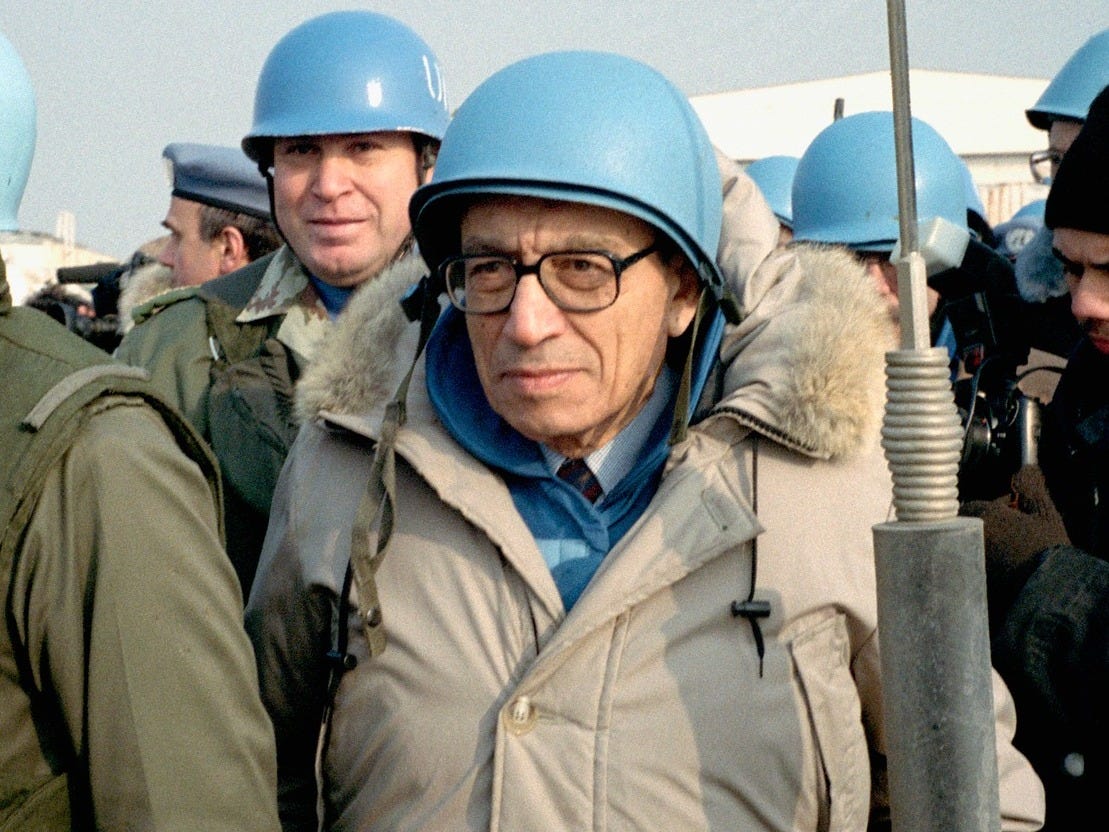
In June 1992, the United Nations decided to set an agenda. Or rather, the UN being the UN, it decided to set two. The first survived a painful birth, but was hailed as a triumph of post–Cold War diplomacy. The second was part of a trilogy, the magnum opus of a UN Secretary-General who believed he could use words to change how the world worked. It marked the beginning of the end of his career.
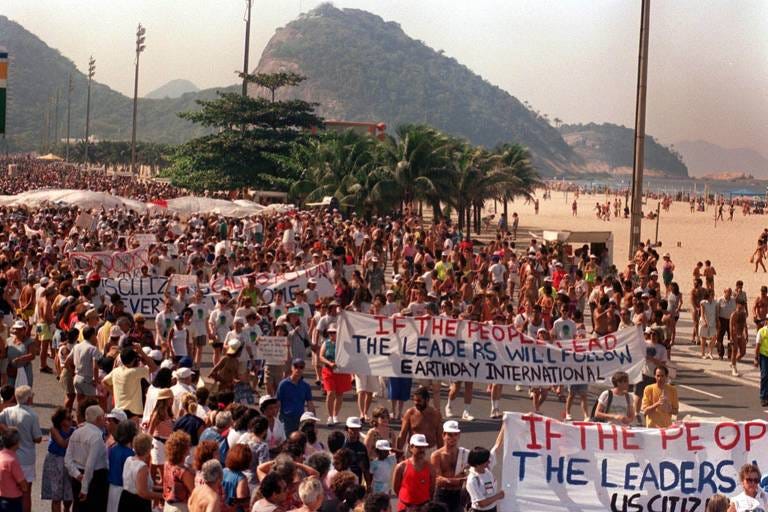
Agenda 21, adopted at the Earth Summit in Rio de Janeiro, was a blueprint for sustainable development. It is not the topic of this article, but it is worth a detour to remember how different multilateralism was in the 1990s than today. Agenda 21 was “the most extensive and comprehensive program of action for the future of our planet ever agreed by governments,” a 40-chapter, 500-page to-do list for government, big business, and global citizens.
The Blueprint and the Backlash
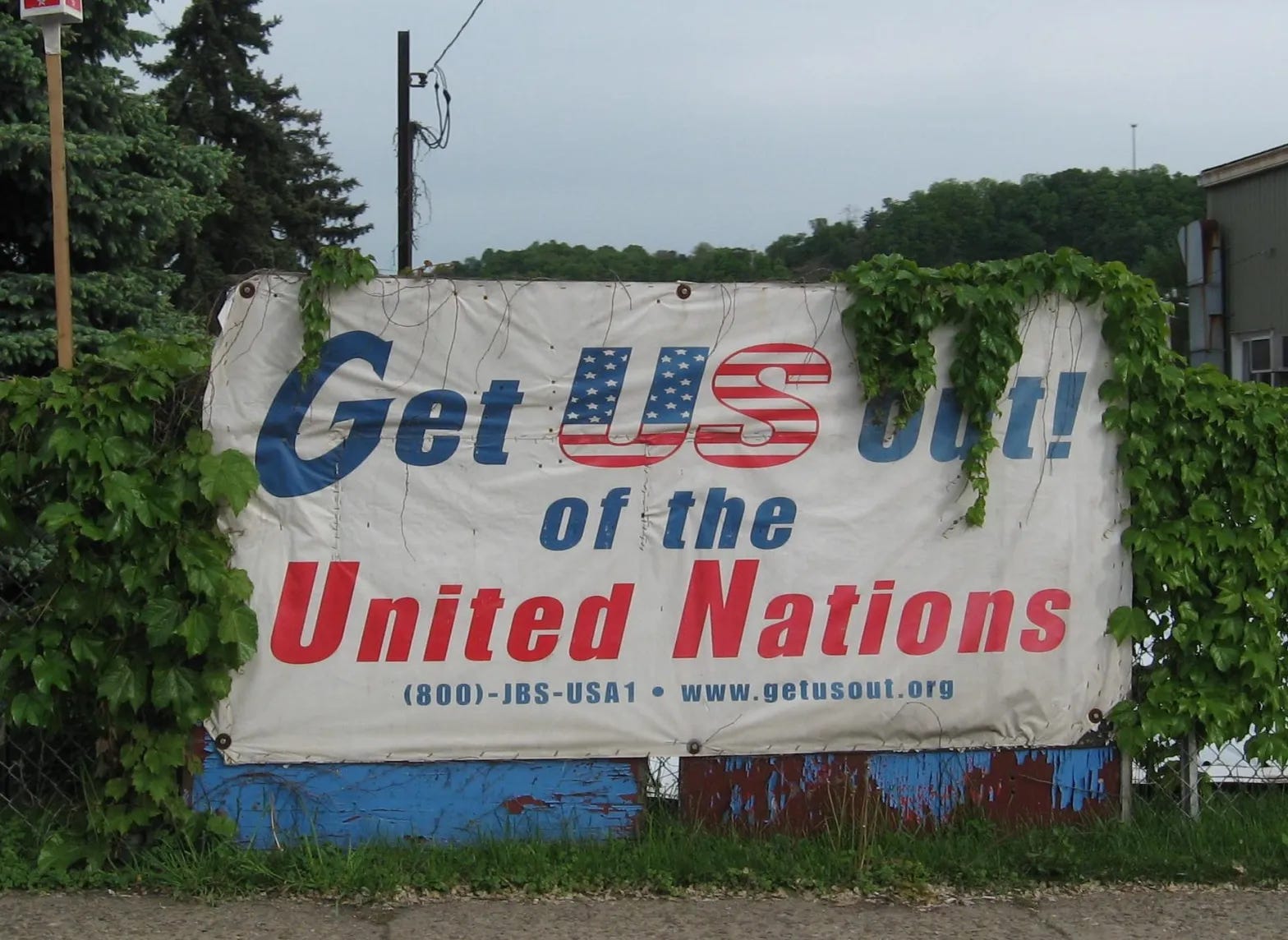
Maurice Strong, the Canadian diplomat and industrialist and the Secretary-General of the Rio Summit, had dreamed of a binding Earth Charter, of the sort that would be “taught in schools, hung in homes, memorized, and recited.” But he was forced to back down in the face of opposition from the Global South, worried that environmentalists would block their path to development, and from the United States, driven in part by conspiracy theories that Strong was the head of a plot to impose world government.
With the charter watered down into a toothless declaration, the agenda became the summit’s big ticket item. Even though it was also nonbinding and did not require ratification, it had a reporting mechanism that mimicked those used by formal treaties. The UN Commission on Sustainable Development was set up with the task of encouraging countries to report what they were doing to tick items off the Agenda 21 to-do list.
If your reaction to this is, “Who cares?,” the answer is: the residents of the 20th century, who were touchingly concerned with what was going to happen to us in the 21st. Take Local Agenda 21, just one of the 40 chapters. LA21 invited communities to sit down with local leaders to see if they could engineer a sustainable global future from the ground up. At its height, more than 6,000 municipalities, largely but not exclusively in Europe, were using LA21 in their planning — and this at a time when austerity was forcing ever-greater responsibilities on the grassroots.
Let’s not pretend that LA21 made people suddenly care about the UN. It did not. But many local citizens actively liked the sustainable development recipe with its blend of social, economic, and environmental ingredients, and they valued the chance to do something for their families and communities during a period of unsettling instability. In 1992, the Japanese bubble burst, Europe suffered its first currency crisis, the post-Soviet world was on the verge of economic collapse, and Africa faced drought and brutal structural adjustment programs. Times were tough.

This was the first time the UN managed to get the world to care about an international agenda and, in my view, it has never really repeated the trick. The Millennium Development Goals (MDGs) were bolstered by a campaign, but this used the modern definition of the “activist,” which asks as many people as it can to do as little as possible. The crowning achievement of this era was setting the mark recognized by the Guinness World Records for the “largest stand up in one week”: That’s 100 million people around the world supporting an end to poverty by… standing on their own feet. A decade after the adoption of the MDGs, the UN was still struggling to retrofit an engine for local action into what was a primarily top-down agenda.
And there was another problem. Popular mobilization continued from the opposing side. The Agenda 21 conspiracy theory was steadily progressing from the American fringe to the global mainstream, as one prominent opponent warned that the Rio to-do list was driving “a new kind of tyranny that, if not stopped, will surely lead us to a new Dark Ages of pain and misery yet unknown to mankind.” Underestimate this movement at your peril, as it is now winning more battles than it loses. It sunk its teeth into climate science during the Climategate leaks, which contributed to the failure of the Copenhagen climate summit in 2009. It mobilized across Europe to torpedo the 2018 Global Compact for Migration. And it then weaponized the COVID-19 “infodemic” against the World Health Organization and its pandemic treaty. The United States threatened to leave the WHO twice — and finally found the exit.
But none of that is the topic of this week’s episode of World’s Toughest Job, a podcast co-produced by Foreign Policy and the United Nations Foundation. While the grassroots energy of Agenda 21 showed the UN at its most expansive, a new Secretary-General was opening up what would prove to be a more dangerous front: a direct assault on the global economy and the Washington Consensus. It was the beginning of an epic institutional turf war — and the beginning of the end of his career.
The Holiday from History
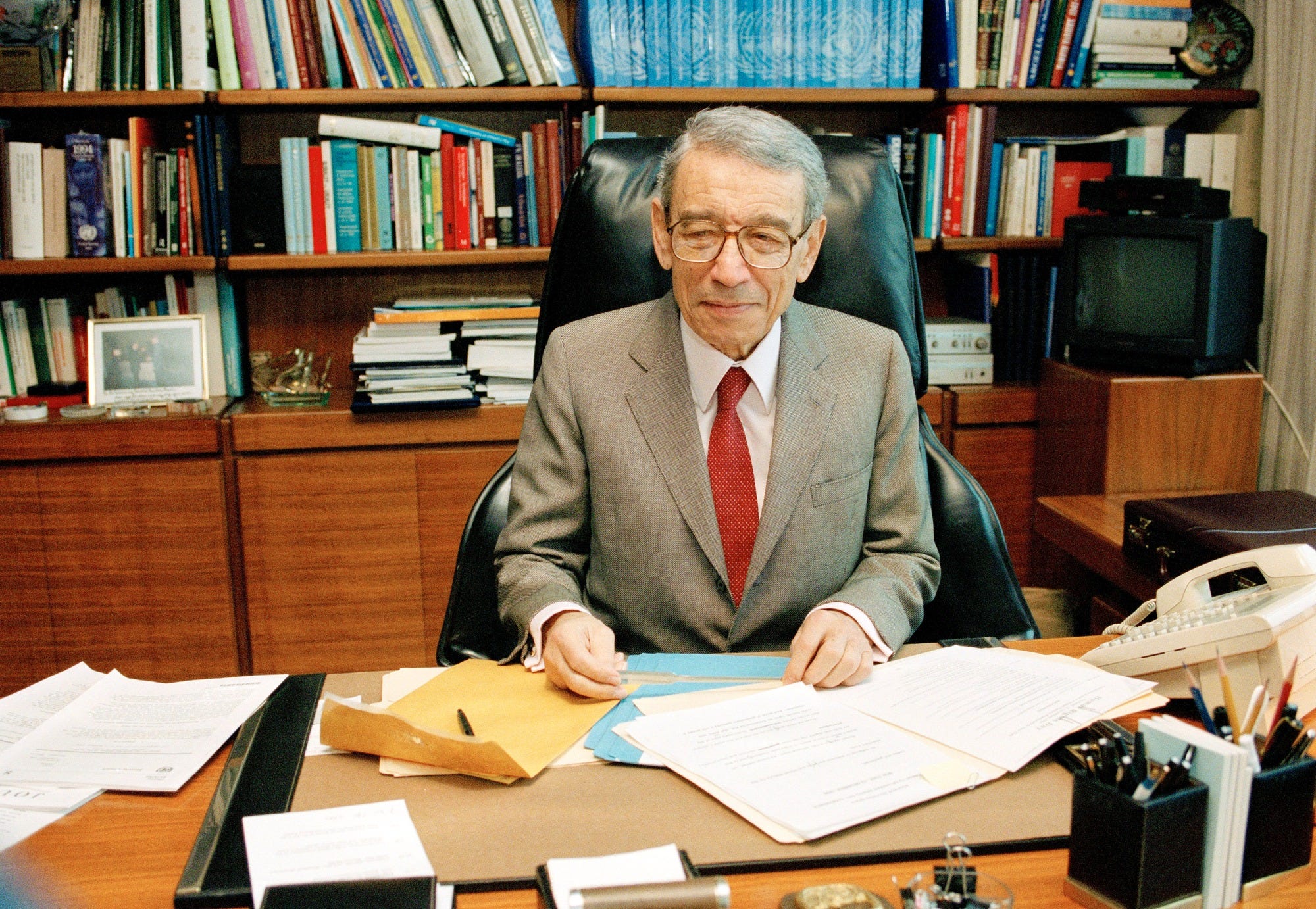
Boutros Boutros-Ghali, an Egyptian academic and a veteran diplomat, took office in 1992 as the sixth Secretary-General as the world began its post–Cold War “holiday from history” and cheerleaders persuaded themselves that a golden age of multilateralism would allow the UN to finally fulfill its potential.
But there were competing ideas for what the world needed — and as often happens in the international system, one school of thought lived in New York and the other could be found touting the newly formed Washington Consensus. This had its roots in a Latin American debt crisis, when John Williamson, a British economist, set out a checklist for the “prudent macroeconomic policies, outward orientation, and free-market capitalism” that “Washington” urged on struggling economies.
The consensus was a product of a hive mind with two hemispheres: on the one hand, “political Washington” by which Williamson meant the U.S. administration and Congress, and on the other, the “technocratic Washington of the international financial institutions, the economic agencies of the US government, the Federal Reserve Board, and the think tanks.”
Diplomats versus Finance Ministries
Boutros-Ghali would have been struck by how casually the IFIs — the International Monetary Fund and the World Bank — were lumped together with the American economic establishment. As Mark Malloch-Brown — unusually a member of both the IFI and the UN tribes — says in this fifth podcast episode, the two institutions have very different origin stories, which has left the former as “creatures of finance ministers and finance ministries” and the latter “an organization of the street [of the mobilization we discussed earlier], of foreign ministers, and of politics.”
Boutros-Ghali was never a man of the streets, but he was a politician and a diplomat and a natural opponent of the Washington Consensus. When he welcomed the Socialist International to the UN headquarters, he told delegates that economic globalization required the “globalization of democracy,” bringing more countries into places where decisions were taken, in other words. As an Egyptian minister, he had already tried to drive change from the outside, forming a short-lived club of countries to negotiate with the G7 on debt. Now he planned to use his power on the inside to articulate a “new rationale for development … to the widest possible audience.”
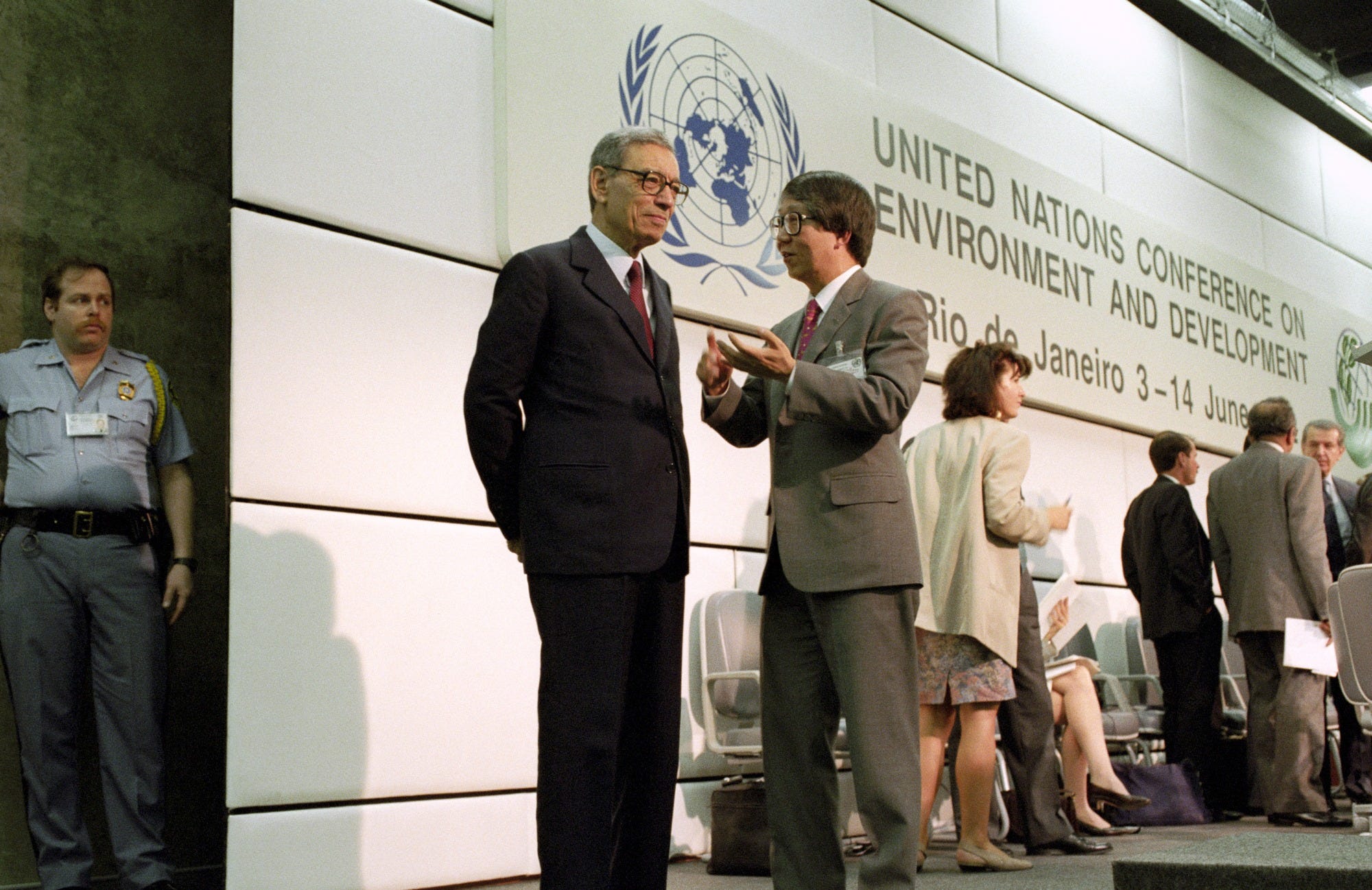
This became the second installment in what would eventually be a controversial trilogy. Boutros-Ghali had already fired the first shot just three days after the Rio Summit with the publication of an Agenda for Peace. The Secretary-General did not even like summits and was outraged by the number of UN officials using the trip to Rio as the chance for a free holiday. Nor was he a fan of Strong’s freewheeling style or his “big tent” approach to multilateralism. By publishing his own agenda as soon as he got home, Boutros-Ghali less than subtly tried to elbow Strong’s baby out of the way.
Unlike the Rio outcome where every word had been fought over, this was very much a personal vision. It had been commissioned by a Security Council worried about new types of conflict — often internal or fueled by economic instability and ecological collapse — and Boutros-Ghali used this opportunity to extend the focus to the “economic despair, social injustice and political oppression” that led to wars. He was driven, at least in part, by anger in his team that the IMF and World Bank were failing to loosen the purse strings in countries where the UN was supporting a precarious peace. The Washington Consensus offered medicine strong enough to kill a patient in the emergency room.
The second part of the trilogy took the development challenge full-on. Boutros-Ghali had taken to writing to the G7 each year to complain about its lack of support for Africa and for conflict-affected states, receiving only “perfunctory acknowledgements.” Now, with the blessing of the General Assembly, he started to make the case for a “dynamic and enabling international economic environment” that would support development across the Global South.
Boutros-Ghali used an Agenda for Development to warn that “the globalization of financial markets” was generating “ risks of instability” that needed a different approach from the multilateral system. That meant breaking the Washington Consensus, or at least putting poverty reduction and social protection on a par with the goal of protecting macroeconomic stability. And it meant the World Bank and IMF working hand in hand with the UN, at every level from headquarters to the field.
This salvo did not go down well. Boutros-Ghali was losing friends with each new installment in his trilogy, a process that accelerated when — unbidden — he launched the finale: an Agenda for Democratization. But his real problem continued to be the fight he had picked with Washington, which worsened when he used a 1996 lecture at Oxford University to float the idea of a global tax to pay for the UN.
Bob Dole, running against Bill Clinton for the U.S. Presidency, turned Boutros-Ghali into a campaign target, sponsoring legislation to block any global tax and threatening U.S. withdrawal from the UN. He also took to deliberately mispronouncing the Secretary-General’s name at campaign rallies (”Bootros! Bootros!”). Rumors were rife of black helicopters primed for a UN takeover of the United States.
Boutros-Ghali lost his final battle with Washington on Nov. 19, 1996, less than a thousand days after the publication of an Agenda for Development. Madeleine Albright, the U.S. ambassador to the UN and a bitter Boutros-Ghali foe, cast a lone veto against his second term. That year, in what he described as a “strange twist of fate,” he finally made it onto the agenda of the G7 and traveled to France with great hopes that he would finally gain a fair hearing. But all anyone wanted to talk about was whether the United States would force out the beleaguered UN leader.
The fate of an Agenda for Development was not settled until after Boutros-Ghali had left office, to be succeeded by Kofi Annan, a Ghanaian diplomat and statesman. His report had been swallowed up by the intergovernmental system, a victim of diplomats who spend their careers slowing things down. To deal with it, the General Assembly had set up the snappily named Ad Hoc Open-ended Working Group of the General Assembly on an Agenda for Development. And bodies with names of that sort are not known for their speedy work.
It took three years for the working group to dismantle Boutros-Ghali’s agenda. The G7 stripped out provisions that threatened the authority of the IMF and World Bank. The G77 contested the pillars on the environment and democracy, viewing them as unacceptable conditionalities on their economic growth. The end result was a shadow of the Secretary-General’s radical vision.
Diagnosing the Disease
But then the kicker. In July 1997, just weeks after the General Assembly adopted its diluted resolution, the Thai baht collapsed. The resulting financial contagion swept through Indonesia, South Korea, and emerging markets globally. The IMF dusted off the Washington Consensus playbook, organizing bailouts contingent on structural adjustment programs: massive interest rate hikes, slashed government spending, and forced bank closures.
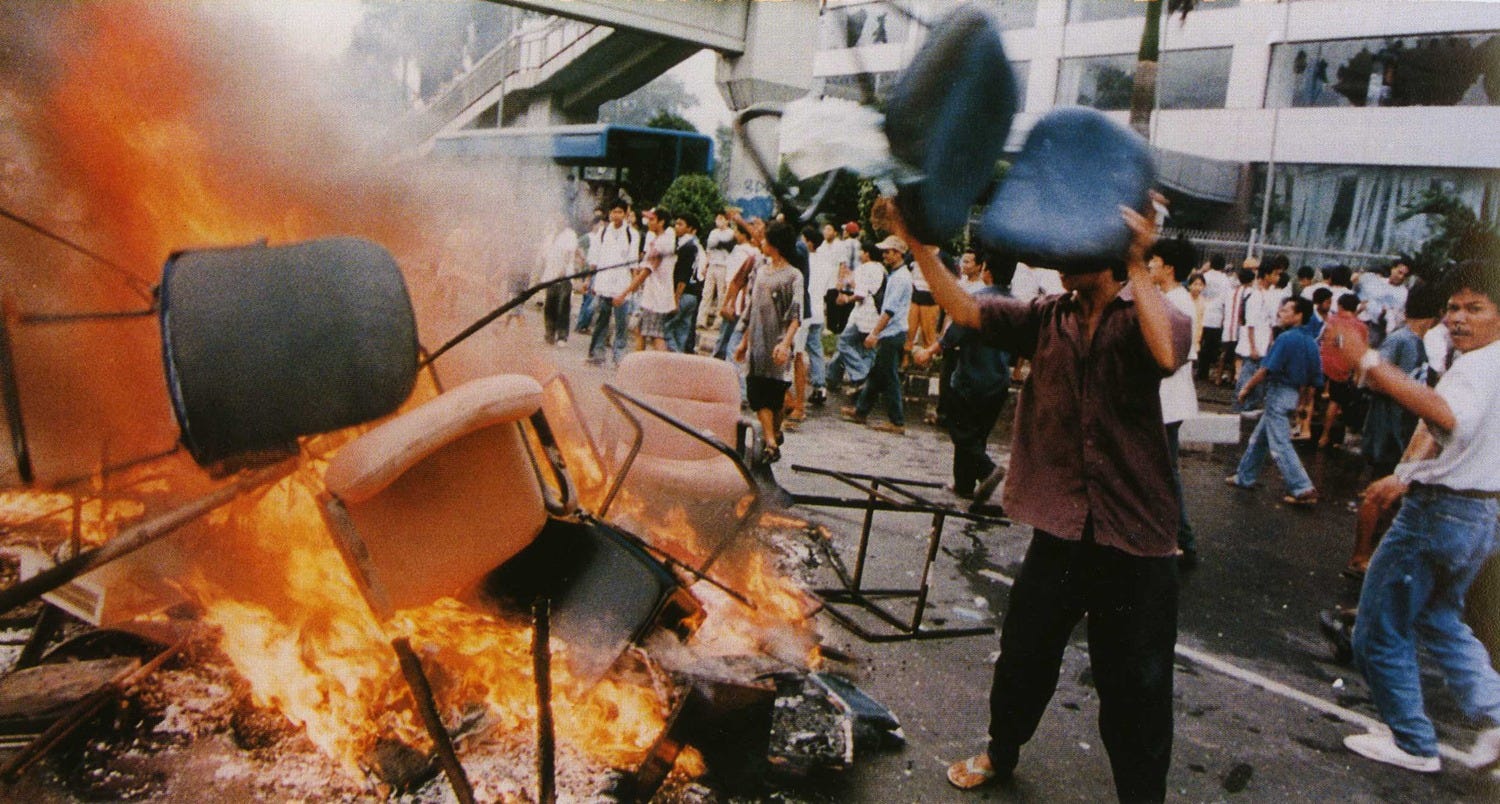
The austerity measures turned a liquidity crunch into a regional depression, destroying millions of jobs and triggering food riots in Indonesia. The UN struck back, or at least its trade and development wing, UNCTAD, did. Using its landmark 1997 and 1998 Trade and Development Reports, it launched a frontal assault on the Washington Consensus, blaming IMF-mandated capital account liberalization for creating the crisis and austerity measures for worsening it. This was the institutional challenge to Washington’s hegemony that Boutros-Ghali had designed his agenda to provoke.
Which brings us back to the central question of this episode of World’s Toughest Job: What role, if any, can a Secretary-General actually play in tackling the global economy?
Boutros-Ghali’s story offers an answer: You can diagnose the disease, but you might not survive prescribing a cure. The Secretary-General lost his job, but three decades later, he may be winning the argument. His career-ending demands for debt relief, global taxes, and a more balanced global economy are now the baseline for those working to reform the global financial architecture. Maybe Boutros-Ghali wasn’t wrong, just 30 years ahead of his time.
As Another Economic Crisis Looms, How Should the UN Respond?

In 1994, United Nations Secretary-General Boutros Boutros-Ghali proposed a radical, new vision to reform the global financial infrastructure. He called it “An Agenda for Development.” But his proposal was watered down in committee and largely ignored by the financial powers of the time.
