



Welcome to the [Re]Group Weekly. Today:
The Swing Voters of Multilateralism. As an era of explosive population growth draws to an end, why young countries hold the key to the UN’s future.
Reading List. New research on youth movements as Gen Z rises, plus Substacks and other briefings tracking the global baby bust.
The SG Roundup. A week where the action is all behind the scenes.
From the Archive. World’s Toughest Job on young people and young countries, plus ICYMI, can the UN pass the Iraq Test?
Peak Population
In 2036, humanity will cross a one-way demographic threshold. For the first time in history, global fertility is projected to fall below replacement level, the point at which each generation stops having enough surviving children to replace itself.1
If the 10th UN Secretary-General serves two full terms, as did their three predecessors, that milestone will arrive on their watch.2 It starts the countdown to the biggest turning point of them all: peak human population.
When Trygve Lie became the first Secretary-General in 1946, fewer than 2.4 billion people lived across roughly 70 sovereign nations. By November 2022, nearly a year into António Guterres’s second term, the world’s 8-billionth baby was born in a maternity ward in Santo Domingo.
It took Homo sapiens hundreds of thousands of years to reach its first billion, yet anyone turning 50 this year has seen the human population double in their lifetime. Meanwhile, that 8-billionth baby stands a good chance of living long enough to see the great contraction begin.
The demographic brakes went on decades ago, but it has taken time for the deceleration to bite. Fertility peaked in 1963, while humanity started growing older in 1970. Peak Baby arrived in 2012, a largely unnoticed record of 146 million births that will never be surpassed.
Once global fertility drops below replacement, the only question is how far demographic momentum carries us: A record generation of young women is still entering motherhood, keeping births high even as family sizes shrink.
That will only delay the end of the era of population growth for so long. The UN reckons humanity will make it to 10 billion at the beginning of the 2060s, before peaking at 10.3 billion in the mid-2080s. Other demographers think the peak could arrive much earlier and at much lower levels than that.
But this is a now problem, not one for tomorrow. Whoever next leads the UN will preside over a world splitting in two. On one side, rapidly aging states that must adapt to population decline. On the other, young countries that lack levers to protect their stake in the future.
Can the international system bridge that divide? And can it move fast enough to keep the new swing voters of multilateralism engaged?
Human Accounting
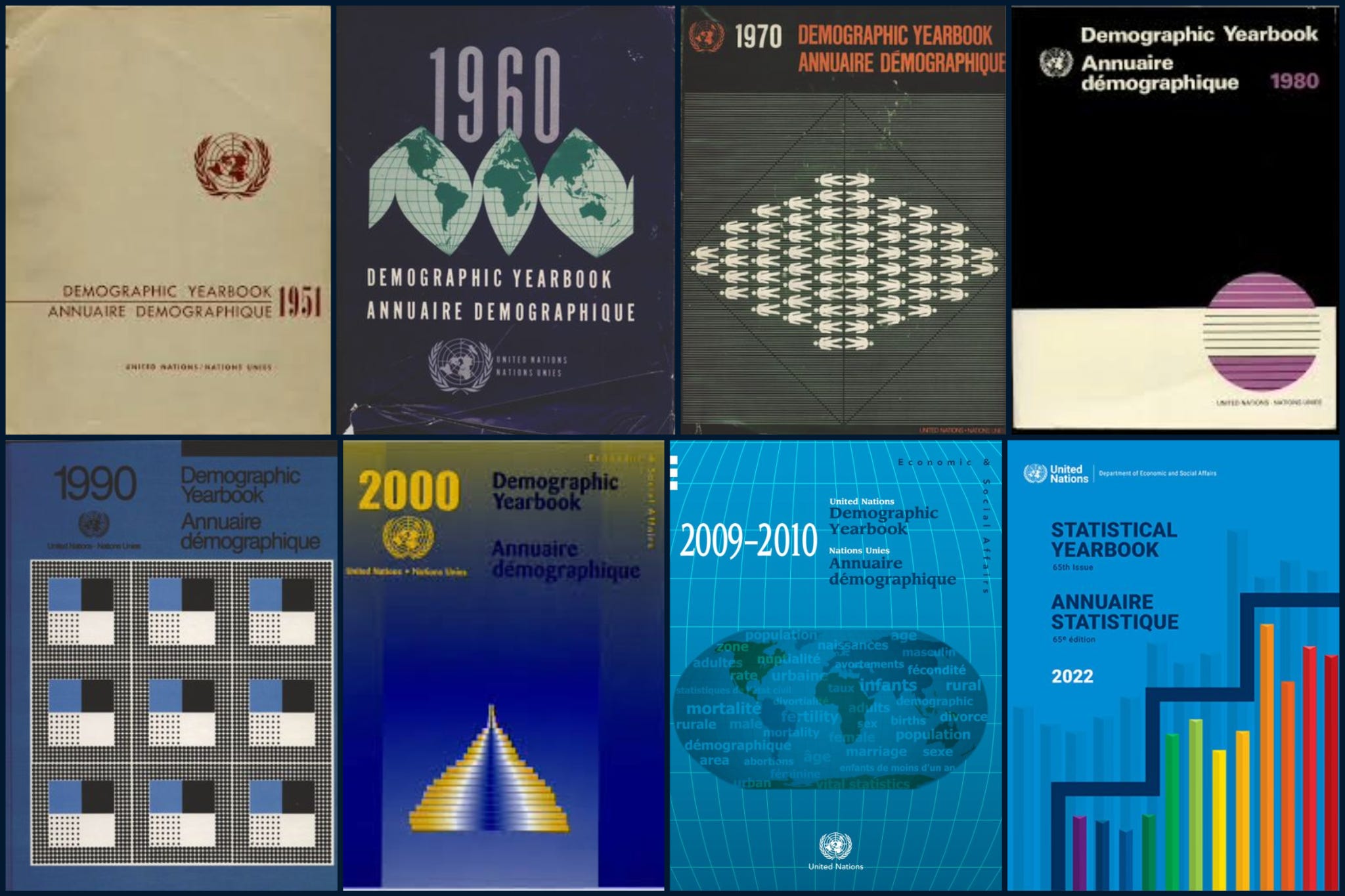
Trygve Lie was a numbers guy. In 1947, he decided that the UN needed “accurate human accounting” to do its work and asked the pioneering demographer Frank W. Notestein to count the world’s people and project how their numbers would grow.
Two years later, the UN published its first estimate of current and past populations. The first projections followed in 1951. World Population Prospects has now reached its 28th edition.
These are gold-standard numbers. They shape how governments, businesses, and pundits plan for the future. And they’ve got a track record that puts other prognosticators to shame (looking at you, economists). Back in 1984, when fewer than 5 billion people were alive, the UN projected when the 8-billionth baby would be born. It got the date right within a few months. Not bad when you’re looking four decades out.
World Population Prospects should have reached its 29th edition this year, but that’s been pushed into 2027 (a quiet casualty of UN budget cuts). If I were the next Secretary-General, I’d claim the headline speaking slot at the eventual launch and use it to celebrate all the unglamorous work the international system does to keep the planet’s operating system running.
The data standards and disease tracking, aviation rules and weather forecasting, maritime safety systems and the technical protocols that allow us all to communicate. Call it the “invisible plumbing speech.”
Four Shifts to Watch
Even if the UN’s population data is now a little out of date, it still packs a predictive punch. Demography is the closest thing a Secretary-General has to a time machine (unless the UN is much better at keeping secrets than we think). Step inside, and four shifts come into view.
1. Birth rates are crashing faster than predicted
If the next Secretary-General serves a full 10 years, around 100 million fewer babies will be born on their watch than during Ban Ki-moon’s decade in office (2007–2016). But this figure is based on UN projections that have not yet been adjusted for the sudden, unexpected fall in fertility that has pushed Thailand’s rate below Japan’s, Chile’s below Italy’s, and Delhi’s below New York City’s.
Once those drops are factored in, the baby bust is going to be even bigger news. Demographers don’t yet agree on why this is happening in so many places at once, but I think the social scientist Alice Evans has it right: a global “relationship recession” driven by people shifting their lives online, making the decline of coupling what she calls “the greatest challenge of the 21st century.”3
The likely headline when the UN’s 2027 projections are finally published? “World Population to Peak Years Earlier Than Expected.”
2. Depopulation is already here
I live in one of Italy’s youngest cities, where university students pull the median age below 40 (compared with nearly 50 nationwide).4 Even so, you notice how few children you hear heading to school in the mornings. That is what an old country sounds like.
Over the next decade, the UN projects Italy will lose more than 2.5 million people (though Italy’s national statistics agency believes record immigration could slow the drop by half or more). By 2036, Italy will be one of 50 UN Member States with shrinking populations, led by three heavyweights: Russia (down 3.8 million over the decade), Japan (down 7.3 million), and China (down 46.5 million).5
Humanity has little institutional memory of sustained depopulation. The last significant global drop came during the 14th-century Black Death. Yet roughly a quarter of us now live in countries that urgently need to confront the economic, social, and political challenges that a shrinking population brings.
3. Young countries matter most
While depopulation will drive media debate, the next Secretary-General shouldn’t get too distracted by the shiny new problem of how rich countries grow old. Young countries — and the young people who live in them — still matter more.
Take Nigeria, one of 95 UN Member States where at least half the population is under 30. Over the next 10 years, more children will be born in Nigeria alone than in the United States, the 27 countries of the European Union, and the United Kingdom combined.
As youth becomes an ever more unevenly distributed resource, do young people move to where opportunities are, do opportunities move to young people — or neither?6 That question will lock young and old countries together, coloring politics in both.
We can already see what it looks like, as the young build movements that upend their societies and the old fuel a nationalist wave that aims to preserve theirs as they are.7
4. The POP20 is locked out of power
That brings us to political power. Across the multilateral system, places at the top table were grabbed by whoever shouted loudly enough when those institutions were created.
Demography is the acid now eating through the legitimacy of clubs like the Security Council and the G20. Take the Council’s five permanent members. In 1947, the P5 accounted for four in 10 of the world’s people (and closer to 70% once you add populations living under imperial rule or occupation). Today that share is just 25% — and shrinking fast.
Think of an alternative group: the POP20, bringing together the 20 countries where the most babies will be born over the next decade. Only two hold permanent seats on the Security Council (China and the United States), and only four more have national seats in the G20.8
Not just Nigeria, but fellow demographic heavyweights like Pakistan, the Democratic Republic of Congo, and Ethiopia also remain locked out of the rooms where the future is shaped.
The Demographic Bargain
Whoever emerges as the 10th Secretary-General will inherit a world of mutual dependence and the makings of a grand bargain.
Old countries need young ones for their talent and dynamism, and to buy time to adapt to the economic and fiscal pressures of shrinking populations. Young countries need old ones for capital, opportunity, and a seat at the table — backed by an international system that works for more than just the legacy powers.
And the UN — now in its ninth decade — needs the buy-in of the younger half of the world to renew itself. Young countries are the swing voters of multilateralism. If they see the UN and other bedrock institutions as essential to advancing their long-term interests, those bodies will thrive. If not, multilateralism as we know it won’t collapse. It will just speak for an ever smaller share of humanity.
Can I Build a Future?
Reading List
As the world wakes up to a wave of Gen Z protests, read Harshani Dharmadasa and Ishaan Shah’s research into this global political awakening. They track 215 youth-shaped protests across 97 countries to see what happens once media attention moves elsewhere.
They find that “young people may get their demands heard, only to lose influence over what happens next. In one-quarter of the cases studied, institutions made clear changes without leaving people better able to act together.”
Global cooperation earns legitimacy when citizens see how international commitments improve their daily lives, rather than when it serves as an alibi for painful and divisive domestic choices, they conclude.
Plus, three more ways to explore the demographic rabbit hole:
On Substack, follow Apoorva Jadhav’s Demography Matters for country-by-country briefings, Oxford professor Jenn Dowd, PhD’s Data for Health (including whether the iPhone caused the baby bust), Alice Evans’ The Great Gender Divergence, and Avivah Wittenberg-Cox’s Elderberries on longevity.
Demographer Paul Morland explores how population shifts are rewiring global power on Sam Olsen’s States of Play (paywalled), while former PEPFAR Chief Science Officer Mike Reid examines the “demographic cliff” from a global health perspective on Reimagining Global Health.
Two briefings from The Economist (here and here, paywalled) push back against demographic doom, arguing that technology and productivity gains can cushion aging societies, alongside the Financial Times charts linked to Alice Evans’ coupling piece.
The SG Roundup
A choppy week in the race to be Secretary-General. Reports suggest a lot is happening behind the scenes, and some of that has spilled out into the open.
The U.S. thinks there are “a couple of really good candidates … two or three,” while the Russians hope the race will wrap up by the end of the year — even as they speculate on what happens if it doesn’t (more about that in 1 for 8 Billion’s briefing on scenarios in case of Council gridlock).
In The New York Times, Somini Sengupta reports on a mood of angst, confusion, and endless conjecture, though others predict clarity when the Security Council votes for the ninth time (expected on Thursday, November 19, using color-coded ballots, but that could change).
Finally, it seems like almost everyone is playing the “So you want to be UN Secretary-General?” game and reading the latest investigation into a past Secretary-General, Dag Hammarskjöld, who lost his life while trying to negotiate peace.
Delivering for Young Countries
From the Archive
This isn’t the first time a wave of young nations has forced the international system to reinvent itself. In the third episode of World’s Toughest Job, Kal Raustiala looked back to the Year of Africa in 1960, when a wave of newly independent countries joined the UN (also read our historical deep dive).
Martin Kimani (now Assistant Secretary-General for Africa), Joe Studwell, Saru Duckworth, and Mark Malloch-Brown then explored how the UN can help young people and young countries navigate a world of unchecked geoeconomic competition (read their takeaways).
ICYMI
Iraq After UNAMI
Reporting from Baghdad after the closure of the UN’s 22-year political mission, Peter Yeo asks whether the UN can pass “the Iraq Test” for a leaner development model.

All numbers not otherwise linked come from the United Nations, Department of Economic and Social Affairs, Population Division (2024), World Population Prospects 2024, Online Edition, or from previous editions. Global replacement in 2036 occurs at 2.15 live births per woman which accounts for children and young adult mortality, at which point the net reproduction rate falls from 1.002 in 2035 to 0.999 in 2036.
There are many reasons why the next Secretary-General might not be in office in 2036, including a choice by the winner to seek only one term (or a decision to offer a single, longer mandate). Think of two terms here as a baseline scenario, not a prediction.
Consider how much further this could go as AI draws people into deeper, more immersive relationships with machines.
Full disclosure, this “below 40” figure is an educated guess, as few students move their residence to the city in which they study, making the official stats unusable for planning purposes.
Immigration aside, I am skeptical that pronatalist policies will do much to reverse the tide, even if governments have plenty of other good reasons to support families.
Opportunities feed into what Bojan Francuz and I have called “the paradox of future generations.” Development success turns young countries into older ones as better health and education for women and children, women’s empowerment, and more inclusive growth drive down fertility. Conflict and instability act like anti-birth control, as more children are born more quickly into societies facing the greatest risks and fewer opportunities. At some point, though, this logic breaks down. The worst shocks could kill so many people that the global population declines abruptly rather than naturally.
Both flavors of populism have, by the way, tended to shrink the space in which the international system can operate, even as they are driven by risks that spread across borders.
The African Union was admitted to the G20 in 2023, boosting Africa’s representation, but a single seat shared among 55 nations is not enough to correct the imbalance.