


By Peter Yeo
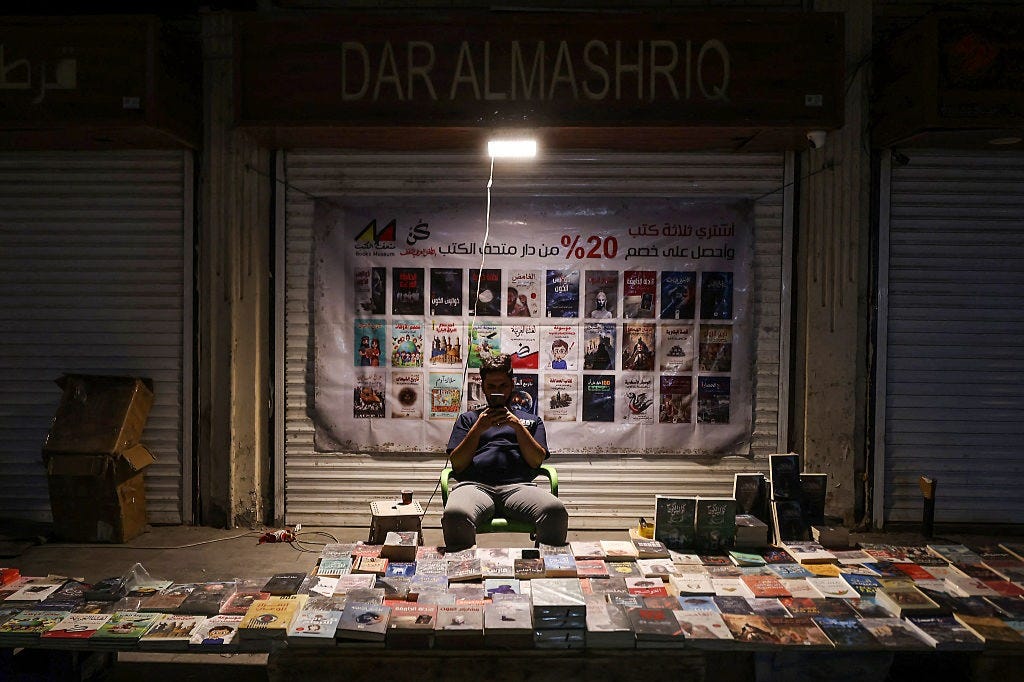
On March 5, 2007, a car bomb tore through Baghdad’s Al-Mutanabbi Street, a winding thoroughfare where books have been sold for over a thousand years. Today, the intellectual heart of the city is bustling once again, as customers flock to its booksellers and open-air cafes.
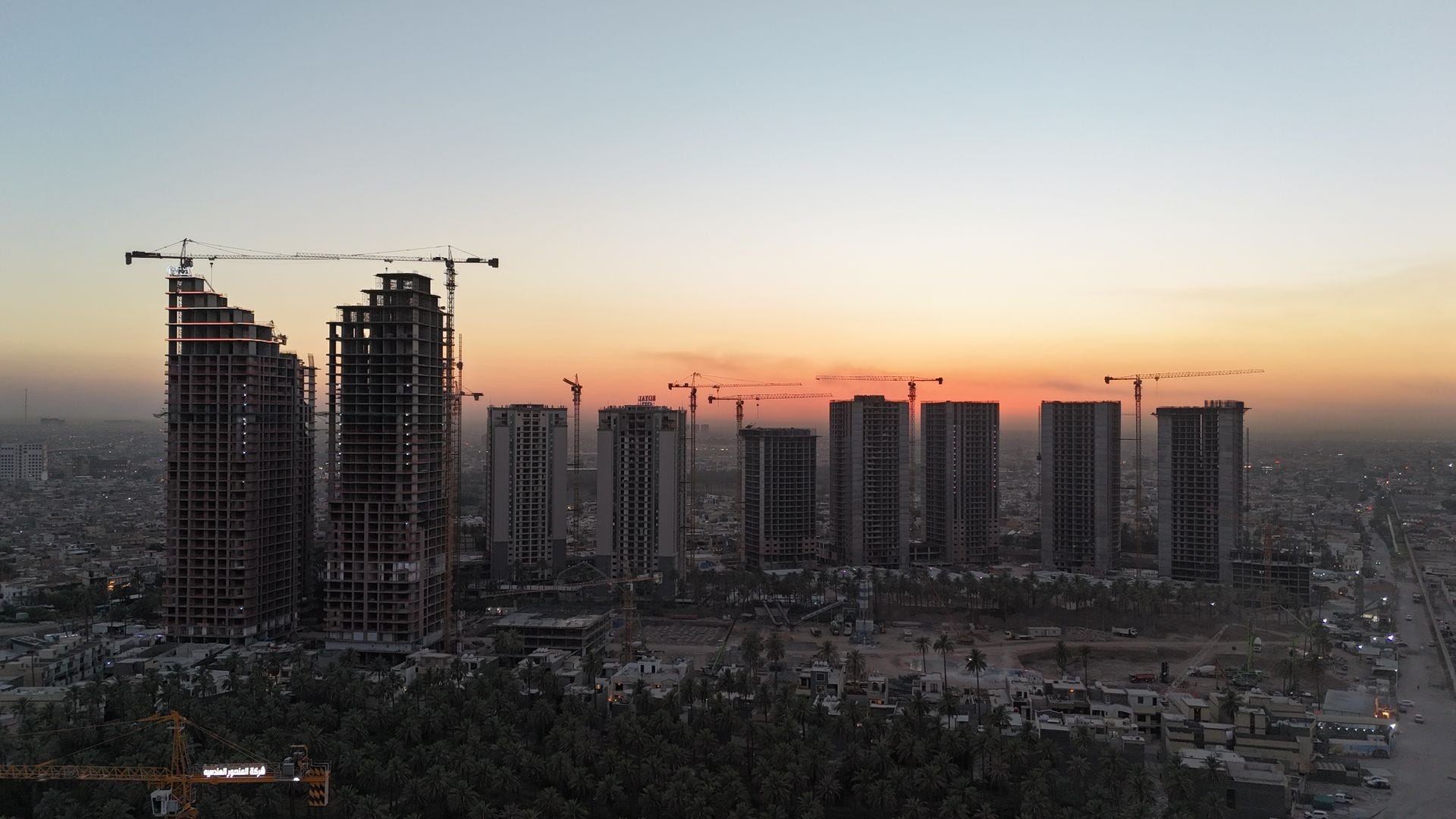
Iraq’s population has more than doubled in less than 30 years, and with a median age of 21, it is one of the youngest countries in the world. One in five Iraqis now live in the capital and its sprawling suburbs, and the pressure shows. A construction boom is transforming the skyline, the streets are clogged with government and private cars, and the city’s essential services are struggling to keep up.
After decades of war, Iraq is a country at relative peace, even as conflict rages across the wider region, including the U.S. war with Iran. But stability is no guarantee of lasting progress. Beneath the surface of its recovery, Iraq faces enormous governance, security, and development challenges that threaten its path to long-term prosperity.
On a recent visit to Baghdad and Erbil, I sat down with the UN’s leadership in Iraq to see how the organization is partnering with the Government to move the country forward. Together, they are navigating the shift from crisis management to country-led growth, a test of what UN reform looks like on the ground.
A New Chapter in a Long History
Iraq’s relationship with the UN dates back to the organization’s birth on June 26, 1945, when it signed the UN Charter as a founding member. For more than two decades after 2003, the United Nations Assistance Mission for Iraq (UNAMI) dominated relations with the government, key political and economic players, and the Iraqi public.
A special political mission is a civilian-led effort to prevent conflict and build foundations for a lasting peace, and UNAMI was one of the largest in the UN’s history. Having survived the devastating bombing of its Baghdad headquarters just days into its mandate, the mission worked alongside Iraq through two decades of conflict and political upheaval. It helped steer the country through the postwar humanitarian phase, fostered community reconciliation, and supported six national elections. UNAMI bowed out just weeks after Iraqis went to the polls in a contest the UN described as “the most credible to date.”
UNAMI’s outgoing leader, Mohamed Al Hassan, promised that the mission’s exit at the end of 2025 would not end the UN’s engagement. “I have no doubt that the Iraqis have flipped the page to another beautiful one,” he said as the mission wound down. But it has taken time for the contours of this new chapter to come into focus. UNAMI’s role was intensely political given its mandate from the Security Council, while older Iraqi officials still remember the days of the Oil-for-Food program, which put the UN in charge of billions of dollars in resources. The era of massive UN budgets in Iraq, underwritten by U.S. and European donors, is gone and will not return.
Closing the political mission has opened new doors. Now that the “UN brand” is no longer associated with political processes, Government ministries are more willing to draw on the 26 UN agencies, funds, and programs that remain on the ground. Rather than implementing hundreds of projects, the UN has repositioned itself to offer technical skills and international learning to help Iraqi ministries tackle long-term priorities, from reskilling the workforce for an economy beyond oil to securing housing, water, and social protection for those most in need, including more than a million displaced Iraqis.
To guide the transition, Iraq and the UN signed a new Sustainable Development Cooperation Framework just as UNAMI was closing its doors. Organized around four pillars — public services, economic growth, environmental protection, and the rule of law — the framework does not claim to address all of Iraq’s challenges. Rather, it sets priorities to support the country-led economic growth that Iraq now needs.
At the signing, then-Deputy Prime Minister Muhammad Ali Tamim said that the pact would “combine resources and expertise … to achieve our national goals.” In other words, Iraq and the UN as partners, with the UN advising and reinforcing the state, rather than providing direct services to the Iraqi people.
Building Systems, Not Running Projects
During my visit to Iraq, I saw what these commitments mean in practice.
Before 2024, Iraq had not held a full census for 37 years, leaving Government ministries to plan schools, hospitals, and infrastructure using decades-old estimates. That changed in November 2024, when the Government partnered with the United Nations Population Fund (UNFPA) to conduct a nationwide count. The country was locked down for two days, as 120,000 fieldworkers fanned out to visit every household. Results showed that young Iraqis, most of them living in urban areas, now dominate the population, offering an opportunity for growth if they find productive work, and posing a threat to stability if they don’t. Then-Prime Minister Mohammed Shia’ al-Sudani hailed the count as “a decisive step towards building Iraq’s future based on precise data,” and UNFPA is now working with ministries to turn those findings into public policy.
A similar push for better data is underway in healthcare. The World Health Organization (WHO) is working with Iraq’s Ministry of Health to modernize the country’s health information systems, digitizing reporting from roughly 5,000 facilities. Better real-time information will help the ministry identify shortages of both staff and equipment, directing resources to where they are needed most.
UN-Habitat, the UN agency focused on housing and sustainable urban development, reflects the broader shift from direct delivery to policy advice. A decade ago, much of its work in Iraq centered on constructing homes for families displaced by conflict. Today, it is helping the Government overhaul national housing policy and demonstrating that affordable, energy-efficient homes can be built at a reasonable cost by the private sector. Muslim Qazimi, acting Head of UN-Habitat in Iraq, was particularly proud that his program had become more efficient and streamlined, despite staffing cuts.
Nowhere is the need for long-term planning more urgent than in confronting Iraq’s water crisis. Years of drought, declining rainfall, and reduced river flows pushed national water reserves to an 80-year low in 2025, and were then followed by disastrous flooding. With 8 million Iraqis now at risk, the UN is seeking “systemic solutions that go beyond emergency measures.”
In southern Iraq, where families in governorates like Basra and Thi-Qar are struggling to find safe water, the Government has sought the expertise of the United Nations Office for Project Services (UNOPS) to develop water treatment facilities. This is about more than simply installing equipment. Local municipal employees are being trained to operate and maintain the plants, leaving behind both functioning infrastructure and the Iraqi expertise needed to sustain it. Meanwhile, the Food and Agriculture Organization (FAO) is helping Government officials develop the policies and technical skills to manage farmland and water resources more sustainably, strengthening the state’s ability to protect the agricultural sector after drought forced the Government to ban planting across more than 4 million hectares of farmland in 2025.
For any of these reforms to take hold, Iraq has to tackle the corruption that drains an estimated 20% of its public funds. The UN Development Programme (UNDP) is working with the Government to strengthen the investigation and prosecution of corruption cases, make government procurement more transparent through digitalization, and implement new anti-money-laundering practices. UNDP told me that it estimates that every $1 investment in its anti-corruption program yields a $37 return in savings.

At a Tipping Point
“We’re at a tipping point in Iraq,” acting Resident Coordinator Peter Hawkins shared during our conversation, as the UN works to align its individual agencies around shared goals. The challenge now, he said, is to “build on the successes” of individual agencies and bring them to scale.
Doing so requires focusing on areas where the UN’s expertise can have the greatest impact. For instance, Hawkins argued that better skills development for young people is a “must do” if Iraq is to diversify its economy away from oil, which still generates 80% to 90% of government revenues. With public sector wages and social transfers consuming roughly four-fifths of the national budget, the State can neither afford to employ a wave of young job seekers directly, nor fund the investments in education and health needed to make them more productive. Training programs are still designed with little input from the private sector, leaving a disconnect between what employers need and what young Iraqis are taught. Bridging that gap is where the UN’s deep bench of global experience can be brought to bear.
As donor dollars shrink, particularly for middle-income countries like Iraq, the UN family must make tough choices about which initiatives can be scaled effectively with the government and which should be handed over entirely. Those decisions will depend on a hard-headed assessment of where the UN is best placed to deliver impact, but also on which Iraqi ministries can deliver results and which remain too ineffective or corrupt.
Donor governments themselves are a key piece of the puzzle. Aid ministries often have “preferred” UN agencies and steer sector-specific grants directly to them. This encourages multiple UN players to work in the same provinces, and sometimes in the same sector. A strengthened Resident Coordinator system, with authority to eliminate duplication and inefficiency, could bring greater coherence to a development system too easily divided by agency mandates, budgets, and competing priorities.
Even so, in my meetings with UN officials in Baghdad, I was struck by their enthusiasm for doing more with less. While financial and staffing cuts have arrived at breakneck speed, officials were proud of how this has forced agencies to work more closely together and to stop duplicating each other’s work. The team in Iraq has been closely tracking the Secretary-General’s UN80 reform push, and was pleased to see headquarters in New York and Geneva catching up to what they are already putting into practice: Country-led partnerships where the UN helps build the policy and regulatory framework for sustainable development.
Writing the Next Chapter
Even with a more effective UN partnership, Iraq faces formidable challenges. Continued political fragmentation has undermined a whole-of-government approach to the country’s problems and hindered Prime Minister Ali al-Zaidi from filling key cabinet positions. Vital oil exports remain at the mercy of regional instability, including in the Strait of Hormuz. And Baghdad still faces the daunting task of demobilizing and integrating armed nonstate militias into the official state security structure. If left unfinished, this could pose an existential threat to the country’s future stability.
These are not small impediments to the country’s development and security, yet the Iraqi Government has decided that the UN family can be part of the solution. The transition to supporting country-led growth is far from complete, and the UN still has plenty of work ahead to show that stepping back from running projects will allow it to catalyze systemic change. But Iraq offers a test case for what UN development reform can look like on the ground: A model not just for Baghdad, but for how the organization helps other countries shape their own futures.
The next chapter of Iraq’s story will be written by the young people now crowding the cafes and bookstalls of Al-Mutanabbi Street. By helping build a country in which they can thrive, a more focused UN will not only support the ambitions of a new generation, but could also define its own role for the decades ahead.
Peter Yeo is President of the Better World Campaign and Senior Vice President of the United Nations Foundation.


