



Welcome to the [Re]Group Weekly. Today:
Increasing or Diminishing Returns: Why the international system keeps getting more crowded, and four questions for Rob Muggah’s New Club Order.
Reading List: From the “armadillo order” to “clubbing in the Anthropocene,” seven things to read on the new ecosystem of cooperation.
Mark Goldberg Live with Jeffrey Feltman: Six takeaways on reviving the UN’s peace and security role under the next Secretary-General.
The SG Roundup: The Security Council tests a reshaped field in today’s seventh straw poll.
Increasing or Diminishing Returns: The New Club Order
Complexity is a problem-solving strategy. When we run into unfamiliar problems, we invent new technologies, build new institutions, and add layers of organization to try and fix them. But complexity is costly. The question is always: Does it create more problems than it solves?
This is why the international system gets more crowded every year. Faced with “a surplus of multilateral challenges and a deficit of multilateral solutions,” countries look for ways to manage risks that spill across their borders.
Partly, they are seeking ways to tackle transnational threats and supply global public goods in an increasingly interdependent world. Partly, they are trying to control geopolitical stresses, as power becomes more distributed, both between states, and away from governments and toward other actors.
We have different labels for these trends. In Our Common Agenda, the current Secretary-General talked about networked multilateralism. Elizabeth Cousens and Susana Malcorra recently described it as an ecosystem that “sees both competition and cooperation,” “is home to predators and prey,” and “defined by long periods of stasis, punctuated by disruptions when anything is possible.”
What is striking is how little of this complexity has been mapped. Compare it to a city like Lagos that has seen its population almost triple in this century, mostly through settlements that lie outside the old municipal plan. You won’t get far navigating this urban center with a turn-of-the-century map, but that is what the international system is trying to do — steer through new terrain with an obsolete GPS.
Now, Robert Muggah has started charting the sprawl. In The New Club Order, published here last week, Rob and his colleagues at the Igarapé Institute tracked 194 coalitions formed outside the formal multilateral system since 2000. “The acceleration in club formation in the past 10 years is unmistakable,” they found.
Clubs cover every issue from security and trade, to AI and critical minerals. Some play a functional role, solving practical problems that nation states cannot solve on their own. Others are geopolitical, as the great powers try to lock in advantage, middle powers hedge to keep their options open, and other states launch “contesting” clubs to rewrite the rules of the game.
Mapping which clubs exist is a foundation to explore four other questions:
How are countries balancing their portfolios? One country has joined 72 clubs, more than a third of those in Rob’s database. How does a government decide which invitations to accept and why? How much political and financial capital does it spend on each membership? And how does it know when it’s time to walk away?
Are clubs generating broader benefits, or fencing them in? There are two different models at play here. One is the pathfinder coalition — like the Powering Past Coal Alliance — which sets a pace and hopes the rest of the world will follow. The other is the club built to service rival blocs, locking in critical minerals or trusted tech supply chains while raising costs for outsiders. The balance between global public goods and excludable club goods is a key indicator of the health of the broader ecosystem.
Will formal international institutions reinvent themselves for this world? Susana and Elizabeth advise the UN to “lean into” a structural role at the center of a crowded ecosystem, but that means less competition with other players and a greater focus on an orchestrator role. What would a “multilateralism-as-platform” model look like in practice (and what habits would the UN have to drop to make it work)?
Does all this activity add up to more than the sum of its parts? That is the hard question of impact, and you can ask it from the perspective of a single government, the members of a specific club, or the international system as a whole. With 34 of Rob’s clubs already dead or dormant, is this new layer of complexity solving enough problems to justify its costs, or are diminishing returns setting in?
We will be coming back to these questions over the coming months. In the meantime, if you missed Rob’s piece last week, go read it and take a spin around his interactive explorer. Then let us know what you think.

A Syllabus for the Club Order
Reading List
If you’re interested in reading more about how states are navigating the New Club Order:
Anne-Marie Slaughter (Financial Times): Argues that what is emerging looks like an “armadillo order” with “lots of overlapping small groups of states and non-state actors taking, or at least contemplating, common action.”
Stewart Patrick (Carnegie Endowment for International Peace): Warns that the success of middle-power multilateralism will depend on whether countries can “agree on common objectives, marshal resources to advance these, and navigate the tricky domestic politics of internationalism in a populist age.”
C. Raja Mohan and Oliver Stuenkel (Belfer Center): Examine how India and Brazil balance competing club memberships, with New Delhi straddling BRICS and U.S.-led coalitions like the Quad while Brasília uses “multi-alignment” to navigate between Washington and Beijing.
Abhinandan Kumar (Lowy Institute): Contends that the proliferation of smaller coalitions is hitting diminishing returns as great-power rivalry and overlapping mandates test their promise of agility.
Mirza Sadaqat Huda (Global Sustainability): Explores how countries are “clubbing in the Anthropocene” as coalitions proliferate for climate and critical minerals, concluding that “the exclusionary and elitist characteristics of climate clubs can undermine global environmental governance.”
Sophie Eisentraut (Munich Security Conference): Finds that cooperation has so far been slowed by “faultlines between middle powers from the Global West and the Global South,” urging states to “establish deeper coalitions to construct a proper new road system.”
Andy Sumner, Len Ishmael, and Stephan Klingebiel (Center for Global Development / Policy Center for the New South / German Institute of Development and Sustainability): Trace the rise of “flexi-lateralism,” where selective coalitions draw legitimacy from the UN while shifting delivery outside it, leaving cooperation “reconfigured through overlapping clubs and coalitions with uneven implications for the Global South and the North.”
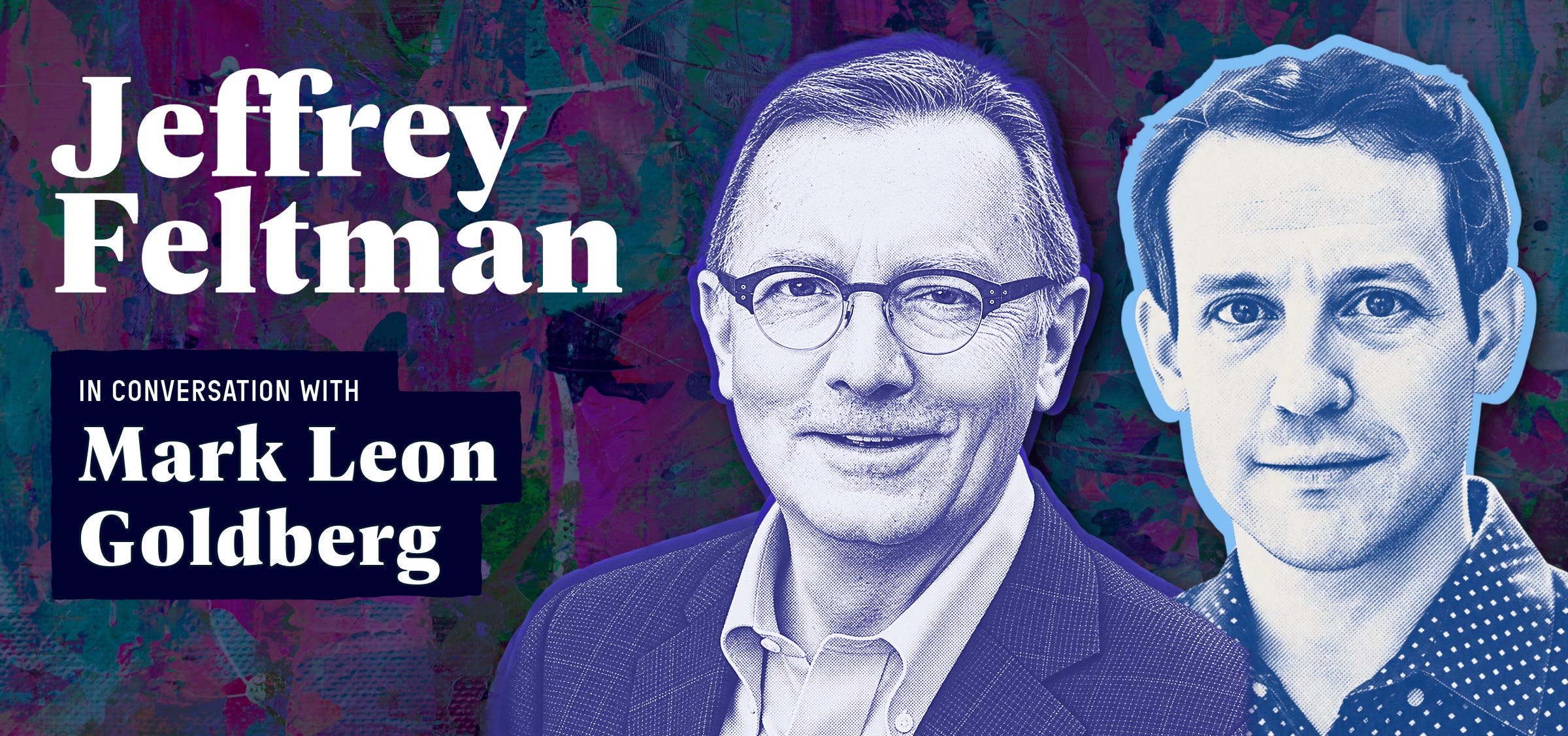
Mark Goldberg Live with Jeffrey Feltman
Following up on Jeffrey Feltman’s [Re]Group playbook on peace and security for the Secretary-General’s first 100 days and Mark Leon Goldberg column this week, Mark and Jeff sat down for a live conversation co-hosted with Global Dispatches:
Capitalize on the demand for a bolder UN. While polarization has fed caution among the UN’s leadership, Jeff left this year’s General Assembly convinced the mood is shifting. There is renewed consensus across “great powers, small powers, and medium powers that peace and security is at the heart of the UN’s purpose,” alongside an appetite to “elevate that peace and security work under a new Secretary-General.”
Don’t underestimate the power of a universal forum. Unlike clubs or informal dialogues, “everyone has sovereign equality under the UN Charter,” Jeff told Mark, making the UN the one place where adversaries can “get together when they might otherwise try to exclude someone that needs to be in the room.” The postwar order has also kept its most important promise: “The UN was set up primarily to prevent World War III, and that hasn’t happened.”
Position the Security Council as a last resort. While Council polarization has grown, Jeff underlined that most countries desperately want to avoid its spotlight. When he was Under-Secretary-General for Political Affairs, his most effective pitch to reluctant governments was simple: “We’re trying to keep you off of the Security Council agenda. We’re trying to prevent or help you resolve a conflict so the Security Council doesn’t have to think about it.”
Raise the cost of silence on the rules of war. The Secretary-General does not have the power to stop the bombing of civilians, Jeff acknowledged, “but man, he or she should be able to embarrass countries and make it hard for countries to ignore this.” Across the UN’s peace and security portfolio, “the Secretary-General’s primary task is to make it harder for others to stay silent.”
Deploy heavyweight envoys where they can make the most difference. Pressed by Mark on whether a Secretary-General risks burning political capital on an intractable war like Sudan, Jeff maintained that the leader “needs to be caught trying.” Failure is always a possibility, but the downside can be managed by securing Security Council mandates for heavyweight special envoys who “absorb some of the risk from the Secretary-General.”
Keep the Global AI Dialogue from becoming another talk shop. With the next UN Global Dialogue on AI Governance set for May 2027, Jeff said he doesn’t expect the UN to “have a universal convention in the same way you had arms control back in the Cold War,” nor should it allow the forum to turn into “another General Assembly.” Instead, he said, the next Secretary-General should use the UN’s convening power to take concrete steps on safety, from protecting children to setting guardrails for open-weight models.
👉 Watch the full conversation here (or read Jeff’s playbook).
The SG Roundup
Today saw the seventh Security Council straw poll, as the Council responded to a shifting field with Lana Nusseibeh in and Macky Sall out.
The results show Rebeca Grynspan holding the lead with 11 “encourage” votes, followed by Rafael Grossi on nine, Carolyn Rodrigues Birkett on eight, and Nusseibeh in fourth with seven. Full breakdown below.


