![[Re]Group: A Playbook for Turbulent Times](https://substackcdn.com/image/fetch/$s_!PUHU!,w_120,h_120,c_fill,f_webp,q_auto:good,fl_progressive:steep/https%3A%2F%2Fsubstack-post-media.s3.amazonaws.com%2Fpublic%2Fimages%2Ff2fb4256-d509-4e61-827b-2ee678efbba9_256x256.png)
![[Re]Group: A Playbook for Turbulent Times](https://substackcdn.com/image/fetch/$s_!OvcZ!,e_trim:10:white/e_trim:10:transparent/h_182,c_limit,f_auto,q_auto:good,fl_progressive:steep/https%3A%2F%2Fsubstack-post-media.s3.amazonaws.com%2Fpublic%2Fimages%2Fa2653539-a634-4ef5-9aab-bc4a7546ebc9_1344x500.png)


We treat multilateral institutions like broken machines. To fix them, we arm ourselves with blueprints, brute force, and wishful thinking. But these institutions are living systems with deep roots and long memories. You cannot change them unless you understand how they evolved.
Instead of thinking like engineers, we need to think like biologists, asking why these systems look and behave the way they do.
Take the octopus as an example. Humans and octopuses have a common ancestor: the urbilaterian, believed to have been a tiny worm-like creature that crawled along the bottom of the ocean 600 million years ago. It had a nervous system, but no shell, no eyes, and no brain. Its descendants split into different branches of life.
On one branch, we find fish, reptiles, birds, and ultimately, humans. On the other: insects, crabs, snails, and the octopus, which has developed an intelligence so different from ours that the biologist and philosopher Peter Godfrey-Smith argues that encountering one is like meeting an alien.
The ancestors of the octopus initially developed a shell to defend themselves from predators, but then, strangely, they lost that shell when the fish that hunted them equipped themselves with more powerful jaws. Why? As your neighborhood gets more dangerous, you would think it would be safer to hunker down at the bottom of the sea and work on strengthening your armor. Instead, the ancestors of the octopus chose to float around as a sack of succulent protein, unprotected by anything other than their fast-growing brains.
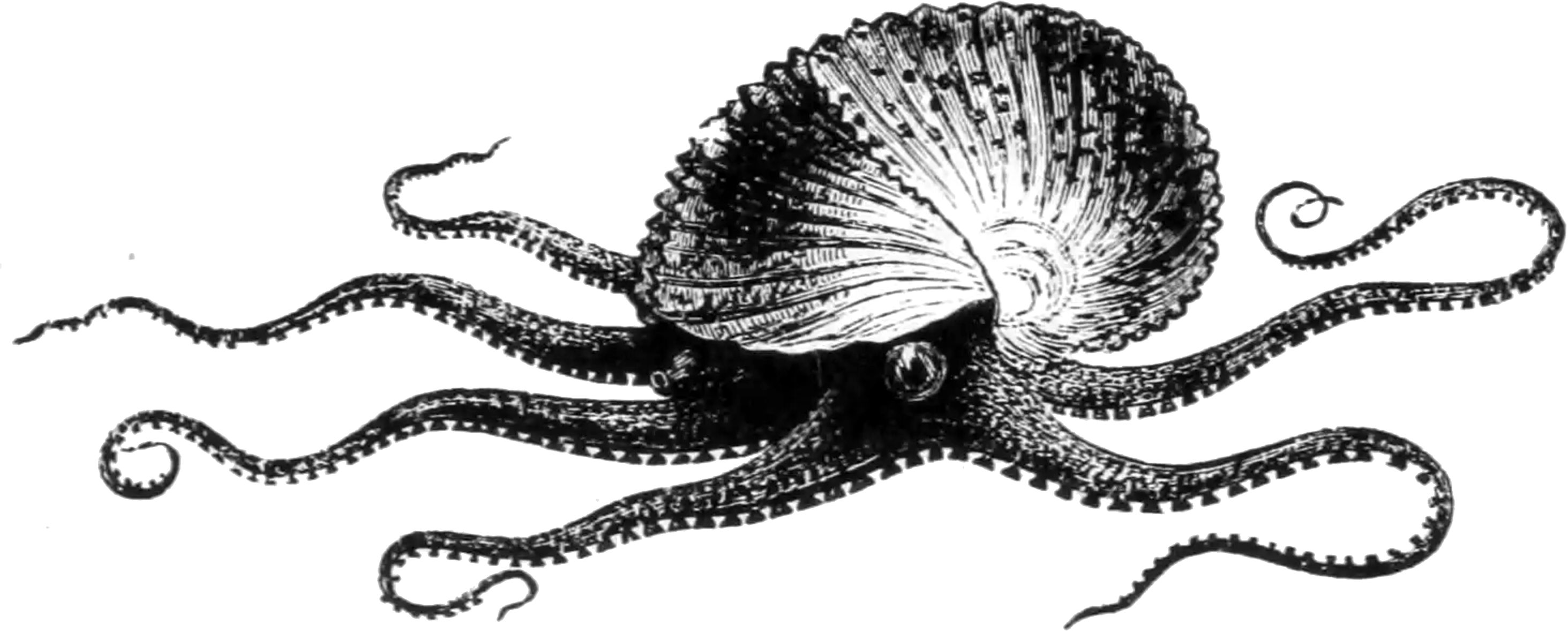
As Godfrey-Smith writes, they swapped the hard-shelled certainty of the mollusk for “a body of pure possibility” — and along the way developed the intellectual power to dismantle cages in captivity, short-circuit overhead lights by shooting water at them, and target keepers they didn’t like.
The standard explanation for this evolutionary leap is that external pressure forced radical change. As fish became faster and fiercer, the ancestors of octopuses had to ditch their heavy shells to outrun them and survive. That is surely part of the answer. But two other factors were in play.
First, the forcing power of catastrophic shocks. A mass extinction a quarter of a billion years ago wiped most of life off Earth and made the oceans so acidic that external shells began to dissolve. For the ancestors of the octopus, which had already begun tucking their shells inside their soft tissue, full internalization went from an evolutionary experiment to a survival necessity. An asteroid strike millions of years later delivered an even more lethal blow to creatures still relying on external armor and cleared the waters for these smart, increasingly shell-less survivors to inherit the seas.
And second, the challenge of solving new problems. Once the octopus’s early ancestors started moving from the sea floor into the open ocean, they needed to upgrade their sensory organs, motor control, and brainpower to navigate this complex, 3D space. Their brains exploded from a few tens of thousands of neurons to half a billion.
As Godfrey-Smith put it, they became smart “in the sense of being curious and flexible… adventurous, opportunistic.”
The Myth of the Jawed Fish
Let’s apply the three-pronged Octopus Theory to the evolution of the multilateral system.
The dominant assumption is that the system changes because of external pressure, mostly from the states that control what an intergovernmental system looks like. We picture governments as the jawed fish of our evolutionary story: actors who know what they want and use “reform” as a tool to get it.
This fuels enthusiasm for formal reform drives, which under the current Secretary-General, António Guterres, have arrived in waves. In 2017, delivering on a campaign promise, Guterres launched a major effort to make the UN “focused more on people and less on process, more on delivery and less on bureaucracy.” Member States then asked for more reform to mark the UN’s 75th birthday, resulting in Our Common Agenda and the Pact for the Future.
We now have a third wave for the UN’s 80th anniversary, supported by a parallel global health architecture overhaul and efforts to tame a tangled climate bureaucracy. UN80 is supposed to deliver “a paradigm shift in how the UN system organizes its work and collaborates for greater impact,” but the process is again bogged down in arguments that largely fail to address the strategic challenges of contemporary multilateralism.
This is the flaw in the jawed fish metaphor. Put a group of governments in a formal negotiation, and most will fight harder to block what they fear than to chase what they want. Formality breeds deadlock. Major powers simply veto progress or use intergovernmental processes to strip radical proposals down to their least threatening elements. A powerful reform vision sometimes proves influential over the long term, but it is seldom the fastest route to near-term change.
But this does not make governments ineffective multilateral actors. Far from it.

Episode 7 of the World’s Toughest Job, a podcast co-produced by Foreign Policy and the United Nations Foundation, focuses on complex emergencies and opens with the UN’s response to the 2008 global food crisis under Secretary-General Ban Ki-moon. The narrator is Josette Sheeran, head of the World Food Programme during the crisis, who tells a story that starts with her warning made in April of that year that the world faced a danger that defied the traditional mechanics of famine.
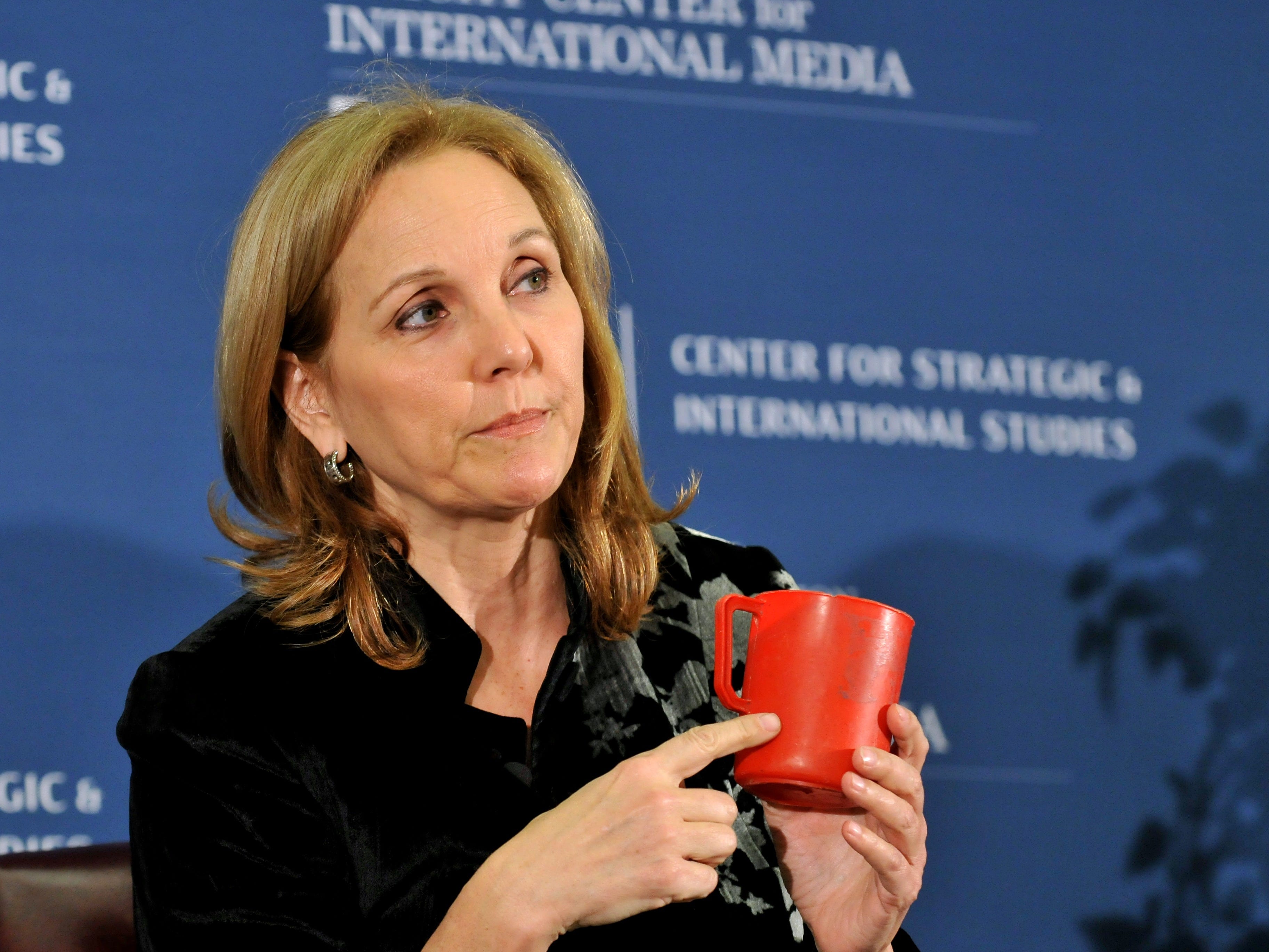
Rising food prices were like a “silent tsunami,” she said. It was a resonant image in a world where memories were still fresh of an actual tsunami that had killed a quarter of a million people just 3½ years earlier.
But she did not deliver this warning at UN Headquarters in New York or in Rome where WFP is based. She spoke in London, where British Prime Minister Gordon Brown had called an ad hoc summit to explore the crisis, to which he invited a similarly ad hoc coalition of food supply chain stakeholders and heads of major global institutions.
Brown does not merit all the credit for triggering the global response, although he deserves his share. But his actions highlight a pattern: A national leader who wants to tackle a global challenge has long chosen the informal route or has at least started out along an informal path.
Maybe there was a golden age where passing a formal resolution was the best way to get things done, but if so, it has left little trace in the UN’s evolutionary record. Instead of formal reform driving lasting change, we find Member States (when they know what they want) using agile coalitions to drive innovation at speed. Minilateralism within the multilateral system, in other words.
Shocks and 3D Problems
That brings us to the two other forces that drive Octopus Theory: the forcing power of catastrophic shocks and the challenge of navigating multidimensional problems.
The 2008 crisis was a perfect storm. This was a systemic emergency driven by chronic underinvestment in food systems and climate shocks in major grain-exporting nations. As the U.S. housing market crumbled, speculative money surged into food commodities, while record oil prices meant more food being burnt as fuel. Spiking prices then triggered tit-for-tat protectionism, as countries used export bans and prohibitive tariffs to protect their own populations.
This shock, which crossed agriculture, finance, energy, and trade, demanded a new type of “operating system.” As Sheeran tells World’s Toughest Job, shortly after the London Summit, Ban Ki-moon transformed a routine April 2008 Chief Executives Board meeting in Bern, Switzerland, into a crisis summit. The CEB has the generally thankless task of coordinating the international system, but Ban seized the moment to bypass standard protocols and bring 22 entities under a single coordinating umbrella: the UN System High-Level Task Force on the Global Food Security Crisis (HLTF). Urgency was the mother of multilateral invention.
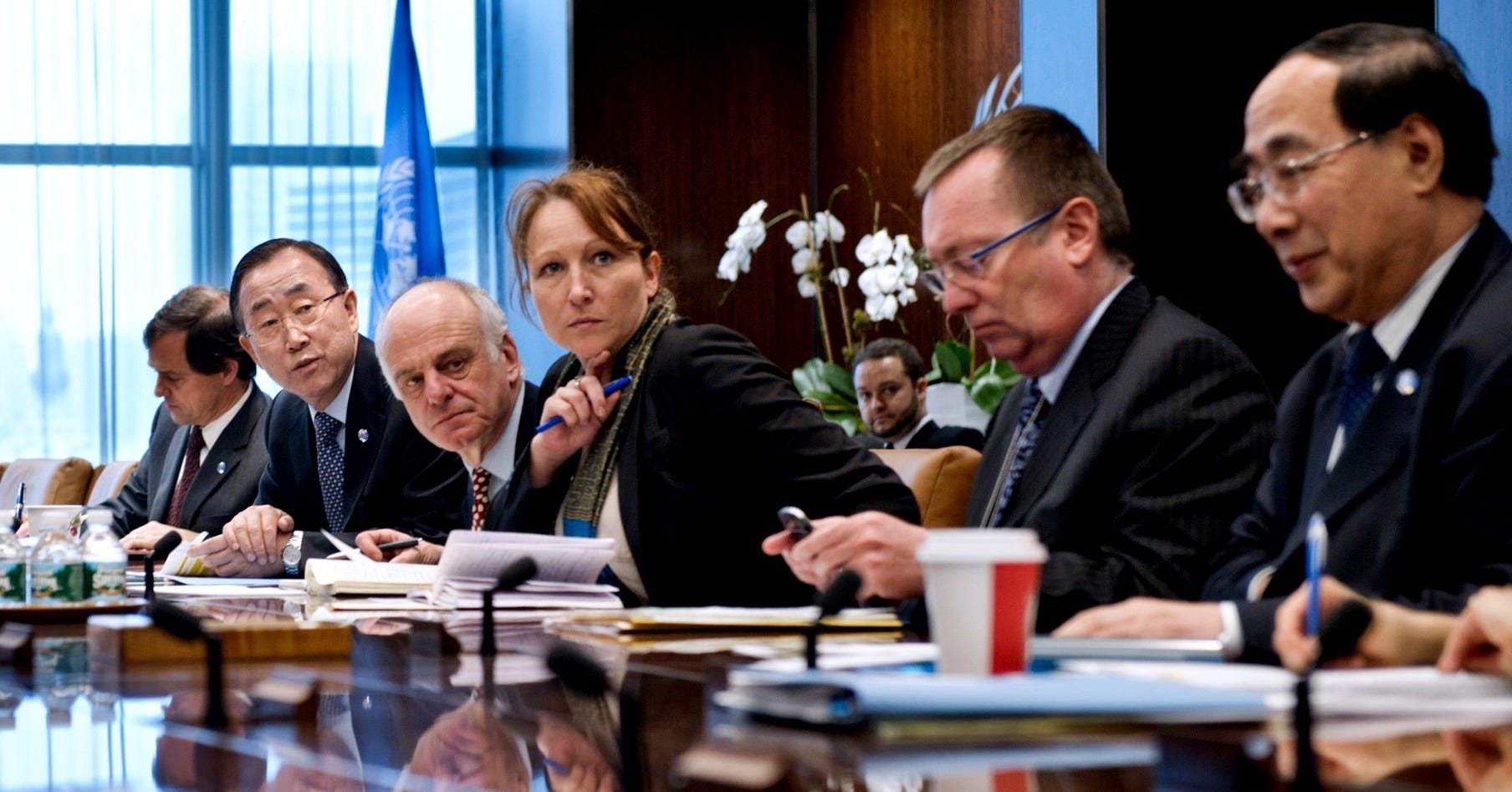
Ban appointed John Holmes, his top humanitarian official, and David Nabarro to coordinate this body. Nabarro came from the public health sector, where he had honed his approach to herding cats during the avian flu scare. He functioned as a roving fixer, persuading competing entities to share data, synchronize funding appeals, and operate under a unified command. Rather than trying to build a permanent bureaucracy, he saw himself as a movement-builder, “in the system, yet outside; cooperating, yet challenging.”
Nabarro spent much of his time trying to prevent interagency warfare, above all the friction between the Rome-based agricultural agencies (the Food and Agriculture Organization of the United Nations, the World Food Programme, and the International Fund for Agricultural Development) and the Washington-based financial institutions (the International Monetary Fund and the World Bank). The HLTF had a budget of just a few million dollars and no formal authority. “The big challenge is how to converge and energize actions for nutrition without precipitating discord,” Nabarro recalled. “We cannot have discord; there is too much at stake.”
But look beyond the structure — the Task Force itself — to the unfamiliar problems it tried to solve. The UN knew how to deliver emergency aid to vulnerable populations (if it could afford the food), but this crisis prompted innovation in the tools and funding needed to drive and fund longer-lasting improvements in crop yields. From fighting fires to building resilient food systems, in other words.
The crisis also accelerated a shift from sending food to providing cash. As Sheeran pointed out as the storm clouds were gathering, “there is food on shelves, but people are priced out of the market.” The fastest way to correct that was to inject cash into existing social protection systems. This ensured that poor families could afford to eat, while incentivizing local farmers to grow more. This pivot toward social safety nets, cash transfers, and food vouchers became a model for subsequent crises, matched by the provision of rapid balance-of-payments assistance that helped governments fund national priorities.
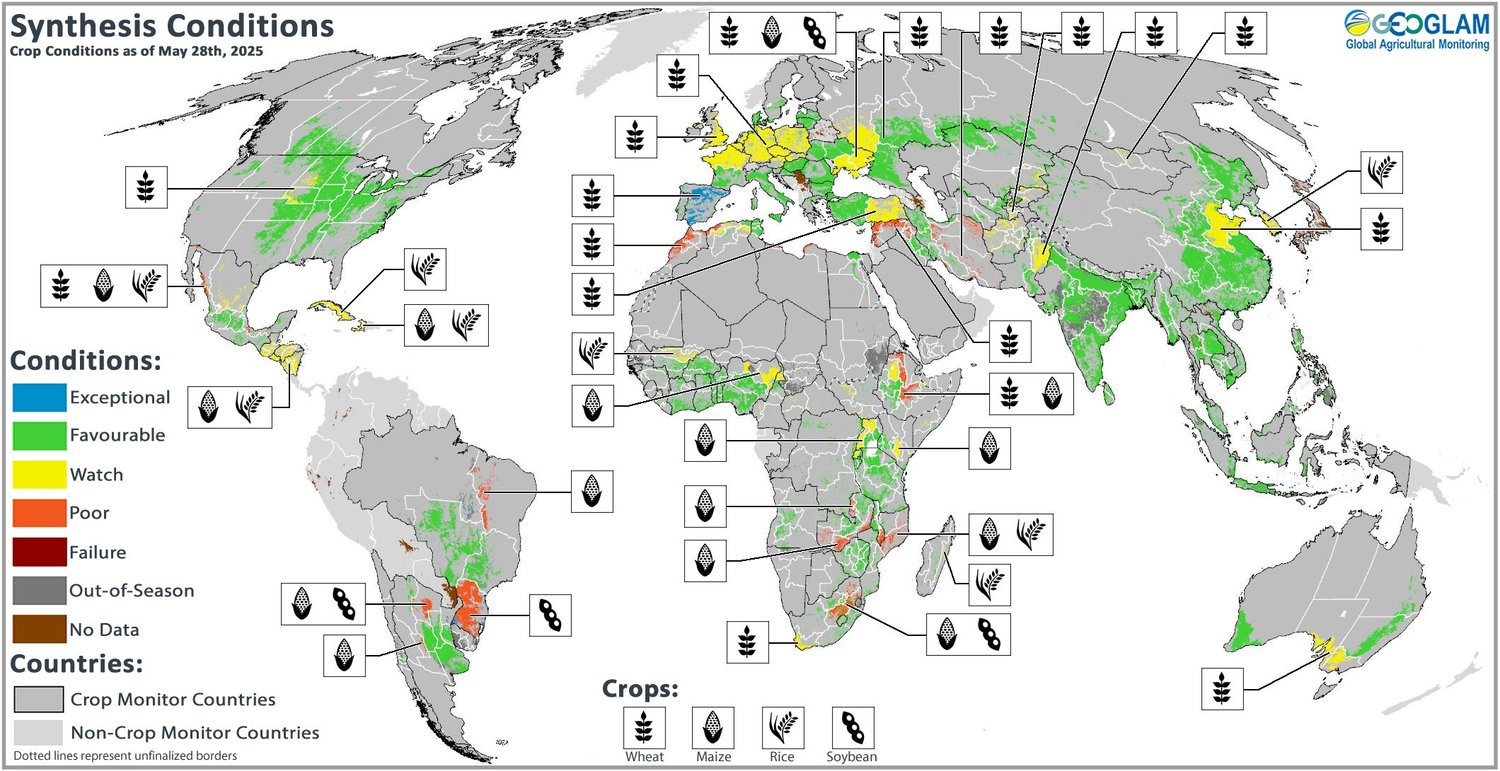
Even failures triggered innovation. The global response struggled to stop the wave of export bans (although it may have slowed the tit-for-tat dynamic) or to end Western subsidies for biofuels. But that spurred a hybrid of minilateral momentum and multilateral machinery. With a mandate from the G20, the UN system launched the Agricultural Market Information System (AMIS), hosted at the FAO, which provides the data on food stocks needed to reduce panic buying and hoarding. In parallel, the G20 endorsed the GEOGLAM network of satellites, an initiative housed at the World Meteorological Organization, to spot droughts and predict harvest shortfalls months before crops are gathered. These are vital global public goods, generated as a direct result of a crisis.
This is not to paint a Pollyannaish picture of multilateral performance, but to highlight the deliberate attempt always to do more than fight fires. In its strategy, the Task Force paired firefighting interventions with actions to strengthen global food systems. As Sheeran tells the podcast, this parallel pursuit of short- and long-term objectives was “not easy to do, not a muscle that was often flexed in the UN system.” But it had a lasting impact on the multilateral system.
Scar Tissue and System Upgrades
When viewed through this lens, large parts of the international system are best seen as accumulated scar tissue of past complex shocks — or the living tissue that grew back in their wake.
Successive crises have driven the structural upgrades we expect formal reform processes to deliver — and have done so more consistently and with many fewer arguments than those processes. Emergencies have encouraged interagency coherence, compelled data sharing, and accelerated the focus on human security. Some positive habits are lost once the crisis is over, but others are encoded in new protocols, coalitions, or legal instruments.
Yet we remain strikingly incurious about the history of this dimension of multilateral evolution. The contrast with biology is stark. Tracing the evolution of octopuses is notoriously difficult because soft-bodied animals leave few fossils, but biologists keep plugging away to build consensus. They look hundreds of millions of years into the past.
But we lack consensus over what can be learned from how the international system has tackled emergencies over just the past quarter century. My wager: More high-quality research on octopus evolution is published every year than on the entirety of global crisis management. Given the lives, money, and political stability resting on the latter, that is an absurdity.
Part of the problem is that institutional post-mortems fixate on what failed in a crisis, rather than what held. But that creates a danger for UN80 and other formal reform drives, especially when they are driven by a desire for simplification. In the absence of agreement on which structures are actually load bearing, any back-to-basics overhaul risks knocking down pillars that may matter most in the next emergency.
There is also a danger in undervaluing the UN’s ability to drive coherence in an increasingly fragmented international system. Like the UN, the octopus faces the challenge of radical decentralization, with the vast majority of its neurons distributed down its arms. Godfrey-Smith likens the octopus’s central brain to the conductor of a jazz band whose players love to improvise and receive “only rough, general instructions from the conductor, who trusts them to play something that works.”
But the conductor matters. If the arms are adventurous and opportunistic, the brain’s role is to force attention onto what matters most, especially when danger is high (for example, a sharp-toothed predator is approaching). When an octopus is dying, the brain degenerates first, and the decentralized arms begin to wander without purpose or coordination, leaving the creature unable to care for or protect itself. A highly decentralized body, it becomes clear, cannot function when the conductor stops doing their job.

When the Conductor Stops
This brings us back to the central question of this episode of World’s Toughest Job: Can the UN act as the emergency platform the world needs?
Octopus Theory helps us understand what is meant by playing the role of a platform. From the center, the UN cannot — and should not — micromanage the response to any shock that crosses sectors and geographies. But it can set a direction and coordinate execution by actors who possess the autonomy, flexibility, and on-the-ground intelligence to operate in a fast-moving environment. The center conducts the band. It should not try to play every instrument.
That requires a different type of intelligence at the center, with the oversight and vision to get the most out of a decentralized network. It puts a premium on an institution that is smart enough to navigate a complex, 3D space and secure enough to create the conditions for others to excel.
Can the UN Still Act as the Emergency Platform the World Needs?

The 1997 East Asian financial crisis, the 2008 global food and energy crisis, and the COVID-19 pandemic are all examples of global systemic shocks. And when the next Secretary-General takes office in January 2027, there will most likely be another complex crisis underway.