



“If we can’t control the course of nature, at least we can control the narrative,” declares oil magnate Digger Rockwell, Tom Cruise’s character in Alejandro González Iñárritu’s Digger. Anyone who has already seen this movie will remember the chaotic scene where he addresses the European Parliament after setting off a global ecological disaster.
Papers fly, politicians fight, and journalists livestream every second. It’s a grand political tragicomedy, except the joke lands uncomfortably close to home. At the UN’s annual climate summit in Antalya, Türkiye, the real-life negotiators seemed determined to give Iñárritu’s fictional parliamentarians a run for their money.
The 31st Conference of the Parties (COP 31) to the 1992 climate convention forced nearly 200 governments to haggle their way toward consensus amid a jamboree of lobbyists, scientists, media, and campaigners. More than 90,000 people registered to attend in person.
We have a soft spot for this particular circus. Both of us cut our teeth in UN civil society advocacy, and we watched COP 31 from two vantage points: Saru Duckworth in the corridors of Antalya talking to activists fighting to hold governments to account, and Valeria Colunga thousands of miles away, tracking the negotiations alongside a stream of increasingly surreal dispatches from inside the venue.
The lunch area blasted recorded birdsong that sounded less like nature than an evacuation alarm, while real rain hammered the roofs of the negotiation rooms. The climate crisis had found its own microphone amid the white noise. There was a sustainable hair and barbering salon in the middle of the government pavilions, in case delegates needed a trim to cool off after Johan Rockström’s presentation on the seven planetary boundaries that humanity has already breached. Earth may be accelerating toward its tipping points, but at least our split ends will still be manageable.
When we talked to an anti-fossil fuel campaigner, they described the mood as depressing, hectic, super frustrating, tiring, and annoying. In that order. Rockström warned that the window for action was still open, “but boy, we have to get going.” Instead, as one negotiator broke down in tears after 18 hours of what are known, without apparent irony, as “informal informals,” COP 31 headed into the longest overtime in COP history and ended without an overarching agreement.
“The worst COP ever,” said Mohamed Adow of Power Shift Africa. But let’s give Digger’s director the last word. While disaster movies are traditionally about something terrible happening to humanity, Iñárritu told journalists on his Digger publicity tour, today “the disaster is us.”
COP Killers
On Aug. 26, eyewitnesses heard a noise like an earthquake as a massive chunk of glacial ice and bedrock broke away from the Langtang Lirung massif in northern Nepal, sending a wall of mud, rock, and water tearing down three river valleys. More than 1,500 people died in what the UN called “one of the most tangible expressions of climate injustice.”
The disaster set the stakes in Türkiye. At the Nepal pavilion, financing appeals centered on the needs of countries facing catastrophic climate change. Elsewhere, countries worried about a supercharged El Niño that will intensify already deadly heatwaves, droughts, and flooding. And the UN’s Emissions Gap Report 2026 delivered a grim new baseline: exceeding the 1.5°C goal of long-term warming is now unavoidable, while current policies put us on course for roughly 2.8°C this century.
Antalya was branded the “implementation COP” built around the principles of “dialogue, consensus, and action.” Governments were supposed to make progress on a just transition, climate finance commitments, and — of course — emissions cuts. Instead, a sprawling political statement sucked oxygen from the negotiations. It was six times the usual length as every country filled it with wish-list demands. With so much time spent arguing about how to describe implementation, the hardest decisions were put off until next year.
The big fights were over fossil fuels and money. Before COP 31, European Union (EU) climate commissioner Wopke Hoekstra had pronounced new finance negotiations “dead in the water,” and the Europeans and other developed countries spent much of the conference accused of obstructing progress, particularly around adaptation finance and the Just Transition Mechanism. At the same time, Saudi Arabia and Russia led a group of countries that resisted language on fossil fuels, in the face of an uneasy alliance of the EU and vulnerable countries.
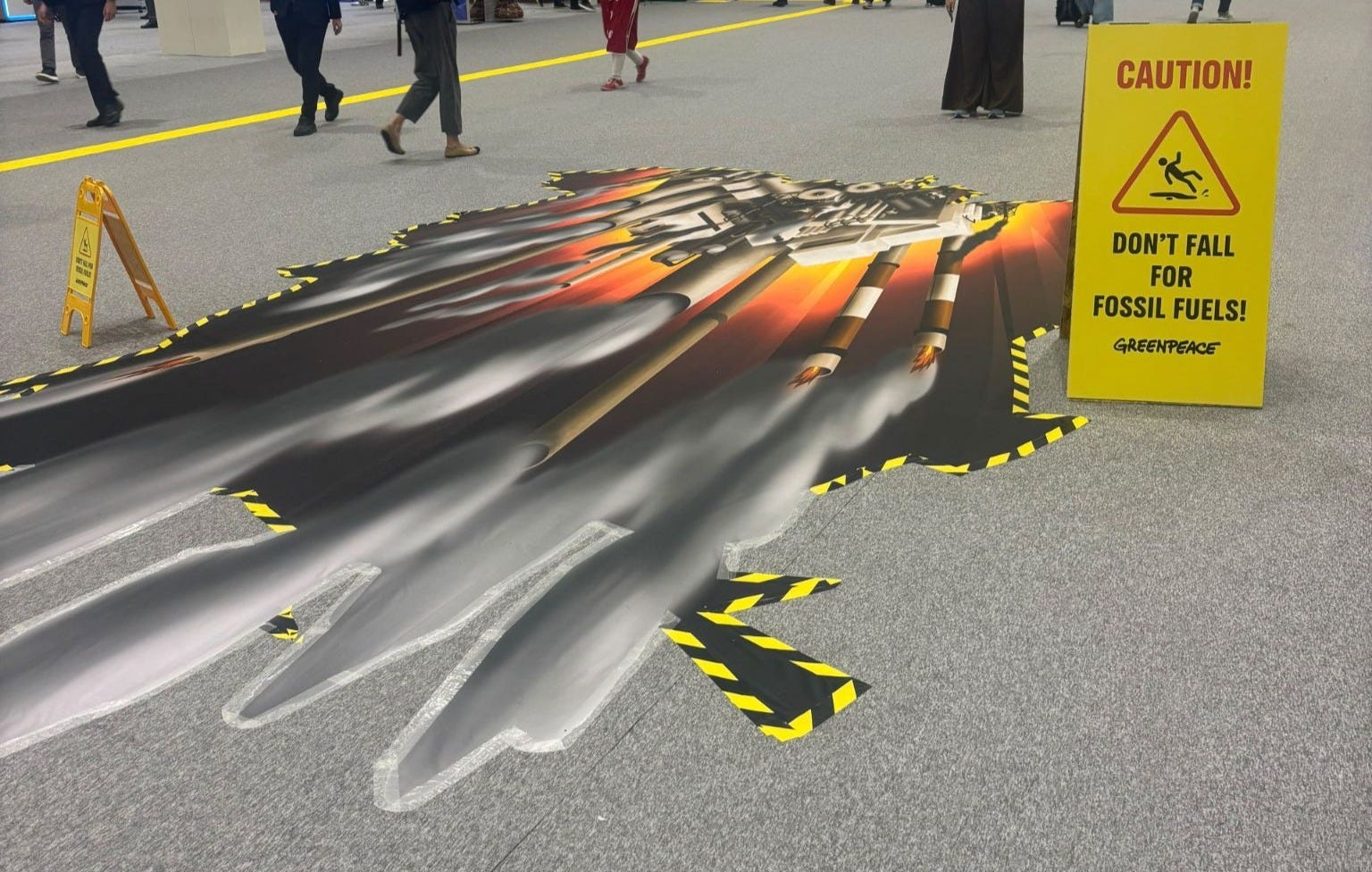
The Nov. 19 draft negotiating text lacked any explicit reference to transitioning away from fossil fuels and proposed a meager $120 billion adaptation finance target. That left us asking the question: What is the point of an institution that struggles to defend old promises, much less fulfill them?
Access Is Not Power
“The COP is not dying. The COP is being killed, not because it’s bloated, not because it’s inefficient or useless. It’s being killed because it’s the last space where civil society, where developing countries can hold developed countries accountable.” That was Anabelle Rosemberg of Climate Action Network International, speaking after civil society joined forces to reject the November 19 draft.
The reality is that there is no single villain. For many at COP, walking away is a luxury. For some Pacific islands, according to Mwanahamisi Singano, the Women and Gender Constituency’s global co-focal point, the negotiations could determine “whether they have a country or not.” She saw “a deliberate attempt of the global north walking away from the obligation,” while vulnerable countries continued showing up to fight. Campaigners face a similar asymmetry: as Sinéad Magner of the Women and Gender Constituency put it, a protest walkout is not the same as a veto.
Gina Cortés Valderrama of 350.org argued that civil society lacks a “table” despite its central role in delivery, while Nelson Owity of the Indigenous Constituency pointed out that “Party Overflow” badges issued to a national government’s delegation give the right to observe negotiations, without the authority to participate in them. Advocates can now speak and sit in on talks where they once could only address opening and closing plenaries. Yet as Singano asked of the results: “Are the outcomes better? No.” Access, apparently, is not power.
When consensus becomes impossible, pressure builds to route climate action through private markets or smaller clubs, changing who has the power and who bears the risk. “This COP is all about market approaches,” said Esther Mwaura-Muiru of the Stand for Her Land Campaign, warning that a shift toward private projects was leaving women with insecure land rights without the land they depend on for food. Representatives of the International Emissions Trading Association (IETA), a private sector network including Amazon and Chevron, acknowledged the distrust. Critics have plenty of reasons to be wary of business, they said, but argued that overly restrictive rules can scare off investment and that market tools were never meant to be a cure-all.
The resort to minilateralism brings its own trade-offs. Singano believes a coalition of the willing can be a good thing if it has South-South leadership. Yet the consensus model still matters because it acknowledges that “while we are operating in this space, everybody has differentiated responsibility but all the countries have to act.”
COP Futures
“Start now from wherever you are. Start now. Don’t wait.” When last year’s COP 30 hit the same resistance to phasing out fossil fuels, the Brazilian hosts took the issue outside the formal consensus process and launched two Presidency Roadmaps, one on fossil fuels and one on deforestation.
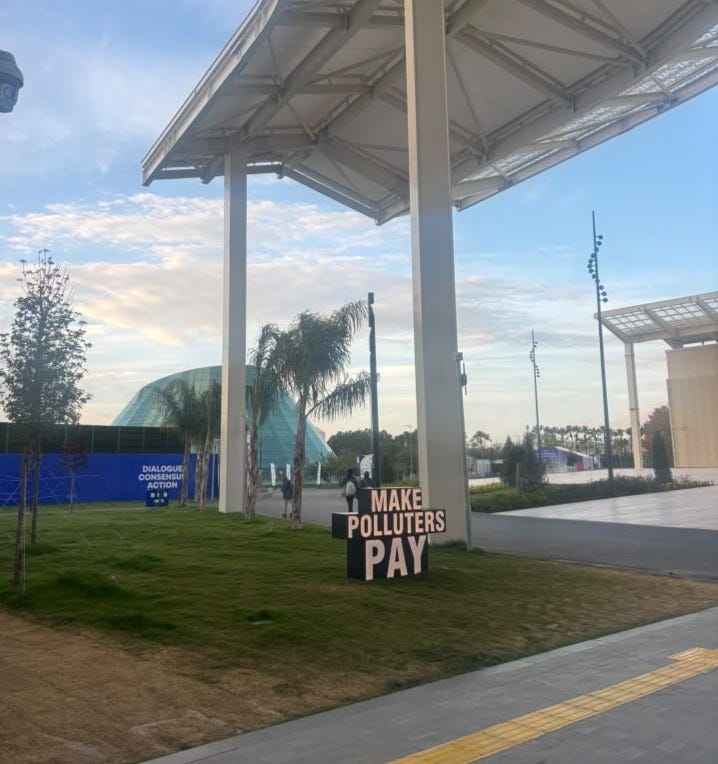
COP 30 CEO Ana Toni injected that urgency when presenting the roadmaps in Türkiye. The effort helps countries deliver existing commitments outside formal negotiations, drawing more than 400 contributions, an exercise that Brazilian Ambassador Liliam Chagas reckons could have taken 10 years through the UN’s consensus process. “We don’t have time. We have to act now.” For her and many others, speed is increasingly a test of the system’s legitimacy.
We see three possible pathways for the future of COP. The first is to defend consensus, which helped build three decades of expanding and largely successful COPs, as well as the Paris Agreement. As Singano pointed out, a universal forum gives smaller countries a way to challenge more powerful ones. For countries without much economic or geopolitical power, that veto is among the few they possess. But that leverage cuts both ways. When nearly 200 countries must agree, the same rule that prevents backsliding can also prevent progress. If you want consensus, you have to accept that a few can stop the rest. That is why even smaller states are losing patience, with Panama’s Environment Minister, Juan Carlos Navarro, calling for a shift from “consensus to majority if we want to get stuff done.”
The second path entrusts progress to increasingly prominent coalitions of the willing. The Beyond Oil and Gas Alliance and the Climate Club organize countries around specific goals, while Colombia and the Netherlands convened 57 countries in Santa Marta in April for a separate fossil-fuel transition conference. “The private sector got there first. They did their coalitions,” said IETA’s Alessandro Vitelli. “Now the governments are going, ‘Yeah, it is slow. You’re right. Coalition time.’” But he worries that competing clubs will create incompatible rules, with a company hoping to invest across borders facing a separate rulebook in each market. Speed brings coordination problems of its own.
A third possibility is two-tier multilateralism, which was championed by Brazil’s COP 30 presidency and is gaining support from Global South countries. The first tier creates rules by consensus, while the second tier mobilizes coalitions to implement at scale. The Brazilians point to the Tropical Forest Forever Facility and the Open Coalition on Compliance Carbon Markets as examples of what this could look like and argue their model will allow “climate action to gain global scale, irrespective of backtracking by any specific country.” That approach fits Brazil’s “don’t wait” ethos, but critics in civil society see a catch. If implementation is through voluntary side deals, the powerful will gain a free hand to write the rules.
Bang, Bang, Bang
Antalya offered a test of whether two-tier multilateralism can shift climate diplomacy into a new gear. Brazil, Türkiye, and Australia launched the Global Implementation Accelerator to select two solutions annually and take them to scale across presidencies, rather than letting each host roll out shiny new initiatives and neglect existing ones.
Kaveh Guilanpour of the Center for Climate and Energy Solutions warns that this action track remains detached from formal negotiations. Who sets priorities? How are results connected to national commitments? And who is accountable if a favored solution fails? Even insiders see the gap. One multilateral development bank climate director in Antalya argued for an independent UN grievance body to step in when fast-tracked projects go wrong on the ground. Not the World Bank and not the Asian Development Bank, he added. “We need to have feedback from the people, right?”
That is where more democratic experiments could come in. The Global Ethical Stocktake convened dialogues on justice and climate action involving around 13,000 everyday people, while the Global Citizens’ Assembly brought together 105 participants chosen by civic lottery from 60 countries and territories. If two-tier multilateralism links government agreements to faster delivery coalitions, giving citizens and grassroots groups a more structured role could help set priorities and check whether results have been delivered on the ground.
Spoiler ahead, but well into Digger, we learn that all the events the audience has seen are part of a satirical play, Fossil Fools, that recounts the ecological disaster Digger Rockwell’s oil company has set off. The play’s poster reads: “the cult classic from 2027.” Real-world diplomacy need not follow that script. For all our frustration with the COP circus, we are convinced that walking away would be a trap.
Proliferating clubs and voluntary tracks are already reshaping climate diplomacy, but without a universal forum, we are likely to end up with something that is a lot less than the sum of its parts. “When all else fails, you hit ’em with the truth,” Digger Rockwell boasts. “You know, the hard truth. Just bang, bang, bang!” For Rockwell, it’s another spin job. For everyone fighting to keep COP alive, it’s the whole point of showing up.
About the Authors
Saru Duckworth is a PhD Candidate at the University of Oxford Saïd Business School. Previously, she was a UN Foundation Next Generation Fellow for Jobs and Economic Opportunities, and served as an organizer of the 2024 UN Civil Society Conference in Nairobi.
Valeria Colunga is Chief Youth Executive at Girl Up and Policy Officer at Southern Voice. Her past experience includes being a Y20 Mexican Delegate and a UN Foundation Next Generation Fellow.

