![[Re]Group: A Playbook for Turbulent Times](https://substackcdn.com/image/fetch/$s_!PUHU!,w_120,h_120,c_fill,f_webp,q_auto:good,fl_progressive:steep/https%3A%2F%2Fsubstack-post-media.s3.amazonaws.com%2Fpublic%2Fimages%2Ff2fb4256-d509-4e61-827b-2ee678efbba9_256x256.png)
![[Re]Group: A Playbook for Turbulent Times](https://substackcdn.com/image/fetch/$s_!OvcZ!,e_trim:10:white/e_trim:10:transparent/h_182,c_limit,f_auto,q_auto:good,fl_progressive:steep/https%3A%2F%2Fsubstack-post-media.s3.amazonaws.com%2Fpublic%2Fimages%2Fa2653539-a634-4ef5-9aab-bc4a7546ebc9_1344x500.png)

This week on “World’s Toughest Job,” a podcast co-produced by Foreign Policy and the United Nations Foundation, we tackle a fundamental question facing the UN today: Can it still keep the peace?
Hosted by Jasmin Bauomy and co-hosted by Mark Malloch-Brown, our second episode explores a world with violence at levels not seen since the 1940s. They are joined by Lynn Kuok, the Lee Kuan Yew Chair at the Brookings Institution; Ankit Panda, a nuclear weapons expert at the Carnegie Endowment for International Peace; and Zeid Ra’ad al-Hussein, President of the International Peace Institute and former UN High Commissioner for Human Rights.
Starting with the historical precedent of the Secretary-General’s role in defusing the U.S.-Soviet Union standoff during the Cuban Missile Crisis in 1962, our panel asks: When modern warfare moves faster than traditional diplomacy, can the UN still act as a firebreak?
1. The UN must embrace its dual legacy.
When we think of the UN’s founding, we usually focus on its postwar mission to prevent another global war. But the institution was actually built on two parallel imperatives: stopping conflict and managing the dismantling of imperialism.
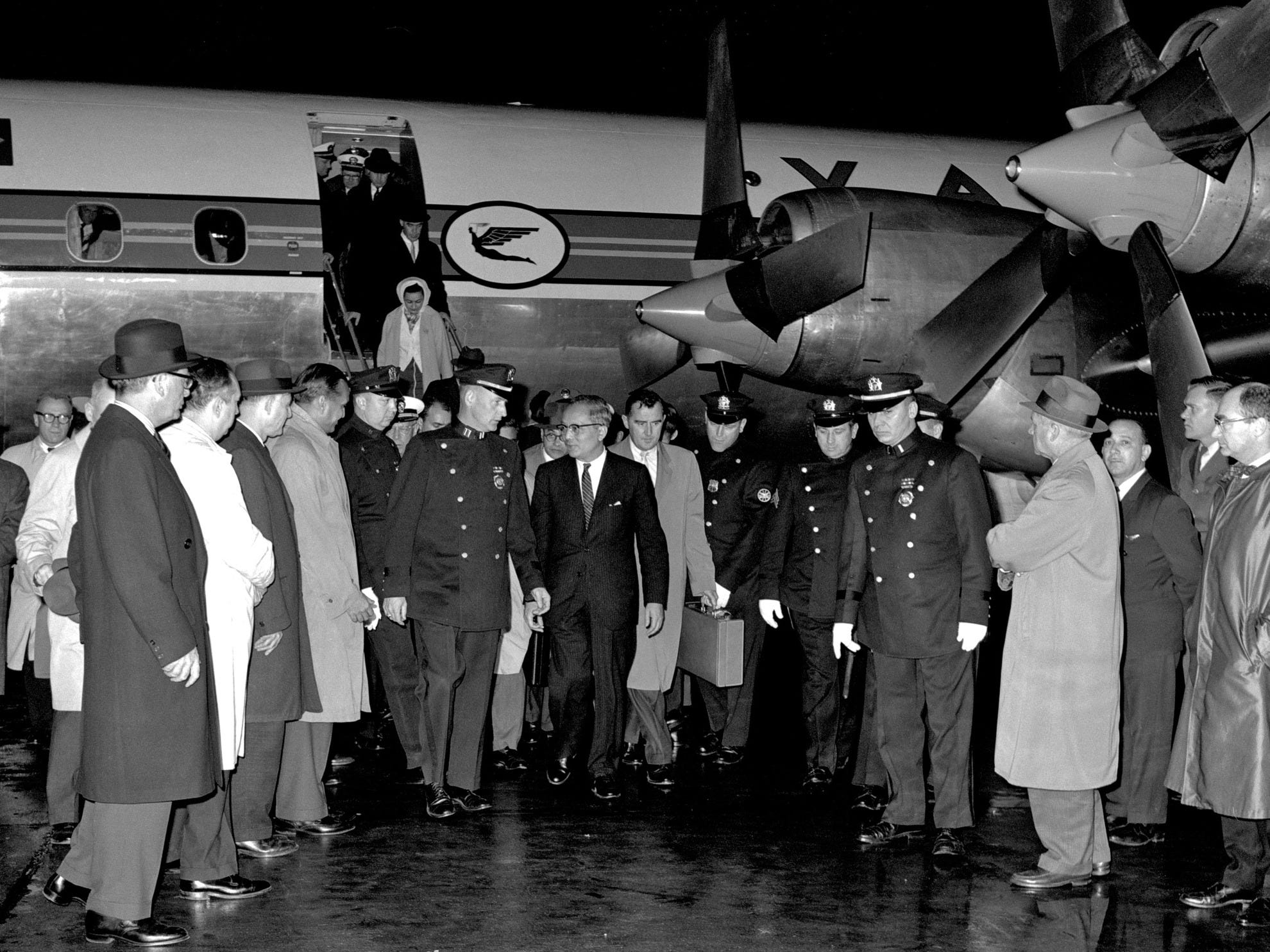
The Cuban Missile Crisis stands as the benchmark for how the Secretary-General can act as an essential mediator between great powers. As the superpowers barreled toward nuclear war, the UN stepped in to provide essential breathing room, with the Secretary-General playing a critical role in “creating the space for national leaders to take the right decisions to prevent us from falling over the brink,” as Ankit Panda put it. This wasn’t achieved from behind a desk in New York; direct intervention was the deciding factor. As Zeid Ra’ad al-Hussein pointed out: “Had U Thant not gone to Cuba, you would not have had a resolution, simple as that.”
Preventing existential conflicts is only half the job. Effective Secretaries-General have also played an essential role in creating space for the peaceful development of newly independent states. This ability to balance major power dynamics while empowering smaller nations is foundational to the UN’s identity and feeds directly into its approach to peacekeeping.
2. The geopolitical guardrails are collapsing.
The world is witnessing a rapid return to great-power conflict, coupled with a breakdown in the rules of international law. As a result, the UN is increasingly sidelined while major powers challenge or ignore multilateral norms.
Lynn Kuok highlighted how these foundational rules of engagement are eroding, noting: “We see U.S.-China tensions. And of course, even the rules by which powers should be playing are contested ... Even in recent months, great powers like the United States have said that international law is in fact irrelevant.” Panda agreed, arguing that the next UN chief will face the daunting task of managing “a United States that is deeply hostile to international law, multilateralism, and the United Nations system.”
Even when international bodies do intervene, such as the tribunal ruling against China regarding the South China Sea, enforcement is impossible without sustained global attention and political will. Ultimately, this breakdown is a reflection of domestic decay. Zeid argued that the erosion of global norms mirrors a broader domestic collapse: “International laws are not being respected,” he asserted. “National law is not being respected.”
3. The old peacekeeping playbook can’t solve today’s complex crises.
Traditional “blue helmet” peacekeeping is facing a political and financial reckoning. As Mark Malloch-Brown explained, today’s peacekeepers are increasingly losing international support and backing from host governments because they fail to deliver lasting solutions. Peacekeeping is expensive, he noted, and “is really only useful if it opens up a path to a longer-term peace.” If a mission merely maintains a dangerous status quo on a conflict, it becomes a low-return investment.
Part of the problem is that legacy missions are ill-equipped to address the underlying drivers of modern violence. In West Africa, for example, traditional UN operations have failed when violence is driven by disputes over land and where climate change is increasing competition between farmers and herders. Without imaginative approaches that get at deep-seated socioeconomic and environmental roots, sustainable peace is impossible.
To regain its footing, the UN must rethink where it spends its political capital. Kuok argued that the next Secretary-General needs the strategic vision to identify which interventions will “give the United Nations the greatest bang for its buck.” This may mean bypassing gridlocked major-power standoffs to focus instead on what are considered second-tier conflicts. By intervening early in crises “where the big powers aren’t so directly engaged,” the UN can exert greater influence and prevent localized disputes from metastasizing into global emergencies.
4. Today’s conflicts pit a $2,000 drone vs. a $2 million missile.
The economics of warfare has been upended by cheaper technologies and artificial intelligence. As Malloch-Brown pointed out, the financial realities of modern combat shift dramatically when a “drone that costs a few thousand dollars is the equal of a multimillion-dollar Patriot missile system.” This asymmetric dynamic can exhaust a well-equipped adversary that is forced to “blow away their ordinance defending themselves against all this cheap kit.”
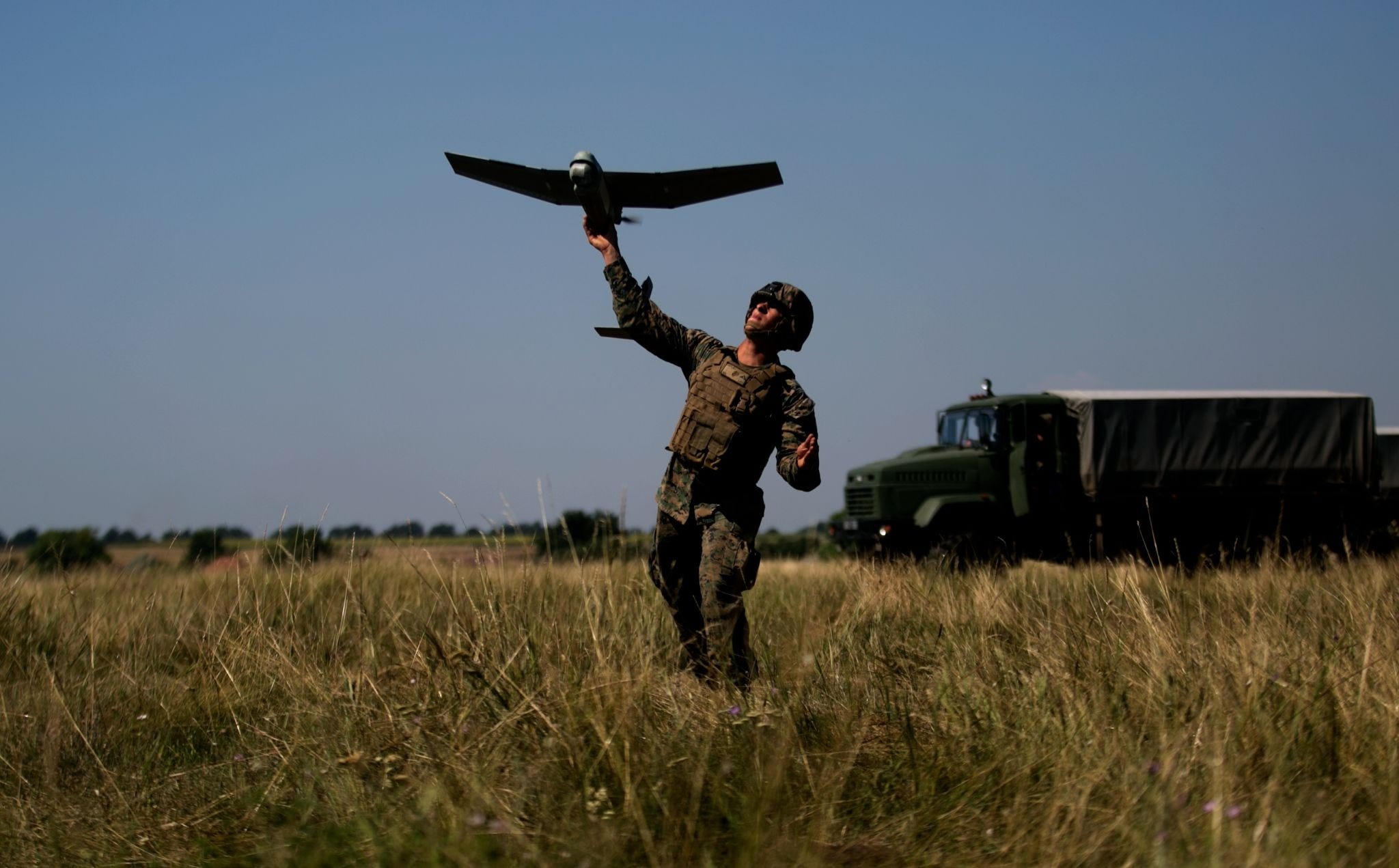
Furthermore, these new weapons are compressing battlefield decision-making to what the panel called machine speed. Panda warned that this alters the timeline for diplomatic intervention, creating a reality where “decision-making and crises might take on logics that are just uncontrollable by diplomats, by national leaders.” If a crisis unfolds in 13 minutes rather than 13 days — the length of the Cuban Missile Crisis — the Secretary-General’s only hope is to establish preventative norms before conflict starts.
5. Tech billionaires are the new sovereign actors.
Because of this technological shift, nation-states are no longer the only geopolitical players in the room. The Secretary-General’s preventive diplomacy must shape guardrails that stretch beyond states — such as the emerging norm against AI controlling nuclear weapons.
The UN must also grapple with a world in which private companies hold the keys to critical global infrastructure. Kuok stressed that securing the undersea domain — the subsea cables that carry the world’s data and power — is a conversation that “must be had, not just with states, but also with the private sector.”
This new reality extends into orbit. Panda highlighted how tech billionaires have growing control over space. Because “the overwhelming operators of satellites today are private commercial companies” such as Elon Musk’s SpaceX, there is a desperate need for new international laws to manage the 21st-century space environment. For the next Secretary-General, figuring out how to bring these tech titans to the diplomatic table will be a defining challenge — a theme we will explore deeply in our upcoming episodes on AI and critical global infrastructure.

6. A paralyzed Security Council is an opportunity, not an excuse.
As we discussed in episode 1, the next Secretary-General cannot wait for a divided Security Council to hand over a mandate. The next leader must be willing to take independent political risks. Zeid argued that institutional gridlock creates space for a “dynamic and active” leader. He pointed to Dag Hammarskjöld, the second UN Secretary-General, as the model: a leader who would “bring in, and suck up ideas, synthesize them, spit them out.”
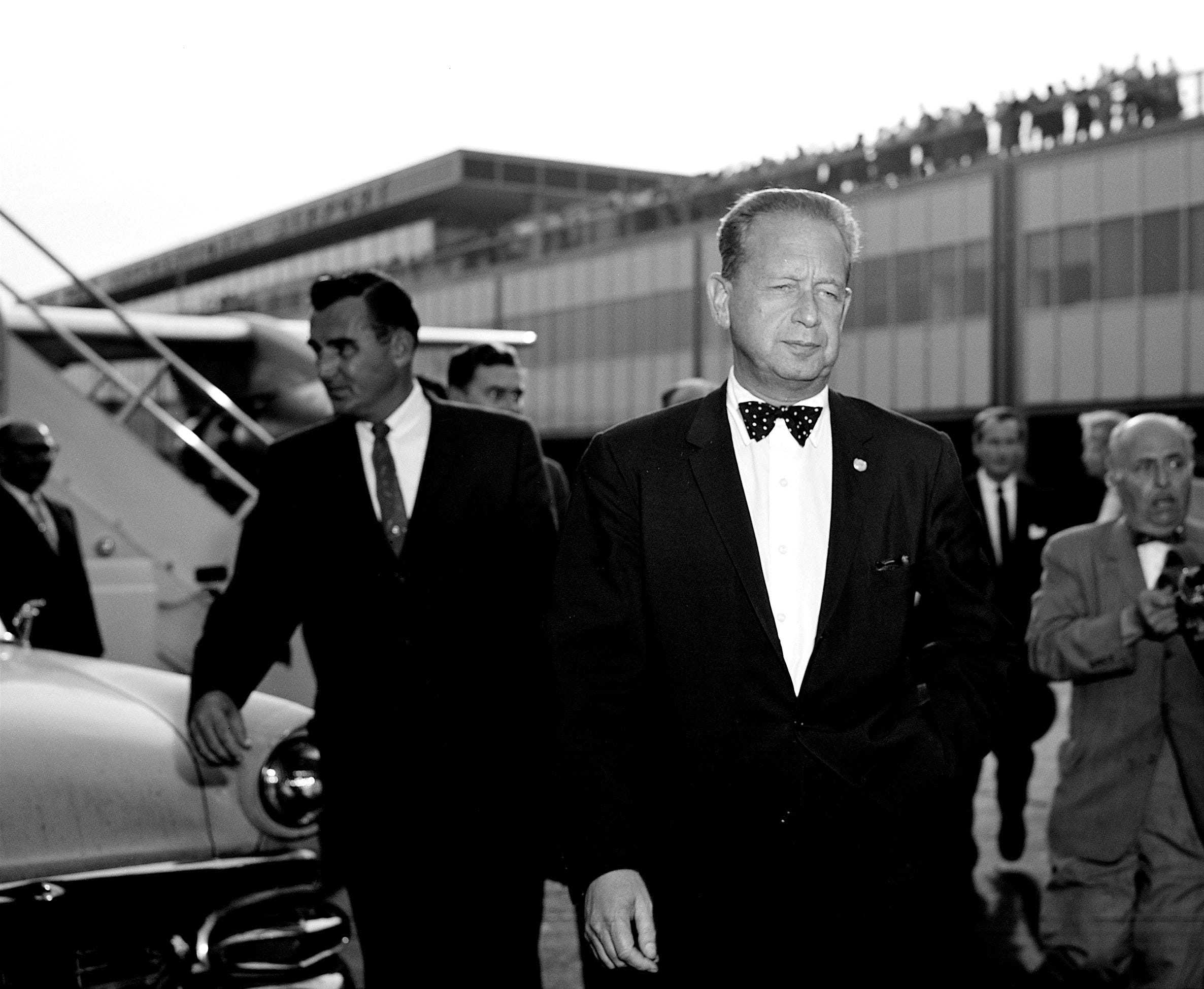
According to Panda, the next UN chief will need to be “known as possible in key global capitals, at the scenes of major international crises,” thereby ensuring “their identity becomes fused with the identity of the United Nations itself.” But moral authority and visibility won’t be enough if they aren’t backed by rigorous technical expertise. “If the secretariat of the UN really does make an effort to understand these issues in depth,” Zeid emphasized, “then when you’re meeting bankers or tech experts or so forth, they deal with you seriously.”
Ultimately, this circles back to the lesson of our first episode: The next Secretary-General must embrace the Icarus arc and risk angering influential states. Zeid offered a warning about leaders who choose to play it safe, asking if anyone could name the Secretary-General of the League of Nations in 1936. “Nobody remembers,” he noted, because that leader kowtowed to the powerful. In the case of the next UN chief, choosing compliance over courage risks condemning the United Nations to the same fate.
Quotations have been lightly edited for clarity.
Listen to the Latest Episode of “World’s Toughest Job”
Can the Secretary-General Still Act as a Firebreak on Peace and Security?

During the Cuban missile crisis in 1962, United Nations Secretary-General U Thant had three things on his side: personal diplomacy, the UN’s neutrality, and a few precious days to negotiate.