![[Re]Group: A Playbook for Turbulent Times](https://substackcdn.com/image/fetch/$s_!PUHU!,w_120,h_120,c_fill,f_webp,q_auto:good,fl_progressive:steep/https%3A%2F%2Fsubstack-post-media.s3.amazonaws.com%2Fpublic%2Fimages%2Ff2fb4256-d509-4e61-827b-2ee678efbba9_256x256.png)
![[Re]Group: A Playbook for Turbulent Times](https://substackcdn.com/image/fetch/$s_!OvcZ!,e_trim:10:white/e_trim:10:transparent/h_182,c_limit,f_auto,q_auto:good,fl_progressive:steep/https%3A%2F%2Fsubstack-post-media.s3.amazonaws.com%2Fpublic%2Fimages%2Fa2653539-a634-4ef5-9aab-bc4a7546ebc9_1344x500.png)
![[Re]Group's avatar](https://substackcdn.com/image/fetch/$s_!w0DV!,w_108,h_108,c_fill,f_webp,q_auto:good,fl_progressive:steep/https%3A%2F%2Fsubstack-post-media.s3.amazonaws.com%2Fpublic%2Fimages%2F0517e9f8-af1c-41a5-b83c-2630660e4517_256x256.png)
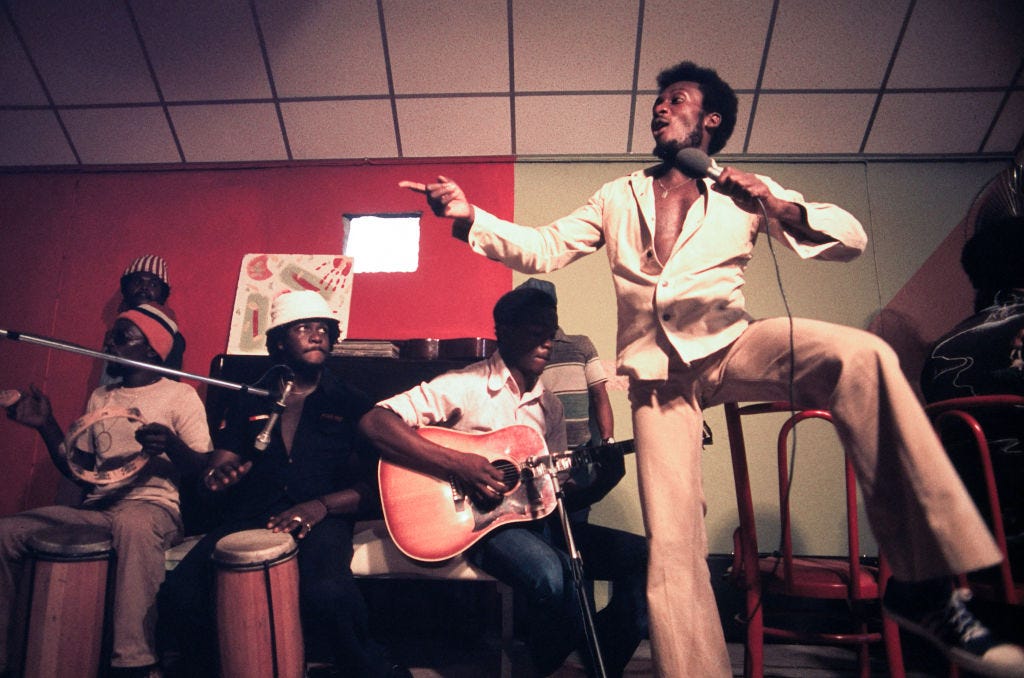
Speaking with Lord Mark Malloch-Brown for the World’s Toughest Job UNGA special, the Barbadian Prime Minister channels Jimmy Cliff with a message for the next UN leader: “You can get it if you really want.”
“I believe in being what I call a Jimmy Cliff girl,” Prime Minister Mia Mottley tells us in an interview for World’s Toughest Job, our podcast co-production with Foreign Policy. “You can get it if you really want, but you must try, and try, and try,” she advises the incoming Secretary-General. (Our UNGA special is live. Find it on a podcast platform near you.)
Talking with co-host Mark Malloch-Brown, the Prime Minister warns that the fear of failure drives paralysis. To survive today’s compounding crises, the international system needs a Secretary-General who is “nimble of thought and nimble of action,” she says.
The Prime Minister spoke ahead of a live debate, where Foreign Policy‘s Ravi Agrawal invited the International Crisis Group’s Comfort Ero and historian Thant Myint-U to play the triage game: “What should the next Secretary-General own, delegate, or drop?”
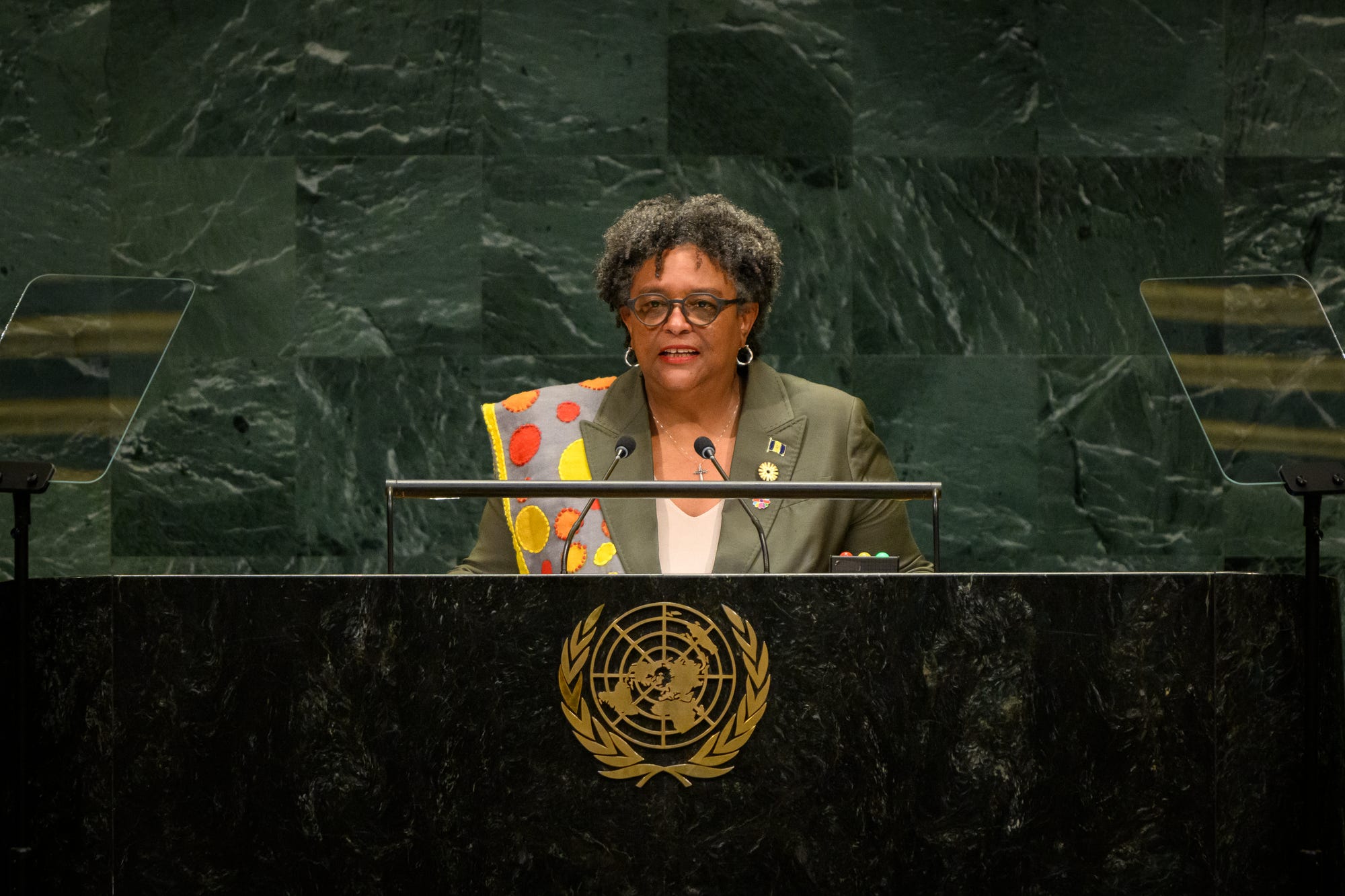
Mottley herself won’t be the world’s Chief Triage Officer. We didn’t ask her why she wasn’t running to be the world’s first woman Secretary-General, but the question surfaced at a Council on Foreign Relations event. “I have a country to run and a region to care for,” she replied.
But whoever emerges as a winner from a crowded field, the Prime Minister has clear ideas for their first 100-Day sprint:
Get humanitarian assistance to places where “too many people are suffering hunger as a result of global conflict.” For Mottley, this isn’t just about active war zones, but about tackling the fallout from supply chain shocks and price spikes that have hit import-dependent nations.
Have mediation teams ready to deploy to conflict zones, drawing capacity from within the UN but also beyond. Even if these envoys cannot fully or immediately resolve a conflict, they can get the right actors to the table to “minimize the extent to which it is causing harm.”
Tackle the exponential growth of AI before it threatens the safety of the planet. Warning that unethical models could pose existential risks, she said the next Secretary-General must build “a global perspective from the human race as to how to protect the human race.”
Address the “slow killer” of underdevelopment. Mottley warned that without access to affordable funding and technical skills, vulnerable countries will fall into a vicious cycle of instability and lost social cohesion.
Recognize that the climate crisis will not wait for the international system to act. Urging the new Secretary-General to seek “small victories” when bigger breakthroughs aren’t on the table, Mottley cited a Caribbean proverb: “one-one blow does kill ole cow.”

The next Secretary-General will face turbulent waters from day one, as the world grapples with worsening supply chain disruptions, more expensive debt, and the impacts of a “super El Niño.” They will need to take office with a plan clear enough to inspire confidence and rally member states behind collective action, given that “many hands will make light work.”
But above all, a new leader needs the flexibility to adapt. Leading the international system today, she concludes, is like sitting on a surfboard: “You have to know how to move... because of how quickly things are changing.”
The Bridgetown Dubs
A podcast is a beautiful thing, but when you put two people as full of ideas as Mottley and MMB in front of a mic, you inevitably leave gold on the cutting room floor. Since she already channeled Jimmy Cliff, consider these our Bridgetown Dubs: an EP of outtakes that didn’t make the official release.

SIDE 1: Multilateral Existentialist
We start with the mandate for multilateralism. On World’s Toughest Job, when the Prime Minister is asked why the international system needs a “pause and reset,” she uses the question to make the case for why we still need a rules-based order. It has made possible 80 years of development gains, she argues, and holds existential importance for smaller states like Barbados.
Now, the priority is to renew that order — and the international institutions that support it — during a polycrisis that is bringing even large countries to their knees.
Mark Malloch-Brown: You have argued for a bigger voice for smaller countries, which may mean empowering the General Assembly further. Do the next Secretary-General and other member states need to be better listeners? Or are there other structural changes that need to be made?
Mia Amor Mottley: I suspect you’re going to need structural changes. I think no one can accuse the previous SGs in recent years of being insensitive to the needs of small states.
We continue to treat small island states and the relationship with financial institutions with almost disdain and contempt, and not recognize that economic imbalances are existential crises for us in the same way that other things like climate or AI are existential crises for the global community.

Where I think we run into difficulties is that there’s always a disconnect between the Permanent Representatives and their capitals. There’s always a disconnect between the governors of the World Bank and the IMF and their capitals. It’s the gatekeepers who make it impossible for you to make serious progress on matters that are meaningful. One, out of fear. Two, out of a desire to retain dominance.
Frederick Douglass told us that power concedes nothing. And unless there is a compelling reason for change to take place, it’s not going to take place.
What is that compelling reason? The world faces a polycrisis, and we have seen large countries on their knees purely because of how it has affected their fiscal situation. Wars and conflicts have impacted how countries relate to one another, and they are prioritizing public expenditure, as defense takes over from development spending.
At some point, countries are going to have to determine what their stake is. That’s why I keep talking about the global commons. We saw it with COVID and the pandemic. Whether you were rich or poor, individuals or countries, no one was excluded.
It showed us that the smallest thing can also decimate the world and that we really are interconnected. Until we can come to a broad realization that we all face common threats and we all want the possibilities that come from common prosperity, we’re not going to see structural change.
That is going to need global advocacy, but particularly in capitals. Because it is with capitals that those gatekeepers are blocking the conversation, and it is in capitals that people are not yet confronting the reality of decisions that are critical for the prosperity and stability of the global community.
SIDE 2: Veranda Diplomacy
Listen to the podcast and you can hear the Prime Minister and Malloch-Brown agree that the UN is in “a horrible financial hole,” but that there is fat to cut that is sometimes visible to “the naked eye.”
The Prime Minister argues that it will never be stable to depend on a handful of people to lead the international system, or a handful of countries to pay for it. You need “solidarity groups” with the political weight to deliver change on the scale that is now needed.
Mark Malloch-Brown: How would you deal with this issue of reform and resources? Do you have any thoughts for a new Secretary General on what their first reform agenda should be?
Mia Amor Mottley: After you finish cutting all the fat that you can, you cannot then be hostage just to a few countries. I give the example that just after we became an independent country, President Johnson offered our then Prime Minister to pay for our membership of the Organization of American States. The Prime Minister said, “Where I come from, if you can’t afford to pay the dues, you do not join the club.”
I believe that the rest of us globally have to be able to accept responsibility that it makes sense for us to increase by a little bit what we are paying, because what the UN then gives us back is what we cannot on our own afford to buy. Without bankrupting governments, we can see a greater proportion of the budgetary amounts being carried by a larger number of states.
Mark Malloch-Brown: As the US cut its donations, we have heard huge criticism of the US, but see very little evidence of countries stepping up to replace it. So I think that’s a very powerful call.
Mia Amor Mottley: I think, Mark, part of the problem is that nobody has really asked countries to step up. We’re talking on a parallel track, as if we’re standing on a veranda outside of where the action takes place.
We need to come up with a formula that says, “Let’s start with the G77 and see where the appetite lies for you to take an increase of 10% or 15%. It’s not going to break your bank, but it’s going to make the difference.” When that is combined with reforms we can make to institutions, then we will be able to do a lot more than we’re currently doing.
But what we can’t do is abandon the development agenda or the humanitarian agenda. You put countries in a vicious cycle that will not wait on time to be resolved. I believe you probably have over 40 countries that are in distress at the moment and dealing with the International Monetary Fund. They can’t wait a year or two for their matters to be resolved, because if they do, it will just get that much worse.
Her Excellency The Honourable Mia Amor Mottley’s conversation with Lord Mark Malloch-Brown has been edited for length and clarity.

