![[Re]Group: A Playbook for Turbulent Times](https://substackcdn.com/image/fetch/$s_!PUHU!,w_120,h_120,c_fill,f_webp,q_auto:good,fl_progressive:steep/https%3A%2F%2Fsubstack-post-media.s3.amazonaws.com%2Fpublic%2Fimages%2Ff2fb4256-d509-4e61-827b-2ee678efbba9_256x256.png)
![[Re]Group: A Playbook for Turbulent Times](https://substackcdn.com/image/fetch/$s_!OvcZ!,e_trim:10:white/e_trim:10:transparent/h_182,c_limit,f_auto,q_auto:good,fl_progressive:steep/https%3A%2F%2Fsubstack-post-media.s3.amazonaws.com%2Fpublic%2Fimages%2Fa2653539-a634-4ef5-9aab-bc4a7546ebc9_1344x500.png)


Embracing the Icarus Arc
Season one of World’s Toughest Job is a wrap. (Though we hope to be back for more.)
Has a podcast ever done more to live up to its title? Across eight episodes, we explored the crises awaiting the 10th UN Secretary-General. From the volatility of major power dynamics to AI and climate shocks, the series made you wonder why anyone would put themselves up for election.
But it was ever thus. Read on for more about that and for our interview with former UN Deputy Secretary-General and World’s Toughest Job co-host, Mark Malloch-Brown.

The Scapegoat
Trygve Lie, the first Secretary-General, called the job “a nightmare.” His successor, Dag Hammarskjöld, was mocked as a “useless lout.” U Thant viewed the UN as a “last-ditch, last-resort affair,” while Javier Pérez de Cuéllar complained about presiding over an institution on the verge of collapse.
But it was Boutros Boutros-Ghali who complained longest and loudest, in a memoir dedicated to settling scores.
Getting the job was an “agonizing and embittering experience.” Losing it — after a fierce battle to avoid a veto from his bitter foe, U.S. ambassador to the UN Madeleine Albright — was worse.
The Clinton administration, he complained, “was doing more to get rid of me than to get rid of Radovan Karadžić, the Serb leader indicted as a war criminal.”
Messy Multipolarity
The UN is always deadlocked. Major powers are always at each other’s throats. The institution is perpetually on the edge of bankruptcy. And if there is unity, as Kofi Annan used to joke, it is when Member States are pretending that SG actually stands for “scapegoat.”
The 10th Secretary-General will inherit all of this, accelerated by a messy multipolarity. If they look at the careers of their predecessors, they will see that the SGs who succeed are the ones who don’t wait for permission. They’re drivers of change, not re-arrangers of deck chairs.
But as Mark Malloch-Brown said in our first episode, you have to burn political capital to get things done. Forcing change comes at a cost. His advice? Embrace the Icarus arc.
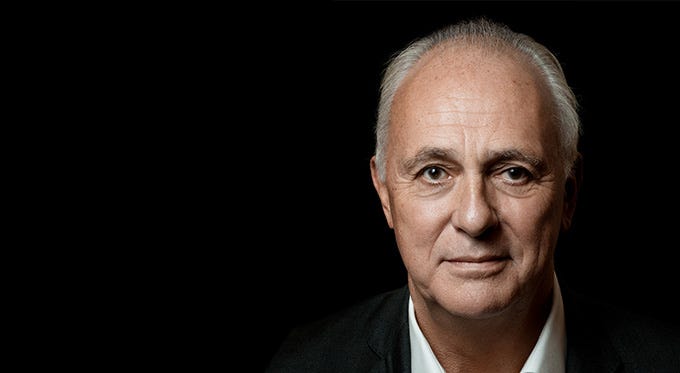
Mark Malloch-Brown
Five Minutes on the Transition
To find out more, we sat down with Mark Malloch-Brown to talk through the Secretary-General’s transition playbook. His advice to the next SG? Skip the mega-reform packages. Build a “Marine Corps,” act fast, and force the system to follow your lead.
[Re]Group: If you were advising the candidates, how should they prepare for day one?
Mark Malloch-Brown: They need a 100-day sprint. As much as possible, you need a very strong team assembled before January 1. That team is tasked with a clearly identified set of early wins that cover the terrain — something on peace and security, on humanitarian response, on climate, probably on AI.
You bring open-ended peace processes to a conclusion and you launch new initiatives around problems like Sudan, which are probably much more open to dynamic mediation than people think.
First, get some early wins that will be seen and will have global impact, so people sit up and realize the UN is back in town. Only then should you get on with the inevitably murky, slow, and less visible process of sorting out the overlap and duplication of agencies.
“Reform tends to deteriorate into working groups and processes that are never-ending and the curse of a New York-centered bureaucracy.”
[Re]Group: If we can’t rely on 193 Member States to agree, where does the support for change come from?
Mark Malloch-Brown: You want a dynamic minilateralism under the multilateralist umbrella, where groups of States work with the Secretary-General on challenges that are of consuming importance to them.
Take Kofi Annan and the HIV crisis. As the pandemic took hold, there were HIV units scattered all across the UN system, responding as much to funding opportunities as to human need.
Kofi realized the response had to be consolidated and driven by clear metrics: The price of antiretrovirals needed to be brought down, and their availability dramatically increased.
He found a way of deploying a combination of governments, international institutions, and the pharmaceutical industry (in part through threats to pharma). He brought in George W. Bush, who was hugely skeptical of the UN in a classic Republican way, but PEPFAR happened in response to Kofi’s leadership.
What the UN has lost in the years since is a leader who defines the problem, determines who needs to be at the table to solve it, mobilizes that group, and drives them towards a time-bound solution.
We're missing the "just make it happen" bit. The whole system no longer gets galvanized behind a problem. You need lean, sharp delivery models.
[Re]Group: You mentioned that getting bogged down in reform can be a trap. How does a new SG get the system to change?
Mark Malloch-Brown: You’ve got to get the UN out of lots of things it currently does, but the way to do that is not to take it head-on.
If a new Secretary-General makes that mistake, they just spend the next five years in trench warfare. I suppose the analogy is: fight with drones, not like the First World War generals.
When you innovate and deliver external success, that builds momentum, and reform follows effective delivery.

Decoding the Candidates
Reading List
To figure out what the candidates intend to do if they win, 1 for 8 Billion has launched a live database of Policy Profiles.
As campaign coordinator Aditi Gorur tells [Re]Group, the value of these profiles is often found in “the space between the notes.” What a candidate omits is as telling as what they emphasize. (For instance, the profiles reveal that across the board, candidates have so far offered little depth on either climate or humanitarian response.)
Fifteen leading NGOs produced the profiles: prevention (CHRIPS and Saferworld), peacekeeping and peacebuilding (CCCPA and International Peace Institute); humanitarian action (ODI Global); development and inequality (Center for Policy Dialogue and Southern Voice); human rights and gender equality (CEJIL and GQUAL Campaign); gender, youth, and civil society inclusion (CIVICUS and TAP Network); climate (Plataforma CIPÓ and SHE Changes Climate); and UN reform (Article 109).
Take the profile on UN reform. Rebeca Grynspan insists the job is “more than stewardship,” calling for “ambitious structural reform,” while Macky Sall wants to “move the agenda” on political reform. On the other side, Rafael Grossi favors “technical right-sizing” as an “administrator and implementer,” and María Fernanda Espinosa commits to “shrinking the UN responsibly.” Meanwhile, candidates like Michelle Bachelet and Carolyn Rodrigues-Birkett frame the challenge largely around “efficiency” and “questions of implementation.”
SG Roundup: Regional Priorities
Six candidates are running for UN Secretary-General, with the Security Council set to weigh in via straw polls in late July.
As New York’s diplomats scatter for summer, speculation continues on whether new candidates will enter the race. At this point, they almost certainly will.
Read our cheat sheet to understand how the process works.
Ideas for the next Secretary-General’s inbox are not in short supply, but what’s missing are concrete proposals that have Member State buy-in.
A new series of convenings aims to fill that gap, starting in Africa. On July 9 and 10, SAIIA, the UN Foundation, NYU CICI, and CEPEI co-hosted a dialogue in Johannesburg, bringing together African scholars, policymakers, and former diplomats to discuss actions the region would ask SG to prioritize.
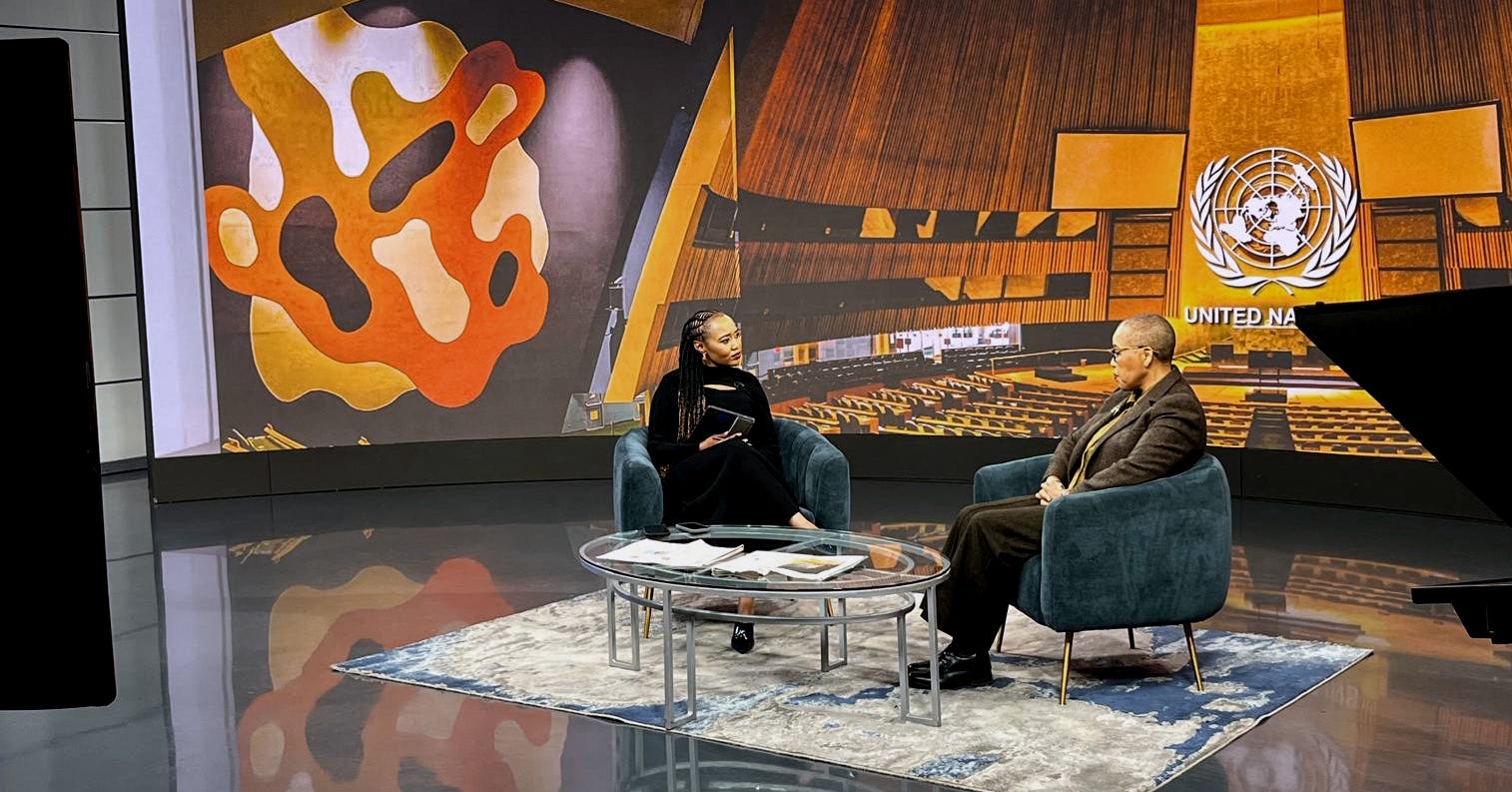
Ambassador Mathu Joyini, former South African Permanent Representative, previewed the stakes on eNCA’s morning show with host Masego Rahlaga, arguing that the leadership qualities we look for in the next SG have to be grounded in regional priorities, not abstract criteria.
Next up: Europe, Asia, and Latin America.
The Complete Podcast
From the Archive
We have just launched the official World's Toughest Job series page — a one-stop shop for the entire first season.
It includes all eight episodes — in audio on your favorite podcast platform and in video on YouTube. For each episode, you will also find our editorial deep-dives on how past Secretaries-General confronted key challenges and takeaways from the expert roundtables.
This project has been an education in how much work goes into creating a series of this scale.
A huge thank you to our brilliant hosts, Jasmin Bauomy and her co-host Mark Malloch-Brown for anchoring the series. And an enormous note of gratitude to our lead producer Karen Given, and the Foreign Policy team of Dan Ephron, Rob Sachs, Maria Ximena Aragon, Sara Stewart, Susanna Maize, and Jesse Willis. We couldn’t have asked for better partners.
A quick favor before you go:
If you found value in the podcast series, please take a moment to like, subscribe, and rate on Apple, Spotify, or YouTube.
And if you have colleagues who you think might want to listen, please forward this newsletter to them.