![[Re]Group: A Playbook for Turbulent Times](https://substackcdn.com/image/fetch/$s_!PUHU!,w_120,h_120,c_fill,f_webp,q_auto:good,fl_progressive:steep/https%3A%2F%2Fsubstack-post-media.s3.amazonaws.com%2Fpublic%2Fimages%2Ff2fb4256-d509-4e61-827b-2ee678efbba9_256x256.png)
![[Re]Group: A Playbook for Turbulent Times](https://substackcdn.com/image/fetch/$s_!OvcZ!,e_trim:10:white/e_trim:10:transparent/h_182,c_limit,f_auto,q_auto:good,fl_progressive:steep/https%3A%2F%2Fsubstack-post-media.s3.amazonaws.com%2Fpublic%2Fimages%2Fa2653539-a634-4ef5-9aab-bc4a7546ebc9_1344x500.png)

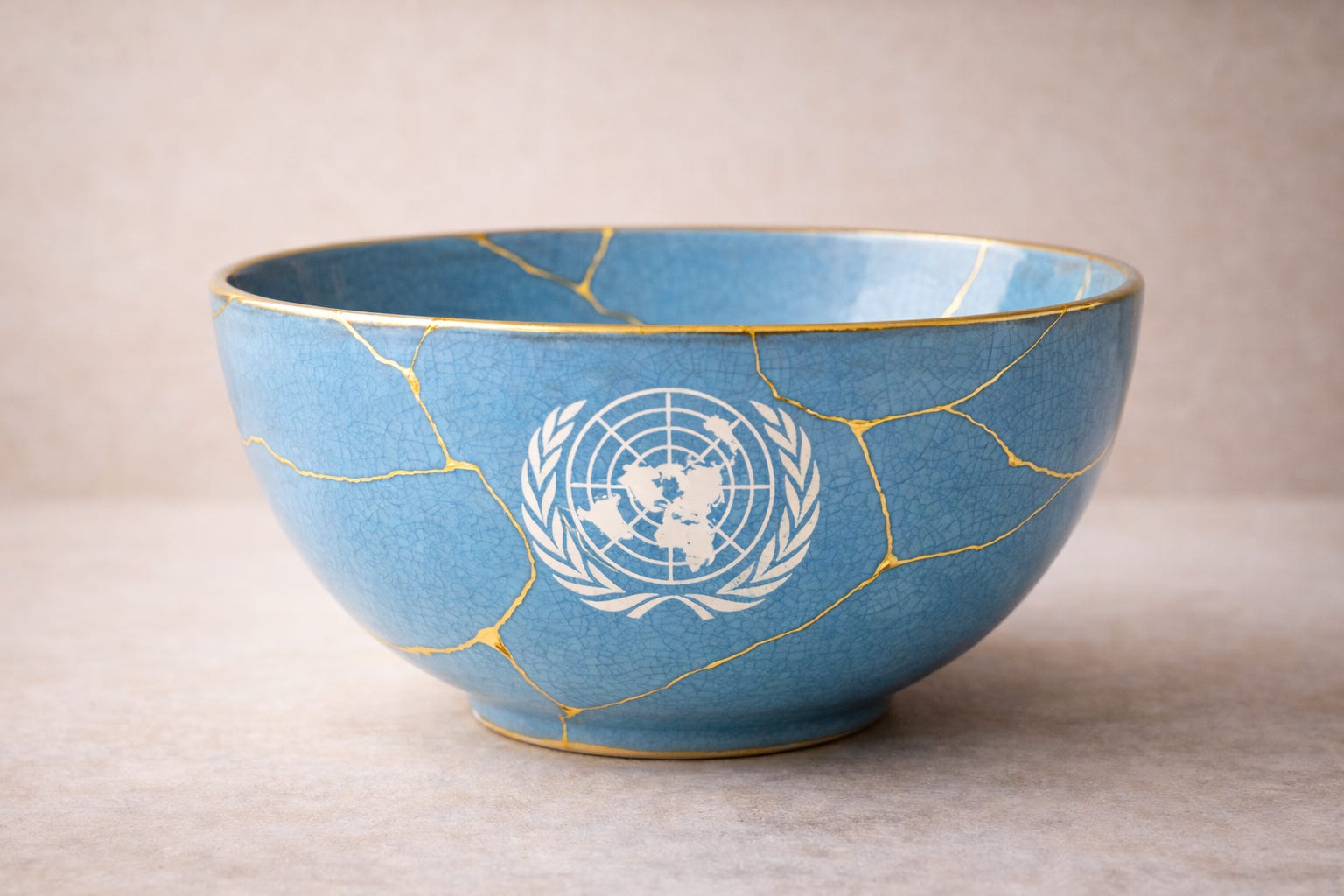
As the race for the next United Nations Secretary-General heats up, the stakes of the contest are high.
A succession of shocks has battered our system for international cooperation at a time when its primary sponsors are withdrawing political and financial support.
For months, world leaders have seemed to be on an accelerated march through the stages of grief — past denial and anger, and now deep into bargaining, as “wrecking ball” politics threaten to dismantle the system from within.
Faced with a world in disarray, states are following all options to insulate themselves from geopolitical stress: de-risking where they can, pursuing strategic autonomy where they must. Many wonder openly if multilateralism — the idea that states best solve problems by working together — has flatlined.
But for all the talk of autonomy, new clubs and alignments are emerging as states seek any table that can deliver an effective hedge against risk as well as more reliable arrangements to meet individual and collective needs. Legacy institutions are also attracting renewed interest, as ad hoc upstarts such as Donald Trump’s Board of Peace spur more full-throated support for the United Nations than it has enjoyed in years.
Don’t mistake this sentiment, though, for a belief that existing institutions can meet today’s challenges. The global issues that worry leaders most — from global economic volatility and unmanaged great-power competition to artificial intelligence, galloping inequalities, and climate change — pose systemic risks that the international system, as currently configured and resourced, lacks the capacity to manage.
This is the Multilateralist’s Paradox that will greet the next Secretary-General: that the crisis isn’t a lack of demand for global cooperation, but a failure of supply.
The Risk Premium
To understand why, we must accept that nostalgia is indeed not a strategy and remember why states created the modern international system in the first place.
The United Nations was designed to manage geopolitical and geoeconomic risk. Born out of the trauma of World War II, the new organization was confronted by a volatile period in which war-ravaged countries were in desperate need of reconstruction and in which ideological polarization more extreme than anything yet experienced today was quickly setting in.
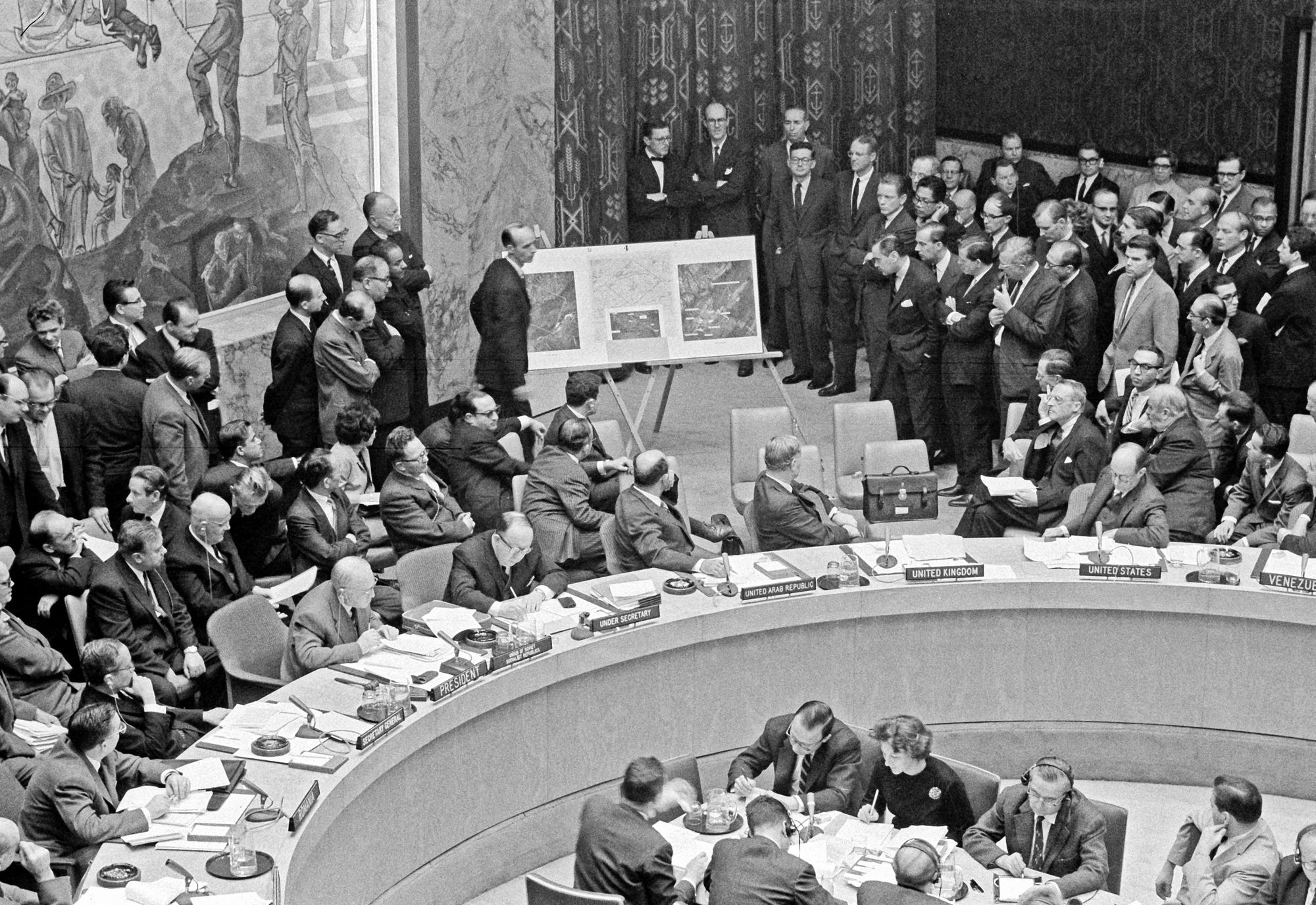
As postwar evolved into Cold War, regional and proxy conflicts took a violent toll, and repeated flashpoints nearly turned the Cold War hot, most dangerously during the Cuban Missile Crisis in 1962, when UN diplomacy helped walk superpowers back from the brink.
A very different dynamic was also emerging from the end of empire with the unprecedented birth of dozens of new nations, coming to independence with far less violence than in any previous period of state-making — a profound, if often forgotten, collective achievement, supported by UN norms and agencies.
After the Cold War, the international system became more complex, as it was tasked with new missions, including ambitious approaches to conflict, a big push on poverty reduction, additions to the global health architecture, and an attempt to generate global public goods in climate, the environment, and other areas.
During this period, multiple wars ended and millions of lives were saved.
But this period was also characterized by ahistoricism, political myopia about the extent of shared interests, and complacency that a comparatively benign geopolitical environment would last forever.
Today, as we again confront a spiking risk premium on global affairs, we need new modes and models for action that more accurately reflect the global distribution of power and interest. With multilateralism seen by many as a survival mechanism, several waves of demand are building on the horizon.
Three Waves of Demand
A first wave comes from so-called pivotal or middle powers — heavyweights in their own right with even greater leverage when they combine effort. These states are instinctively favorable toward an inclusive international system but pragmatic about any forum they believe can deliver results. We are already seeing them innovate on priorities ranging from trade to critical minerals to AI. The pace of diversification will only increase.
A second wave comes from smaller states that regard the breakdown of global rules as an existential threat. A decade ago, they saw a path, however narrow, to climate finance, debt restructuring, and investment in a shared future. With that track in jeopardy, they have a powerful need to renew collective action ahead of the next storm. No one should underestimate the influence these countries can exert.
A third wave may surprisingly come from the world’s largest powers. The United States and China are locked in a structural rivalry that will define the 21st century. They appear to have their sights set on confrontation, but paradoxically this rivalry may drive a corresponding demand for guardrails. Neither country gains from accidental war. Neither benefits if AI goes rogue. Neither profits if proxy conflicts get out of hand.
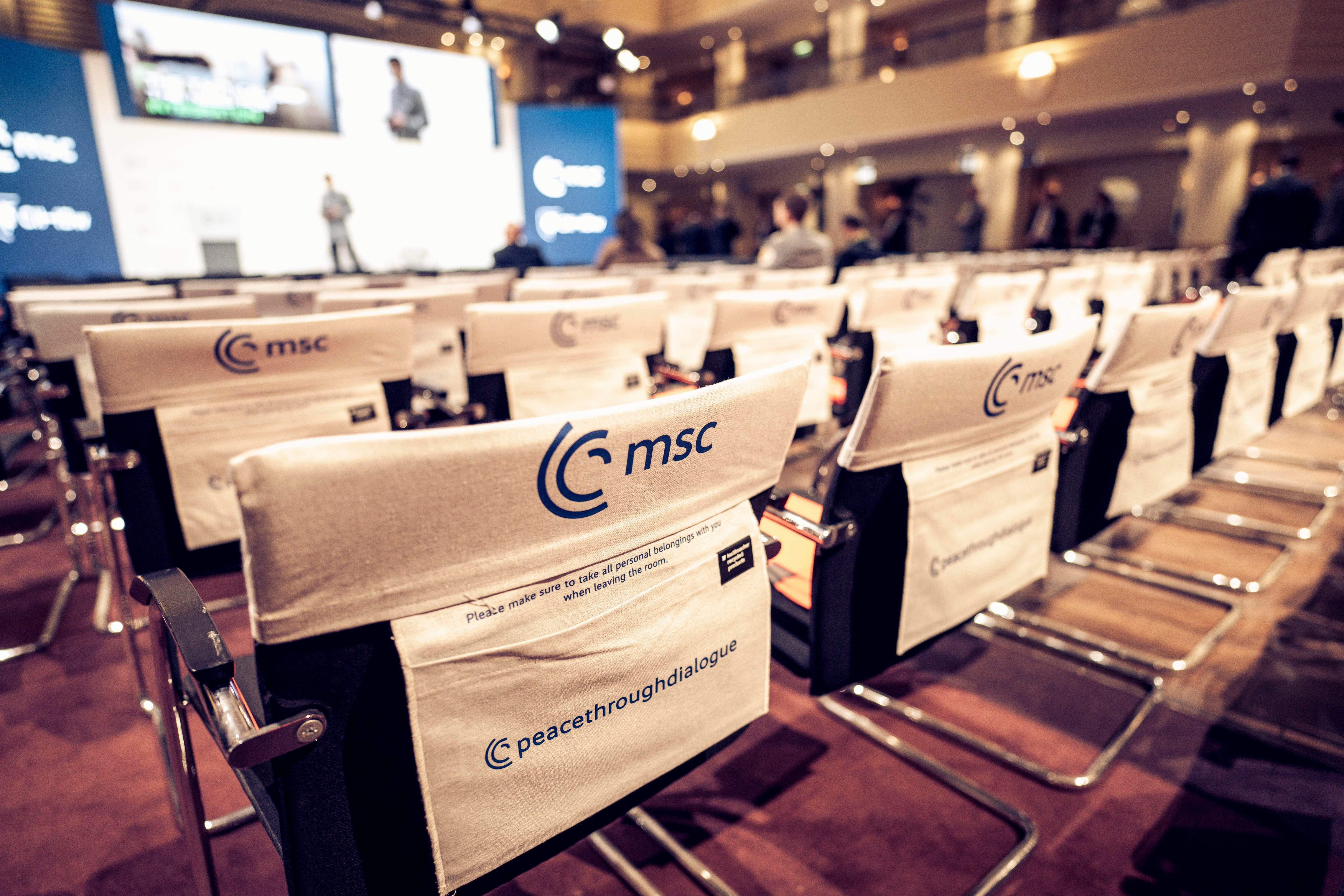
At the 2026 Munich Security Conference, it was striking to see the United States and China both touting and doubting the value of international cooperation. U.S. Secretary of State Marco Rubio said the United Nations “still has tremendous potential to be a tool for good in the world” but chastised the body for lacking answers to the most important global questions. President Trump, meanwhile, has said that the newly launched Board of Peace “is going to almost be looking over the United Nations and making sure it runs properly.”
Like Rubio, his counterpart, China’s Minister of Foreign Affairs, Wang Yi, expressed interest in both old and new multilateral solutions. He reaffirmed the UN as an authoritative platform for global governance but also said the actions of a “certain country” were impeding its functions. He heralded China’s own Global Governance Initiative as an alternative “compass for the giant ship of history,” at a time when China is building increasingly powerful networks of influence across the Global South and beyond.
If the appetite for cooperation is not dead, neither will it be easily satisfied. Levels of trust are low. Resources are scarce. Multilateral institutions are struggling to deliver. The paradox facing a new Secretary-General is less that they will lead an irrelevant institution than one that risks being overwhelmed or sidelined by demand it cannot supply.
Transcending the Paradox
For the UN, tackling the supply crunch requires more than rearranging the organigram, especially given the pace at which demand for multilateral solutions is accelerating.
Instead, the next Secretary-General can view surging demand as an invitation to innovate and an opening for deeper reinvention. In fact, multilateral improvisation is a time-honored tradition going back to the UN’s founding and characteristic of its most effective work. A renewed focus on core missions is one place to start, with a spur to strategic creativity around the issues on which people most expect the UN to deliver.


