![[Re]Group: A Playbook for Turbulent Times](https://substackcdn.com/image/fetch/$s_!PUHU!,w_120,h_120,c_fill,f_webp,q_auto:good,fl_progressive:steep/https%3A%2F%2Fsubstack-post-media.s3.amazonaws.com%2Fpublic%2Fimages%2Ff2fb4256-d509-4e61-827b-2ee678efbba9_256x256.png)
![[Re]Group: A Playbook for Turbulent Times](https://substackcdn.com/image/fetch/$s_!OvcZ!,e_trim:10:white/e_trim:10:transparent/h_182,c_limit,f_auto,q_auto:good,fl_progressive:steep/https%3A%2F%2Fsubstack-post-media.s3.amazonaws.com%2Fpublic%2Fimages%2Fa2653539-a634-4ef5-9aab-bc4a7546ebc9_1344x500.png)
![[Re]Group's avatar](https://substackcdn.com/image/fetch/$s_!w0DV!,w_108,h_108,c_fill,f_webp,q_auto:good,fl_progressive:steep/https%3A%2F%2Fsubstack-post-media.s3.amazonaws.com%2Fpublic%2Fimages%2F0517e9f8-af1c-41a5-b83c-2630660e4517_256x256.png)
For 80 years, the selection of the United Nations Secretary-General has been the world’s most exclusive game of musical chairs. It is a process famously described as opaque, protracted, and usually bad-tempered — a diplomatic papal conclave where the white smoke rises only after months of bruising backroom deals.
A General Assembly resolution calls for a candidate of “eminence and high attainment,” a bar that all nine occupants of the office have met (though one hid a terrible secret). But eminence is rarely the deciding factor. Since 1946, the race has been defined by unwritten rules, great power rivalries, and accidental victors.
Nine men have now been Secretary-General (plus one Acting Secretary-General). We look back at how they were chosen, identifying seven lessons on what to expect as the world gears up for the next selection.
1. Pick Your Article of Faith
Article 7 of the UN Charter stipulates five “principal organs” of the UN System (plus the Trusteeship Council which has suspended its operations), of which the UN Secretariat, helmed by a Secretary-General, is one — implying a stature alongside the UN’s Member State bodies that has often been honored in the breach.
Article 97 of the UN Charter provides for the Secretary-General to be appointed by the General Assembly upon the recommendation of the Security Council. This is another opportunity for balance across the UN system that has yet to be seized. In practice, the Security Council has played kingmaker and the General Assembly largely a rubber stamp.
The primacy of the Security Council has also handed a weapon to the Permanent Five (P5): the veto. Historically, you do not need the world to love you to become Secretary-General; you just need China, France, Russia, the United Kingdom, and the United States not to hate you or at least to be indifferent to you.
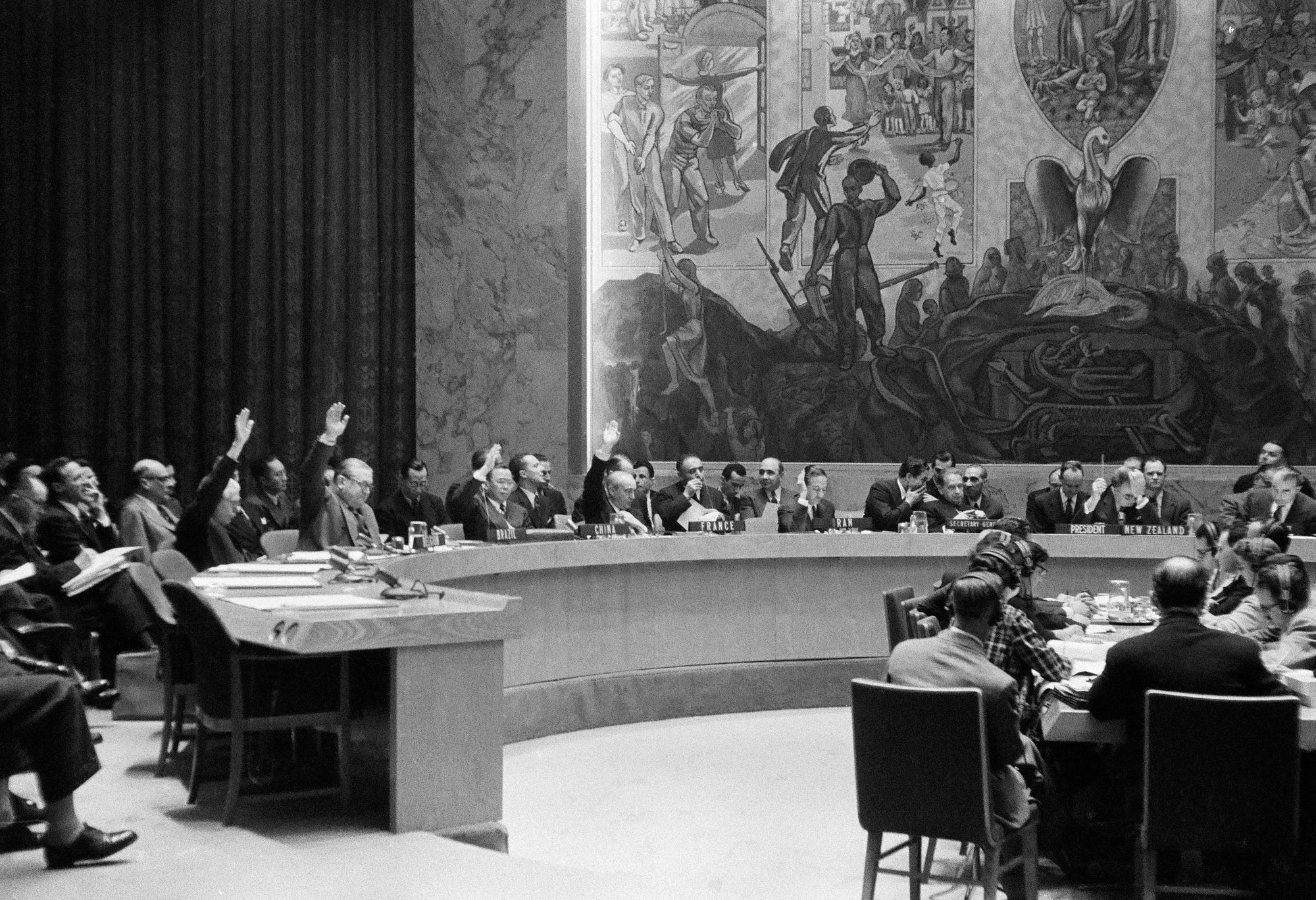
The veto has turned many selections into a war of attrition. In 1981, the race descended into a farce known as the Waldheim-Salim deadlock. China, determined to see a Secretary-General from the developing world, vetoed the Austrian incumbent Kurt Waldheim a record-breaking 16 times. The United States, refusing to accept a “radical,” vetoed the Tanzanian candidate Salim Ahmed Salim 15 times. The stalemate broke only when both exhausted powers dumped their champions and settled on a compromise everyone could live with: Peru’s Javier Pérez de Cuéllar.
The veto can be just as deadly when wielded alone. In 1996, Boutros Boutros-Ghali had the support of 14 of the 15 Security Council members for a second term. But he had made a fatal enemy in U.S. Ambassador Madeleine Albright. After a series of clashes (Boutros-Ghali once dismissed her as “poor girl, she is out of her league”), the U.S. cast a lone veto, forcing the Egyptian diplomat out. The lesson was brutal and clear: A recommendation requires unanimity. If even a single great power wants you gone, you go.
For all the power wielded by the Security Council, the process remains unpredictable and dynamics elsewhere can still shape preferences.
2. The Secret Candidate
Because the veto can incinerate front-runners, high-profile campaigning is often a kiss of death. The history of the UN shows that the winner is frequently the person who stayed in the shadows the longest.
The first proper Secretary-General, Norway’s Trygve Lie, was a compromise candidate chosen in 1946 only after the United States and Soviet Union blocked each other’s favored contenders. (The actual first occupant was Gladwyn Jebb, a British civil servant who held the job for a little over three months as Acting Secretary-General — hence the ½ in our history — allowing the British to forever annoy the Norwegians by claiming that the first Secretary-General came from Yorkshire, not Oslo).
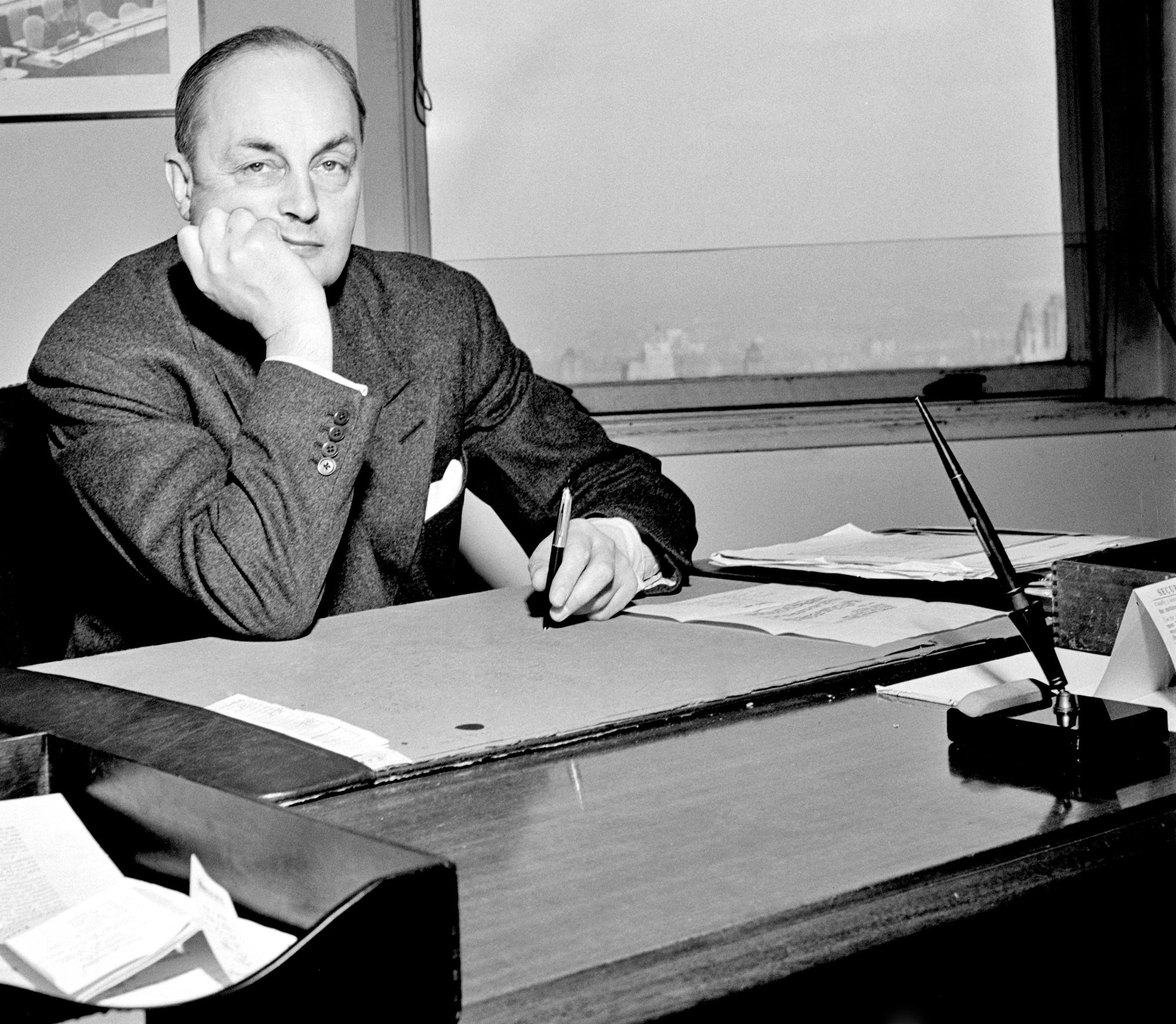
The ultimate stealth candidate, however, was Dag Hammarskjöld. In 1953, with the Security Council deadlocked, the French proposed the quiet Swedish civil servant. He was so unknown that he wasn’t even on the betting lists. Hammarskjöld himself first heard the news from a journalist and dismissed it as an “April Fool’s joke in extremely bad taste.”
The tactic of hiding in plain sight remains effective. Kofi Annan ran a stealth campaign in 1996 with U.S. backing, quietly positioning himself while the French fought to save Boutros-Ghali. Ban Ki-moon used his low profile to secure the job in 2006, as heavyweights destroyed one another.
Still, while António Guterres, a former Portuguese Prime Minister, navigated the 2016 race partly by being visible enough to win the public argument, but careful enough to avoid triggering a Russian veto against a Western European candidate, his performance in the General Assembly is generally seen to have contributed to his success.
3. Regional Rotation: It’s more of a guideline
Regional rotation — the idea that the top job is a prize that must be passed fairly across all regions of the world — is one of the UN’s unwritten rules.
Geography has always mattered. In the early days, the main rule was negative: No national from a P5 country could apply. This is perhaps the only rule the P5 have consistently followed — mostly because none of them trusts the others to hold the post.
Later, regions began to stake their claims. Boutros-Ghali’s election in 1991 was driven by a demand that it was Africa’s turn. South Korea’s Ban Ki-moon benefited from a consensus that the job belonged to Asia. But the practice is fragile.
Most recently, in 2016, the rotation principle suggested it was Eastern Europe’s turn, but confusion about multiple candidates from a single nominator created an unexpected dynamic that contributed to the outcome. Simultaneously, a global campaign pushed for transparency and public engagement in the selection, which generated new dynamics in the candidate field.
Yet, when the ballots were counted, the Security Council ignored the map, the gender gap, and candidates from Eastern Europe to select Guterres, a man from the West. Rhetoric about balance is powerful in the General Assembly, but in the Security Council, strategic comfort always trumps geography.
4. The Reluctant Administrator
As wartime president, Franklin Delano Roosevelt wanted the UN to launch under a “world-famous moderator.” Dwight Eisenhower, Anthony Eden, and Charles de Gaulle were touted for the job. Every race since has seen speculation over a rock star candidate, but one has never formally stood. Instead, Member States have made clear that the Secretary-General serves at their pleasure, with U Thant complaining that the Security Council was treating him like a “glorified clerk.”
But Secretaries-General have also been known to prove themselves surprisingly assertive. During the Cuban Missile Crisis, Thant provided the “ladder“ down which both the Soviet Union and the United States descended,” while the Security Council itself hailed the Burmese diplomat for bringing them together (once, memorably, in poetry: “Cheer next U Thant who never tires / In harmonizing our desires”).

Hammarskjöld and Annan were supposed to be pliable bureaucrats but proved to be transformative leaders in office. The former — “a nice, competent Swedish civil servant who wouldn’t rock the boat” — was a visionary who turned the UN into a peacekeeping and development actor.
Annan owed his job to Albright, who was U.S. Secretary of State at the time, and complained about her habit of calling him in the middle of the night to tell him what to do. But he went on to receive the Nobel Peace Prize for revitalizing the UN, opposing terrorism, championing human rights, and leading the fight against HIV/AIDS in Africa. He faced down a determined campaign to remove him after clashing with the U.S. over Iraq, and to this day the Ghanaian remains one of the most admired Secretaries-General among his peers.
5. The Waldheim Warning
Perhaps the most chilling lesson from history is the so-called Waldheim Warning: If the UN does not vet its potential leaders, history eventually will.
Kurt Waldheim served two terms (1972–1981) as a “colorless” crowd-pleaser. It was only after he left office to run for the Austrian presidency that the world discovered he had been an intelligence officer in a Wehrmacht unit that committed atrocities in the Balkans during World War II. The files, as it happens, were in UN archives the whole time; it was just that “nobody bothered” to check.
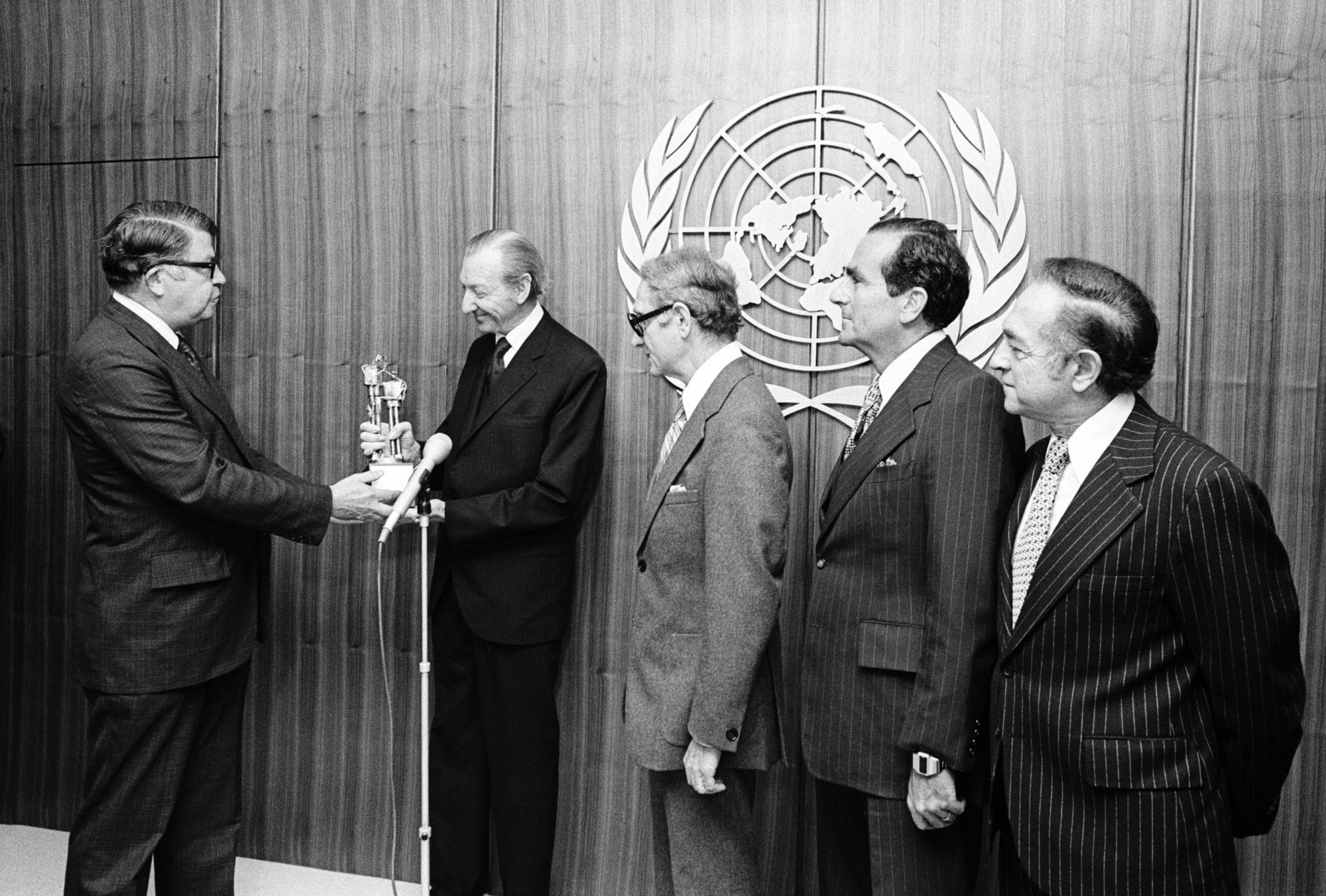
Governments jostle for the favored candidates, but in doing so, they can fail to ask the hard questions. In an age of information saturation, oversharing on social media, and hackers newly super-empowered by AI, if the UN does not vet those who could be its next leader, someone else probably will.
6. Living the Lie
The General Assembly represents the “Parliament of Man,” but in the selection of the Secretary-General, it has struggled to have a voice.
While the GA formally appoints the Secretary-General, it has almost always accepted the Security Council’s single recommendation. Only once did the Assembly try to flex its muscles, and in doing so, Trygve Lie’s life became a living nightmare.
In 1950, the Soviets threatened to veto Lie’s reappointment because of his support for UN intervention in Korea. The United States, refusing to back down, pushed the General Assembly to extend Lie’s term without a Security Council recommendation. It was a pyrrhic victory. The Soviet bloc simply boycotted Lie, refusing to acknowledge his existence or open his letters. Isolated and crushed by the pressure (and a McCarthyite witch hunt against his staff), Lie resigned in 1952, declaring the post “the most impossible job on this earth.”
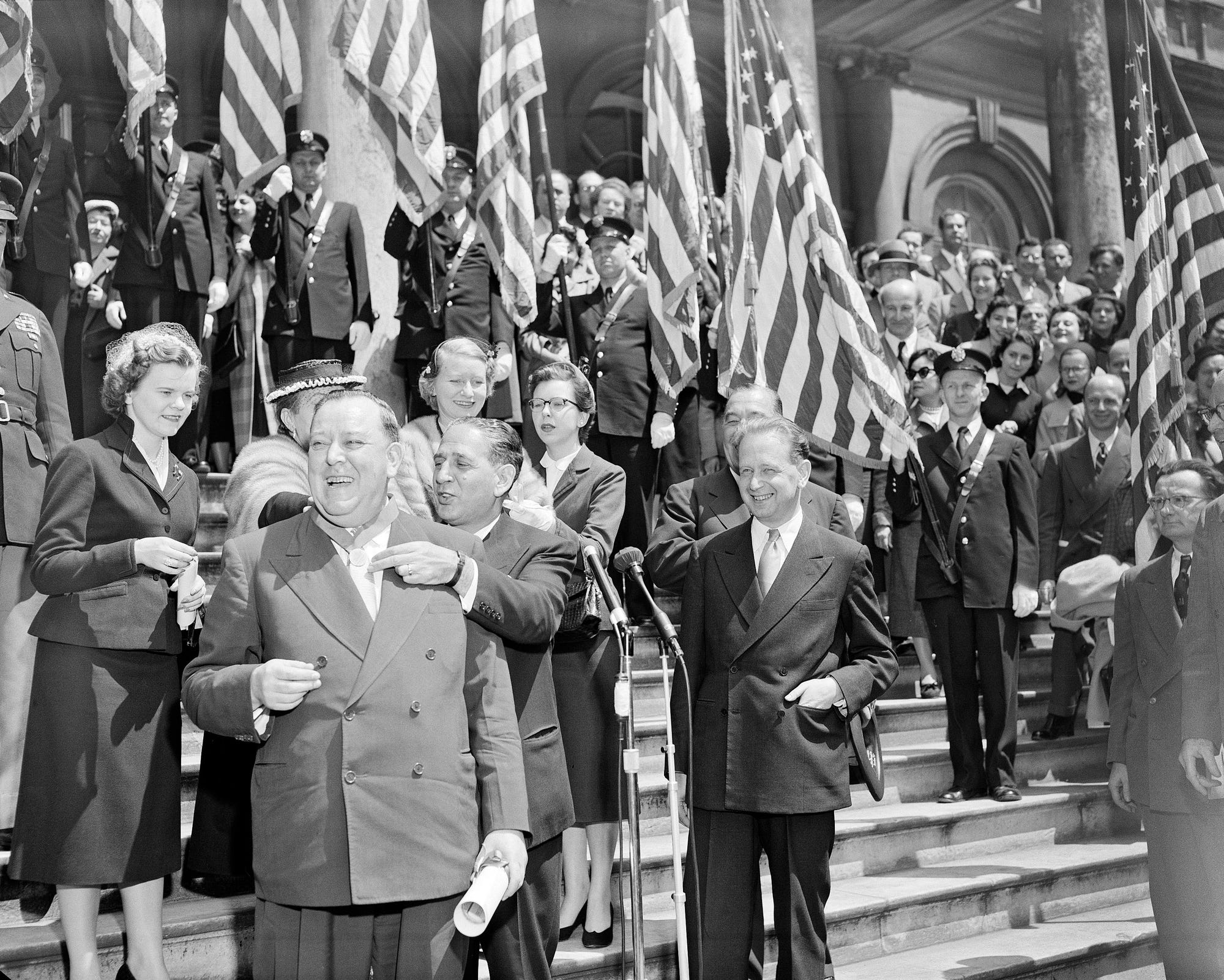
Since then, the Assembly has fretted under the yoke of the Council but is yet to stage a full rebellion.
Still, this year could well produce unexpected dynamics, whether from the General Assembly or the E10 (the elected members of the Security Council), at least four of which need to concur with the P5 for a candidate to be put forward for appointment.
7. The Arc Bends (Slowly) Toward Transparency
For decades, the selection process happened in smoke-filled rooms (literally, in the early days). Today, the arc has bent toward transparency, though power still hides in the dark.
An early innovation was the straw poll, introduced during the 1981 deadlock to test candidates without casting a formal vote. Later came colored ballots to differentiate between P5 and E10 votes, with the former warning of a potential veto.
The biggest shift occurred in 2016. For the first time, the President of the General Assembly and President of the Security Council jointly kicked off the process. Candidates were required to publish vision statements and participate in informal public dialogues in the General Assembly — effectively job interviews in front of the world. Guterres emerged victorious in part because he performed well in these hearings, creating momentum that the Security Council found hard to ignore.
A caucus of countries known as the ACT Group (for Accountability, Coherence, and Transparency) soon came together to press for further improvements. Its latest proposals can be found here.
There was even a hint in 2021 that the field could be open to citizen candidates when a young UN staffer attempted to challenge Guterres for his second term. That was clearly a bridge too far and rules were tightened requiring formal Member State nomination, effectively locking out unconventional challengers.
This year’s contest has seen further push-me-pull-you as modalities for the selection were agreed. There were some important steps, including new requirements for financial disclosure from candidates and encouragement of women as candidates. But proposals for further innovations, from serving a single seven-year term to instituting clear timelines to asking the Security Council to recommend two or more candidates, were rebuffed, including through a remarkable display of P5 unity.
Amid so much disruption, the search for Secretary-General v.10.0 could follow in its historical grooves but could well skip a beat. While the “most impossible job” may simply fall to the person whom the great powers dislike the least, we may well be surprised. Between the frequency with which old multilateral habits are being chucked aside, and the palpable consequence of this selection, we should all be prepared for anything.