![[Re]Group: A Playbook for Turbulent Times](https://substackcdn.com/image/fetch/$s_!PUHU!,w_120,h_120,c_fill,f_webp,q_auto:good,fl_progressive:steep/https%3A%2F%2Fsubstack-post-media.s3.amazonaws.com%2Fpublic%2Fimages%2Ff2fb4256-d509-4e61-827b-2ee678efbba9_256x256.png)
![[Re]Group: A Playbook for Turbulent Times](https://substackcdn.com/image/fetch/$s_!OvcZ!,e_trim:10:white/e_trim:10:transparent/h_182,c_limit,f_auto,q_auto:good,fl_progressive:steep/https%3A%2F%2Fsubstack-post-media.s3.amazonaws.com%2Fpublic%2Fimages%2Fa2653539-a634-4ef5-9aab-bc4a7546ebc9_1344x500.png)
![[Re]Group's avatar](https://substackcdn.com/image/fetch/$s_!w0DV!,w_108,h_108,c_fill,f_webp,q_auto:good,fl_progressive:steep/https%3A%2F%2Fsubstack-post-media.s3.amazonaws.com%2Fpublic%2Fimages%2F0517e9f8-af1c-41a5-b83c-2630660e4517_256x256.png)
An interview with Francesco Mancini
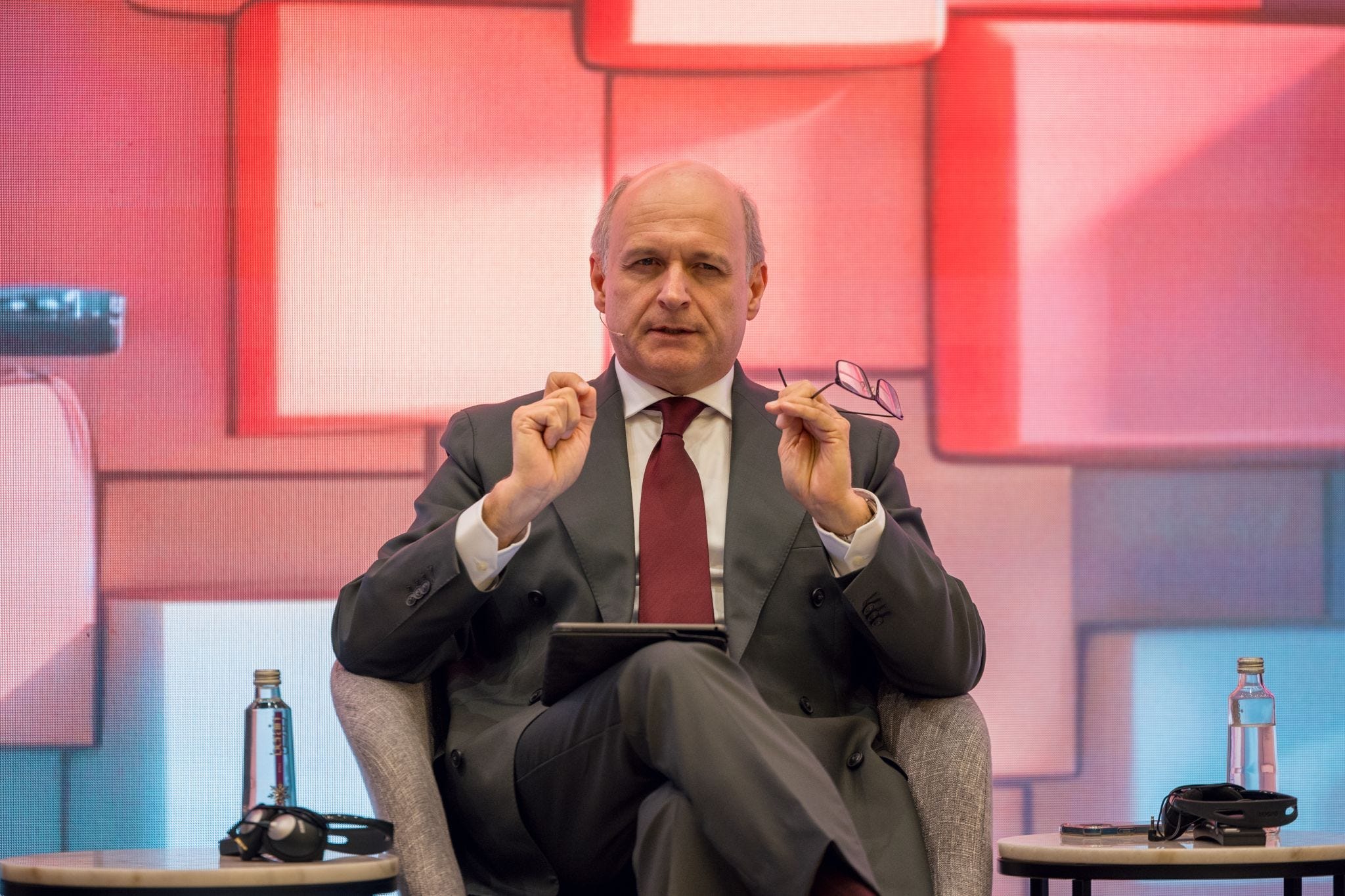
At the World Economic Forum in Davos, Canadian Prime Minister Mark Carney warned multilateralists that “nostalgia is not a strategy.” Rather than mourning a ruptured system, Carney challenged fellow leaders to invent more resilient models of cooperation suited for an era of growing geopolitical tension.
In this interview from the podcast Macro, Daniele Bellasio, Deputy Editor-in-Chief of Italian newspaper Il Sole 24 Ore, asks Francesco Mancini, Vice Dean and Associate Professor at the National University of Singapore’s Lee Kuan Yew School of Public Policy, to reflect on what Carney meant.
Professor Mancini outlines the harsh realities for small and medium-sized nations navigating this landscape. While he agrees that great powers increasingly use trade and coercion to force compliance, he cautions against the view that international rules are now useless: Just because the bigger players sometimes break the rules does not stop the vast majority of the world from relying on them.
Mancini argues that middle powers can forge a new form of multilateralism — indeed some already are doing this — as they build new alliances to manage shared risks and navigate the risks posed by more coercive great powers.
With kind permission from Il Sole 24 Ore, we have translated the interview from Italian and edited it for length and clarity. Italian speakers can listen to the original here.
Daniele Bellasio: At Davos, former Canadian central bank governor [and now the country’s Prime Minister] Mark Carney declared, “Nostalgia is not a strategy.” He described a world experiencing a rupture of the liberal order and proposed a new activism of middle powers to manage the risk of a world divided into U.S., Chinese, and Russian spheres of influence. To understand if a world governed by middle powers is truly viable, we’re joined by Professor Francesco Mancini, who teaches global governance at the National University of Singapore.
Professor, to start: Is Carney’s strategy of middle powers banding together to manage geopolitical risk fundamentally sound? What works in his speech, and what falls short?
Francesco Mancini: You summarized Carney’s core premise well. We are not merely in a transition; we are facing a rupture of the rules-based international order. He quoted Thucydides’ classic maxim of realpolitik: “The strong do what they can, and the weak suffer what they must.” It reflects the idea that, in the absence of rules, power is exercised purely for self-benefit.
However, Carney also used a metaphor from Vaclav Havel’s The Power of the Powerless, likening today’s international situation to shopkeepers who, under Soviet communism, displayed regime slogans out of fear. He argued that many countries continue to invoke the rules-based international order as if it still functions, even though everyone knows it has stopped working, with those rules now applied asymmetrically or for self-serving ends.
I found this comparison less successful. Czechoslovakia was invaded by Soviet tanks; its participation in the Soviet empire was an armed imposition, which is far from the reality of the United Nations. But the underlying point is valid. Today, great powers — the U.S., China, and Russia — use tools of coercion, including trade, to force compliance. Carney’s warning to middle powers is stark: If you are not at the table, you are on the menu. He is issuing a call for medium-sized countries — like Canada, Japan, Australia, and many European nations, including Italy — to organize and cooperate to avoid falling prey to the great powers.
The idea of middle powers creating a new global governance balances idealism with pragmatism. From your perspective in Singapore, is the idea of a world driven by middle powers convincing to you, and what role can they actually play?
It is absolutely plausible. In fact, many multilateral collaborations started with middle powers and expanded from there. This “pragmatic idealism” is something many countries have already been applying. We heard the Prime Minister of Finland speak last year of “value-based realism,” for example.
The parallel between Finland and Canada is interesting. What do the two countries have in common? Geography. They are located on the borders of countries that offer them existential challenges (Russia for Finland, the U.S. for Canada). Countries on geopolitical fault lines typically feel the need to defend their values and stand up for their identity, but they must also be ready to defend themselves against threats to their borders. Risk — the threats they face — creates an incentive to cooperate with those that have shared interests.
There is a similar dynamic in Southeast Asia, where competition between China and the U.S. creates similar pressures. At Davos, Singapore’s President Tharman Shanmugaratnam spoke about the need for a plan B. He argued that we cannot simply wait for the old order to return. This is not a rejection of the multilateralism of the United Nations, but a realistic approach that starts from where we are now.
These are countries that recognize the values of norms and formal international institutions but are also creating targeted, variable-geometry coalitions around specific global challenges, from AI security to the climate crisis to open trade. Look at the group of states that have been working for years on maritime security, for example, focusing on an issue that really matters to them.
We also see countries diversifying their trade partners and strengthening their domestic economies to reduce vulnerabilities. In other words, a range of approaches that we could describe as geopolitical risk management.
Critics point out two major risks. First, relying on new alliances seems risky when U.S. administrations can change every four years. Second, countries like Canada are deeply intertwined economically with the U.S. Is a middle-power alliance simply too difficult to sustain in practice?
Regarding the first criticism: Waiting around for Washington to change is not a strategy. The world is divided between those who think America’s current worldview is a temporary anomaly and those who recognize it as the new normal. Over 80 years after the Second World War, we have learned that you cannot depend on a single state for defense or economic stability. You must diversify.
As for the second criticism — that diversification is difficult — of course it is. Geography makes it much harder for Canada to trade than for nations in Southeast Asia, which are positioned to easily trade with one another. But difficulty is not an excuse for inaction.
I would add my own critique of Carney’s speech. He failed to explain that we’re talking about only one aspect of international relations when we focus on the laws, rules, and institutions that guide cooperation between countries. Force, economic power, and increasingly technological might are all tools also at the disposal of states.
But rules do not become useless just because states violate them. It is like saying we shouldn’t have laws against theft because thieves exist. The opposite is true: Thieves are exactly why you need the law, the police, and better burglar alarms. The fact that America, China, and Russia are today acting more coercively does not mean the global rules have vanished.
The majority of the world — represented by these medium and small states — continues to rely on them and is actively using them to cooperate.
Recently, this plan B seems to just look like a pivot to China. Carney went to Beijing; the UK and Australia have reopened dialogues with the Chinese. Are we simply swapping reliance on the U.S. for reliance on China?
We must not think in such a dualistic way. America and China are massive economic magnets, but corporate diversification extends far beyond them to the Middle East, Southeast Asia, India, and Latin America. Assuming China is the only alternative to America is not an effective strategy.
In a world where the international order no longer automatically guarantees fairness and predictability, we can no longer choose between disengagement (“I won’t talk to you”) or total alignment (“you are my best friend ever”). Instead, we need an active risk management strategy. Even market access is no longer a passive benefit of globalization. It requires active risk management. We can no longer choose between total disengagement or total alignment; we must proactively manage diversified partnerships.
That requires a redesign of policy — both industrial and foreign policy — which in itself requires a substantial commitment.
How does the Chinese leadership view this movement of middle powers?
Chinese Vice Premier He Lifeng spoke in Davos of the importance of multilateralism, free trade, and cooperation. Trump [the U.S. President] loves to break the rules, but Beijing needs stability to trade, grow, and project influence. Clearly, it also resists an order based on rules that constrain its power, but it has a very different approach from the American one.
In essence, China plays two games at once. Inside the system, it champions multilateralism and uses the United Nations and the World Trade Organization when it is convenient. Outside the system, it builds alternative institutions and uses bilateral economic leverage to increase other countries’ dependence on Beijing.
Because China lacks the vast network of alliances the U.S. has, it has to actively build them — often from a structural position of strength. In this context, Carney’s proposal for middle powers to cooperate is a challenge to China’s strategy. A united front of middle powers reduces the effectiveness of Beijing’s bilateral pressure, helping smaller states avoid succumbing to coercion without resorting to a frontal clash.
We recently heard Mario Draghi [the former Prime Minister of Italy and earlier president of the European Central Bank] urge Europe to unite and become a genuine power itself. What is Europe’s role in this new dynamic?
Europe must learn from Canada and be more proactive. Simply regretting the past or acting offended when a historical ally breaks the rules is not a strategy. We must accept that the world is changing.
Europe is essentially a coalition of middle powers, and many of these mechanisms are already in motion — the EU is actively pursuing free trade agreements with Southeast Asia, Australia, and India. The core problem is that Europe is unable to convert its aggregate economic weight into unified political power. European states still tend to act alone to sponsor their own domestic companies and interests. I see this often from my vantage point in Asia.
While that structural issue won’t be solved overnight, it shouldn’t stop Europe from pursuing a more active, strategic engagement with China and the rest of the world. We need leaders who understand that active risk management and diversification are the only ways forward.
As you and Mark Carney both rightly point out, nostalgia is not a strategy. Professor Mancini, thank you for joining us.
This conversation comes courtesy of Il Sole 24 Ore, Italy’s newspaper of record. We are grateful for their permission to republish this interview from Macro, their podcast dedicated to the geopolitical forces shaping our world.
As part of our broader effort to surface analysis and ideas circulating beyond English-language debates, we are looking to bring in perspectives from other languages about the future of multilateralism. We welcome suggestions and other ideas to share and spotlight.