![[Re]Group: A Playbook for Turbulent Times](https://substackcdn.com/image/fetch/$s_!PUHU!,w_120,h_120,c_fill,f_webp,q_auto:good,fl_progressive:steep/https%3A%2F%2Fsubstack-post-media.s3.amazonaws.com%2Fpublic%2Fimages%2Ff2fb4256-d509-4e61-827b-2ee678efbba9_256x256.png)
![[Re]Group: A Playbook for Turbulent Times](https://substackcdn.com/image/fetch/$s_!OvcZ!,e_trim:10:white/e_trim:10:transparent/h_182,c_limit,f_auto,q_auto:good,fl_progressive:steep/https%3A%2F%2Fsubstack-post-media.s3.amazonaws.com%2Fpublic%2Fimages%2Fa2653539-a634-4ef5-9aab-bc4a7546ebc9_1344x500.png)

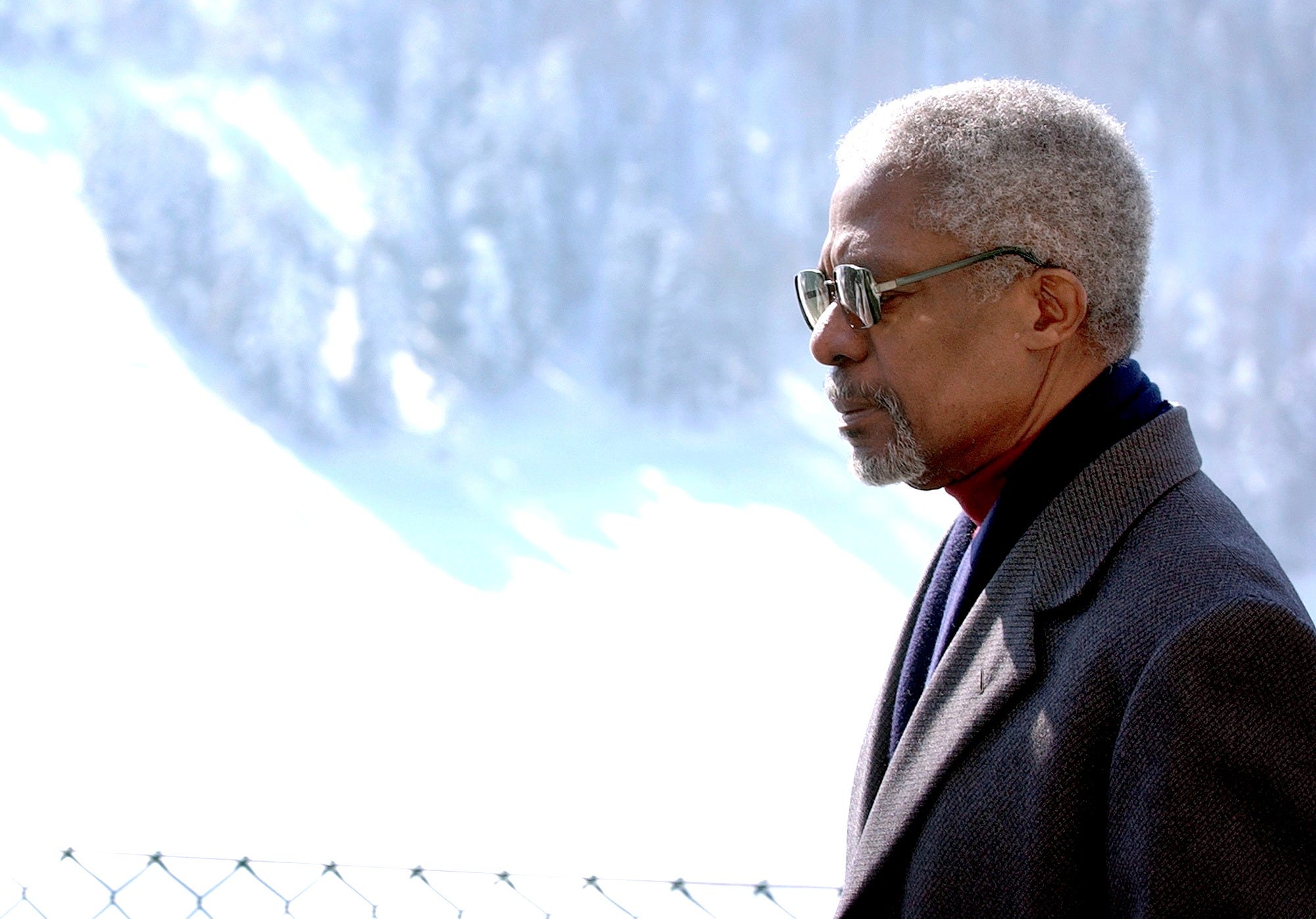
The sixth episode of World’s Toughest Job, a podcast co-produced by Foreign Policy and the United Nations Foundation, explores the world’s critical infrastructure: the physical and digital transboundary networks that connect the world.

In it, Salvatore Mercogliano, the maritime historian, tells the story of the Alert, a ship owned by the British postal service. On the second day of World War I, the ship sailed into the English Channel to dredge up and sever five of Germany’s submarine cables. It was the opening salvo of a campaign in which British ships cut Germany’s transatlantic connections to the Americas, Spain, and its African colonies.
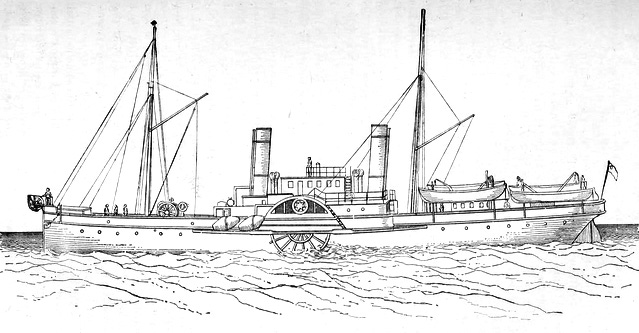
Its communications network wiped out, Germany was forced to rely on the cables of neutral countries like the United States or radio transmissions that were easily intercepted. This left the German regime vulnerable to British intelligence, which found out about a plot between the Germans and Mexicans and used it to end American neutrality.
After that, everyone knew the playbook: The first thing you did once a war started was to cut the cables.
The Swamp That Spoke to the World
It was the vulnerability of physical cables that made radio so attractive, as can be seen in a place called Coltano, stranded in the no-man’s-land between Pisa and Livorno.
Coltano was once a swamp and will be again if environmentalists get their way. While Coltano was partly drained by the Medicis, Mussolini’s government finished the job as part of its program known as internal colonization. Sharecroppers were brought down from the North to tame the wilderness and to live in standardized farmhouses named for the First World War’s battlefields, rivers, and mountains.
At the time, Italy was as much a young country as Egypt or Haiti is today, but the demographic wheel turns fast (a story we told in episode 3 of the podcast). In the Boom Economico of the late 1950s and 1960s, Coltano’s young people moved away as fast as they could. Coltano is now largely depopulated and may be reflooded to “rewild” it as a stopover for migratory birds.
But Coltano has another tale to tell, which is why its name may sound familiar. This story is rooted in the estate’s geography: a vast basin that acts as a natural parabolic dish, alongside marshy soil with extremely high electrical conductivity. This combination attracted the son of a wealthy Bolognese landowner and the heir to the Jameson Irish Whiskey fortune: Guglielmo Marconi.
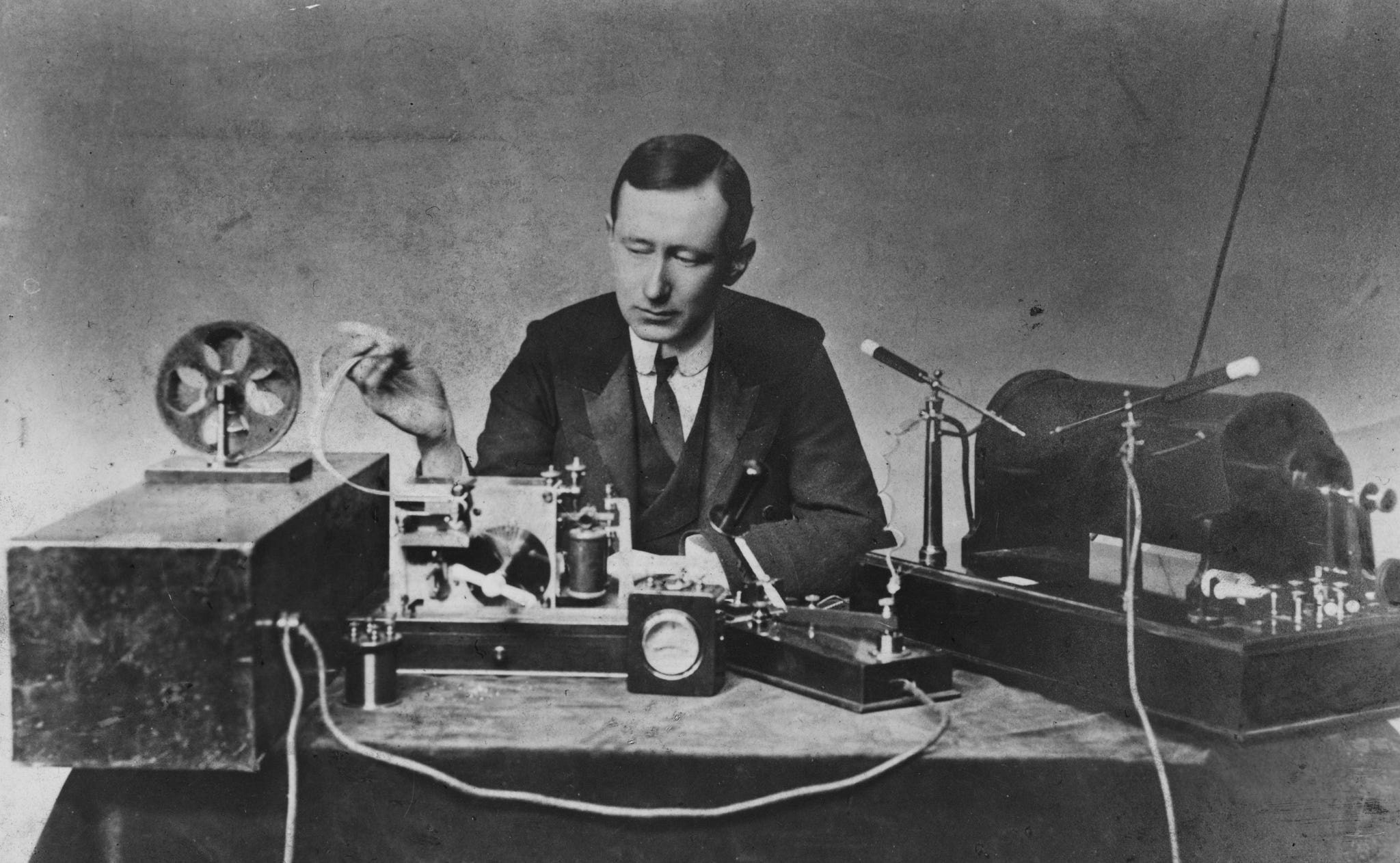
Marconi was a college dropout but an inveterate tinkerer. He had become obsessed with Hertzian waves, locking himself in the attic of his family’s country estate, from where he managed to send a radio signal to the other side of a nearby hill. Spurned by the Italian government when he offered up his invention, Marconi moved to London in 1896 with his mother, who used her family’s industrial connections to help the 22-year-old secure an audience with the chief electrical engineer of the British Post Office.
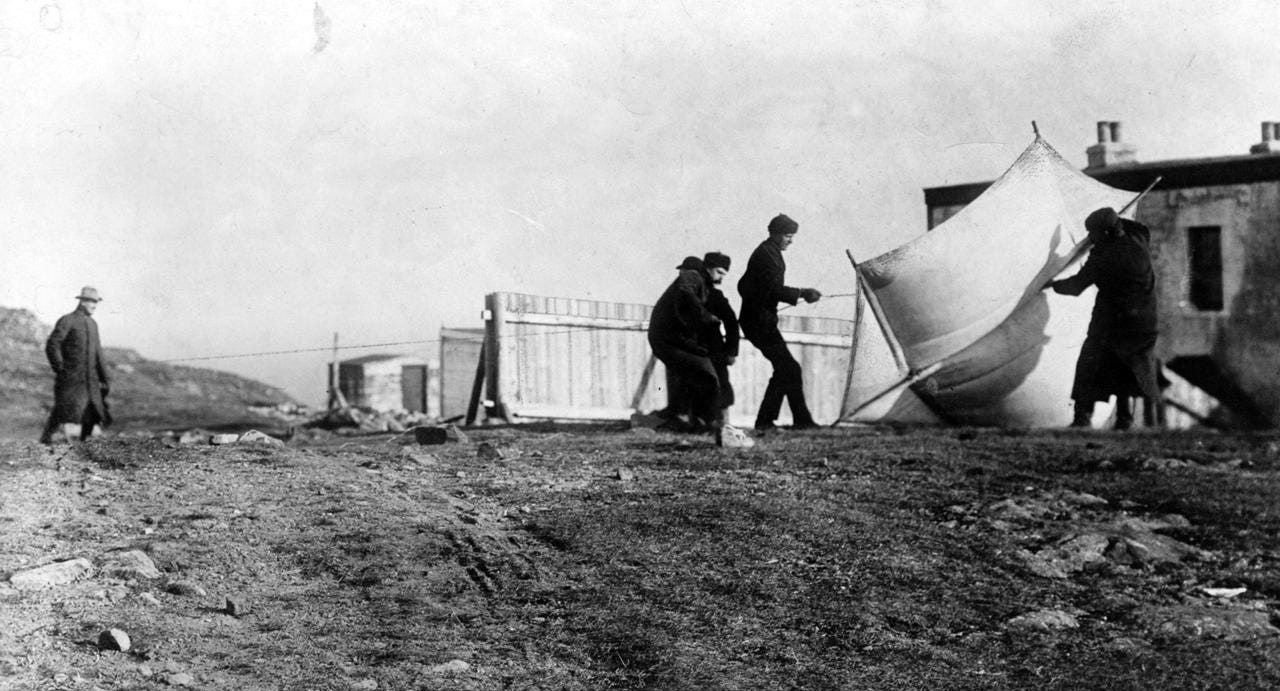
The British were impressed, and Marconi was granted the world’s first patent for a system of wireless telegraphy. The shock wave came in 1901. Told by scientists that radio waves could never be sent across the ocean due to the curvature of the Earth, Marconi decided to try anyway. In December, he stood in a freezing shack in Newfoundland, listening to a receiver connected to an antenna carried into the sky by a kite. Across the Atlantic, his team fired up a transmitter. Through the static, Marconi heard three clicks: dot-dot-dot — the letter S in Morse code. He had bounced a radio wave off the ionosphere, an atmospheric layer no one even knew existed at the time.
Overnight he became the Elon Musk of his era, and the Italians fought to get their prodigal son back. King Vittorio Emmanuel III personally championed the inventor, arranging for the Italian navy to provide a warship to serve as his floating laboratory. When the ship anchored in the Baltic Sea, the King even brought the Russian Tsar on board to watch Marconi demonstrate the technology.
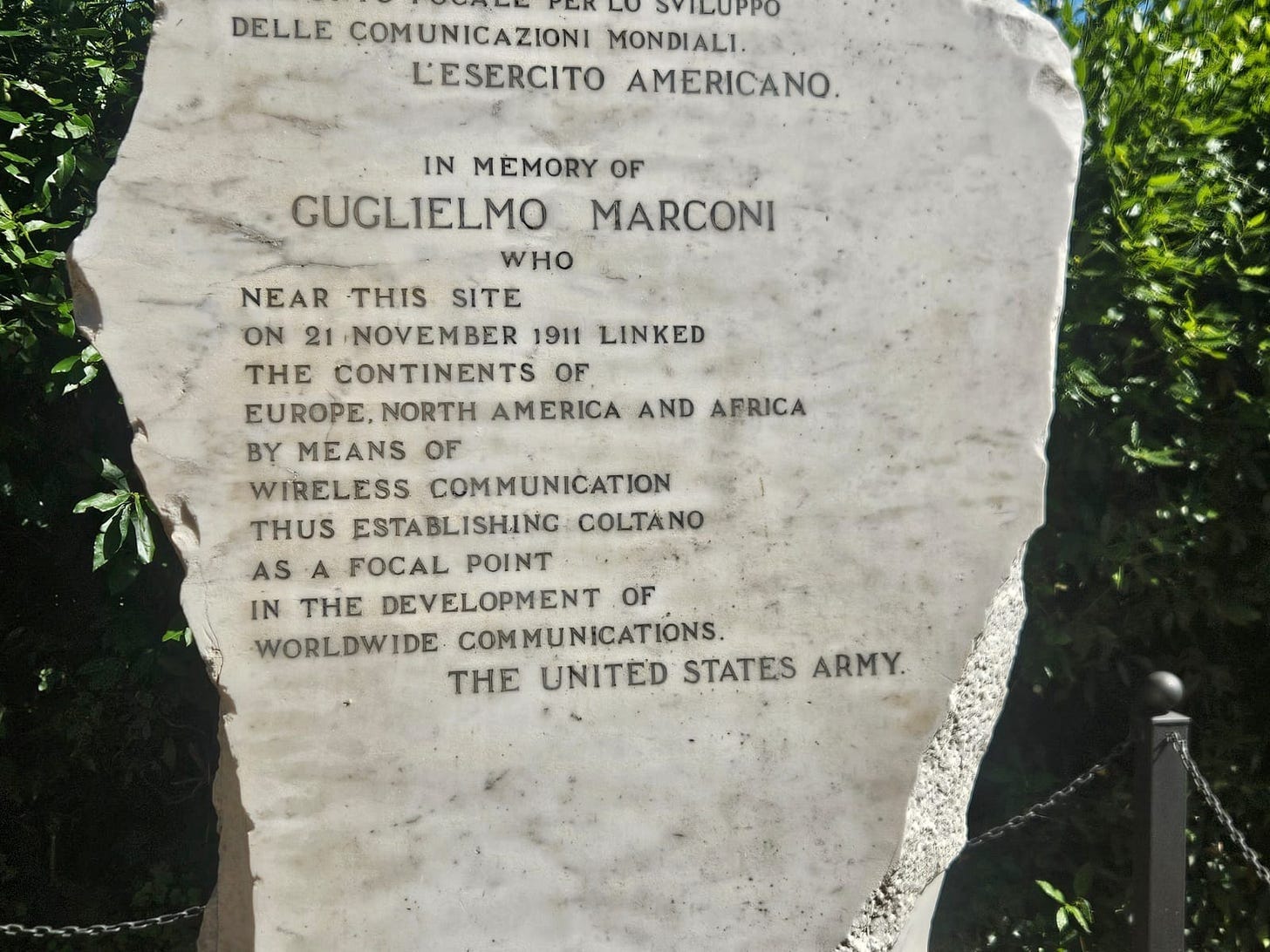
While surveying the Tuscan coastline on that same cruiser later that year, Marconi spotted the perfect site for the world’s first intercontinental ultra-power station: Coltano. The Medici estate now belonged to the Crown, so the King smoothed out any obstacles, and parliament voted through the budget to fund what was the Manhattan Project of its day. Over six years, engineers erected massive iron masts to support a complex umbrella of aerial wires that covered Coltano’s fields.
The King came for the launch. As he watched, Marconi tapped out a signal to a receiver in Glace Bay, Nova Scotia. “First wireless from Italy,” ran the headline in The New York Times. “Marconi Sends Greetings to The Times Across 4,000 Miles of Space.”
Breaking Monopolies
By the time Marconi powered up Coltano, the tussle between wired and wireless signals was already baked into the burgeoning market for telecommunications.
The first fixed telegraph signal had been sent across the Atlantic 50 years earlier, when American businessman Cyrus West Field finally managed to plant a cumbersome cable onto the seabed without its snapping on the way down. On Aug. 16, 1858, Queen Victoria sent a congratulatory telegram to U.S. President James Buchanan. It took 16 hours to transmit fewer than a hundred words.

Barely three weeks later, the project’s chief electrician — convinced he could speed up the transmission — pumped too much voltage into the line, frying the cable’s insulation. The line went dead.
The Italian King. The British Queen. You could say that these were more farsighted times, in which visionary leaders were committed to using technology for the good of humanity. Or you could argue that European countries were desperate for ways to exert control over their empires and armies. Tellingly, Marconi’s second broadcast was to Italy’s colony in Eritrea. Later, Coltano became the primary voice of Mussolini’s Impero Fascista.
Marconi was a hot ticket, because the British empire had a monopoly on gutta-percha, a natural latex mostly used today for dentistry. Then, it was the only material that could effectively waterproof subsea wiring, allowing the Brits to corner the market in oceanic cables. They could charge adversaries what they liked and listen in to their messages as well.
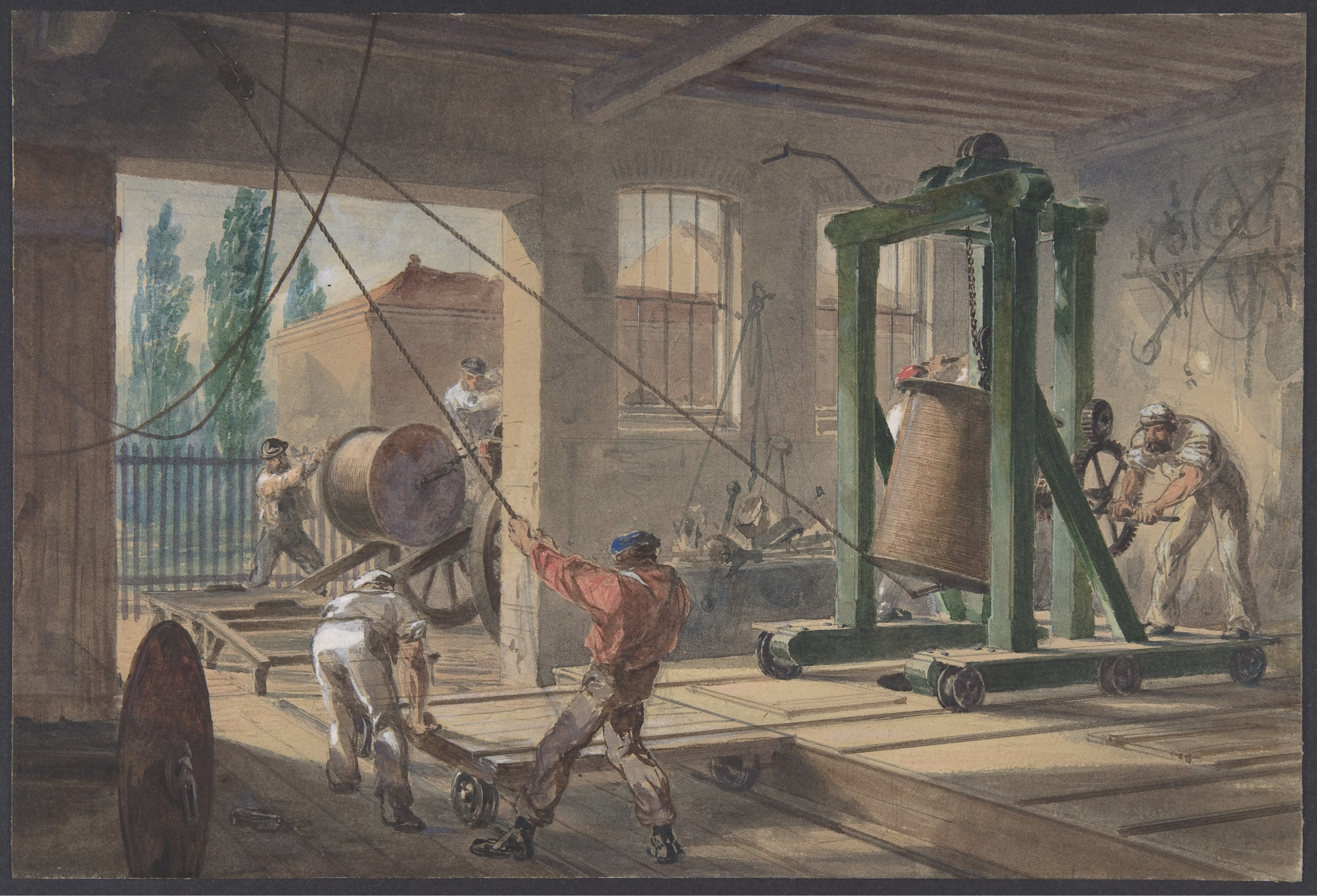
Marconi’s wireless offered the Italians that modern buzzword: strategic autonomy. And they weren’t going to let the nascent multilateral system take it away from them without a fight. Marconi wanted his own monopoly, and his company caused a storm when one of its transmission stations refused to accept a message from the brother of Kaiser Wilhelm II because it was broadcast on equipment made by a German rival.
Germany called the first International Radiotelegraph Conference in Berlin in 1903 to promote global standardization, but Italy refused to sign anything that would force Marconi to open his network to competitors.
From the beginning, the parameters of the geopolitical game were set: Get as much bandwidth as fast as possible, because that provides economic and political power. Establish a monopoly if you can, and resist international rules if you have one. Sabotage and tap cables, especially at choke points. Jam, hack, and decrypt wireless signals. And if either cable or wireless becomes too dominant, invest in the other to hedge against your strategic vulnerabilities.
The One-Megabyte Flight
In our podcast, we pick up this story around a century after Marconi sent his first transatlantic signal, when a young project manager, Brian Herlihy, spent a week printing a 1 megabyte file. A week.
This was the era when the price of transmitting international data had collapsed almost to zero. During the dot-com boom — and the telecoms bubble it inflated — billions were spent on laying oceanic cable, just as a technological breakthrough expanded the capacity of existing cables by a factor of a hundred. Suddenly, the world had so much connectivity that most oceanic cable lay dark, waiting for someone to need it.
But this boom had not reached Guinea, or much of Africa, where bandwidth was scarce and data eye-wateringly expensive. As Kofi Annan’s Deputy Secretary-General, Mark Malloch-Brown, tells World’s Toughest Job, when Annan became UN Secretary-General in 1997, he made the digital divide a rallying cry. At the time, the African continent of 750 million people was connected to the global network by just a handful of exorbitantly priced oceanic trunk lines. Annan was convinced that if Africa missed the communications revolution, it would be permanently locked out of the global economy.
This was not a popular stance. Many leaders — and Silicon Valley titans — believed the UN’s priorities were backward. In a turn-of-the-century debate in Seattle, Bill Gates dismissed the focus on connectivity, arguing that the developing world needed clean water, healthcare, and education more than the internet. But to Annan, being online wasn’t a luxury. It was the engine that would allow societies to pay for both basic and more advanced needs.
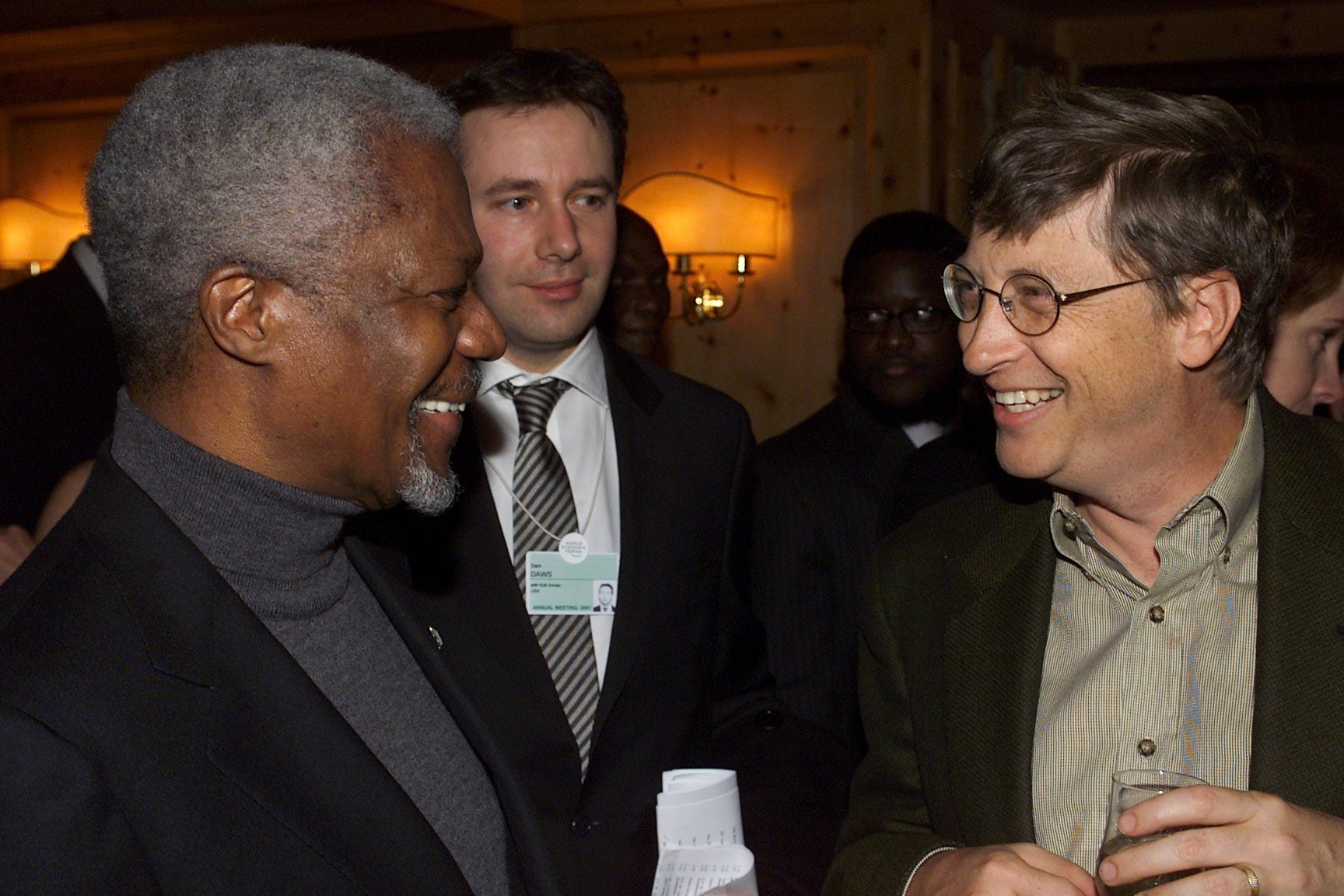
The Secretary-General understood geopolitical reality: The UN couldn’t lay hundreds of thousands of kilometers of fiber-optic glass. It needed the private sector. “The UN was an enabler,” Malloch-Brown says — it was about convening the right players to overcome regulatory hurdles and stimulate demand.
This was when Herlihy, our project manager, was tormented by a document no one could print. Part of a team trying to build a refinery, the contract emailed from France by the lawyers just wouldn’t download. Being the youngest guy on the team, he was told: “Get on a plane, fly back to Paris, get the document, and come back to Guinea.” Flights were infrequent, so it took him a week to return with a hard copy.
Like Marconi before him, Herlihy was fighting a monopoly. He spent his evenings in Guinea building a business case for what would become the Seacom cable, focusing on East Africa, where demand for data was spiraling but government-funded cables were forever delayed. Herlihy sold his plan to investors, assembled a $600 million fund, and started work. Resistance came from regional efforts to block private investment on the one hand, and threats from pirates off the Horn of Africa on the other.
When Seacom went live on July 23, 2009, the economic impact was immediate. Within three days, internet speeds across Kenya increased up to five times, and the bills of local businesses that had been paying $3,000 a month for 1MB of satellite data were slashed by 80%.
This activity catalyzed East Africa’s tech boom. the so-called Silicon Savannah, which today accounts for over 8% of Kenya’s economy and is the largest engine for employment growth for Kenya’s young people.
Severed Cables and the New Space Race
Today, Africa has been reached by 77 submarine cables, part of around 600 worldwide, an increasing proportion owned by Google, Meta, Amazon, Microsoft, and other hyperscalers. That is a largely privatized network of a million miles of fiber-optic glass on the ocean floor, carrying over 95% of all the world’s intercontinental data traffic.
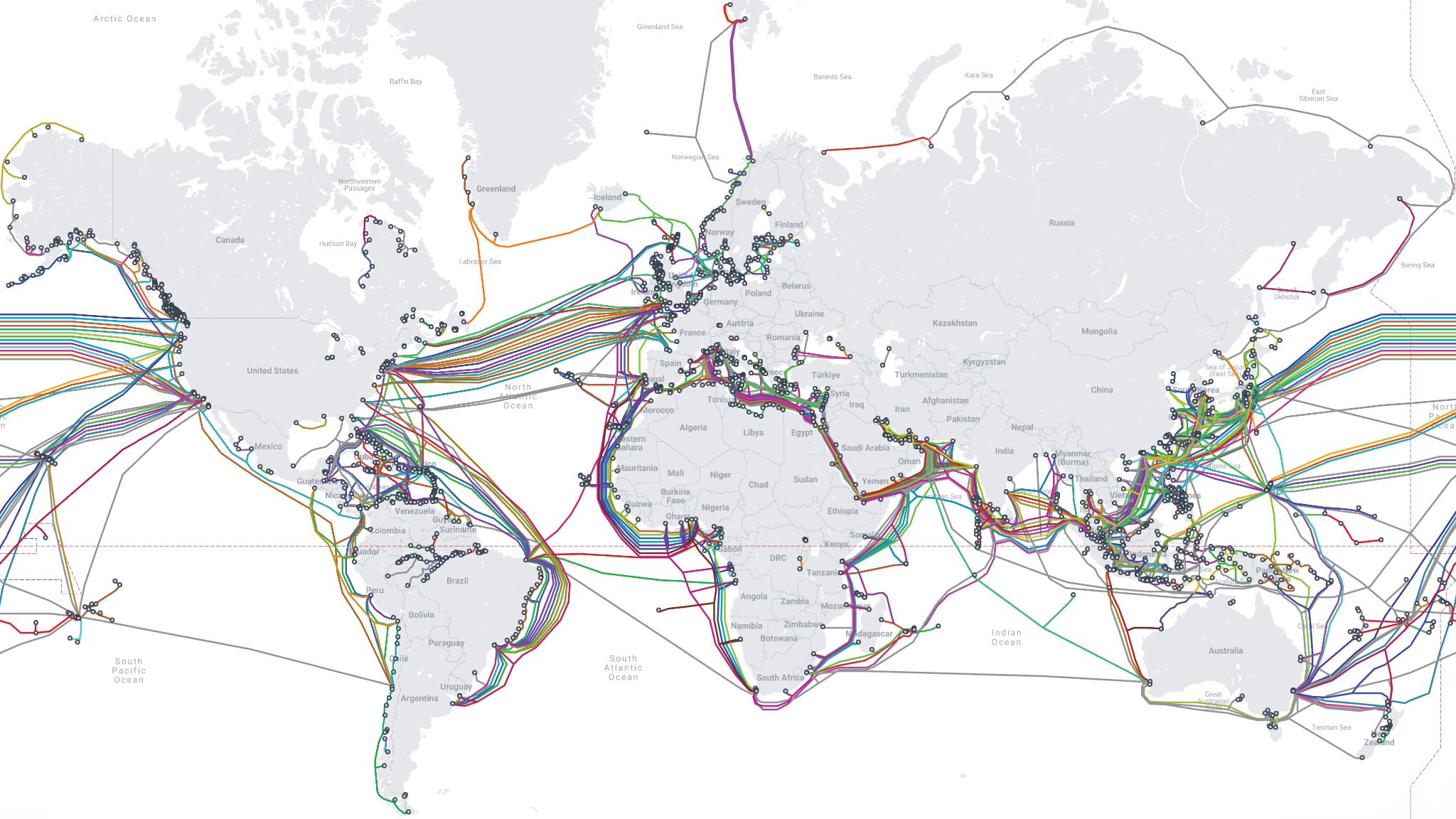
But wireless hasn’t gone away. In the 1970s, the U.S. Navy tapped Soviet military cables, creating a scramble for a more secure alternative. The space race wasn’t just about putting a man on the moon, it was about putting communication relays in orbit where submarines couldn’t reach them. For a brief period in the 1970s and 1980s, satellites were viewed as the secure future of telecommunications. But as Herlihy found, cables continue to dominate intercontinental traffic because satellites are too slow.
But just as cables were cut in WWI, the past few years have seen a spike in “gray-zone” warfare. From severed cables in the Baltic Sea (linked to Russian- and Chinese-flagged ships) to disruptions in the Red Sea, cutting physical cables is back in style. And natural disasters are also a threat. When a suspected underwater rockslide off the coast of Côte d’Ivoire severed four major subsea cables in March 2024, internet access across more than a dozen West African nations slowed to a crawl, forcing the countries to scramble for satellite backup.
As happened a century ago, the countermove is wireless, using low Earth orbit (LEO) satellite constellations like Elon Musk’s Starlink. The initial pitch was utopian, targeting Kofi Annan’s digital divide, but the market has pivoted to the rich and the powerful. Cruise ships, cargo fleets, and airlines have stripped out their slow geostationary satellite systems and replaced them with LEO terminals. Satellites are increasingly used to provide redundancy for finance and business operations that cannot afford downtime.
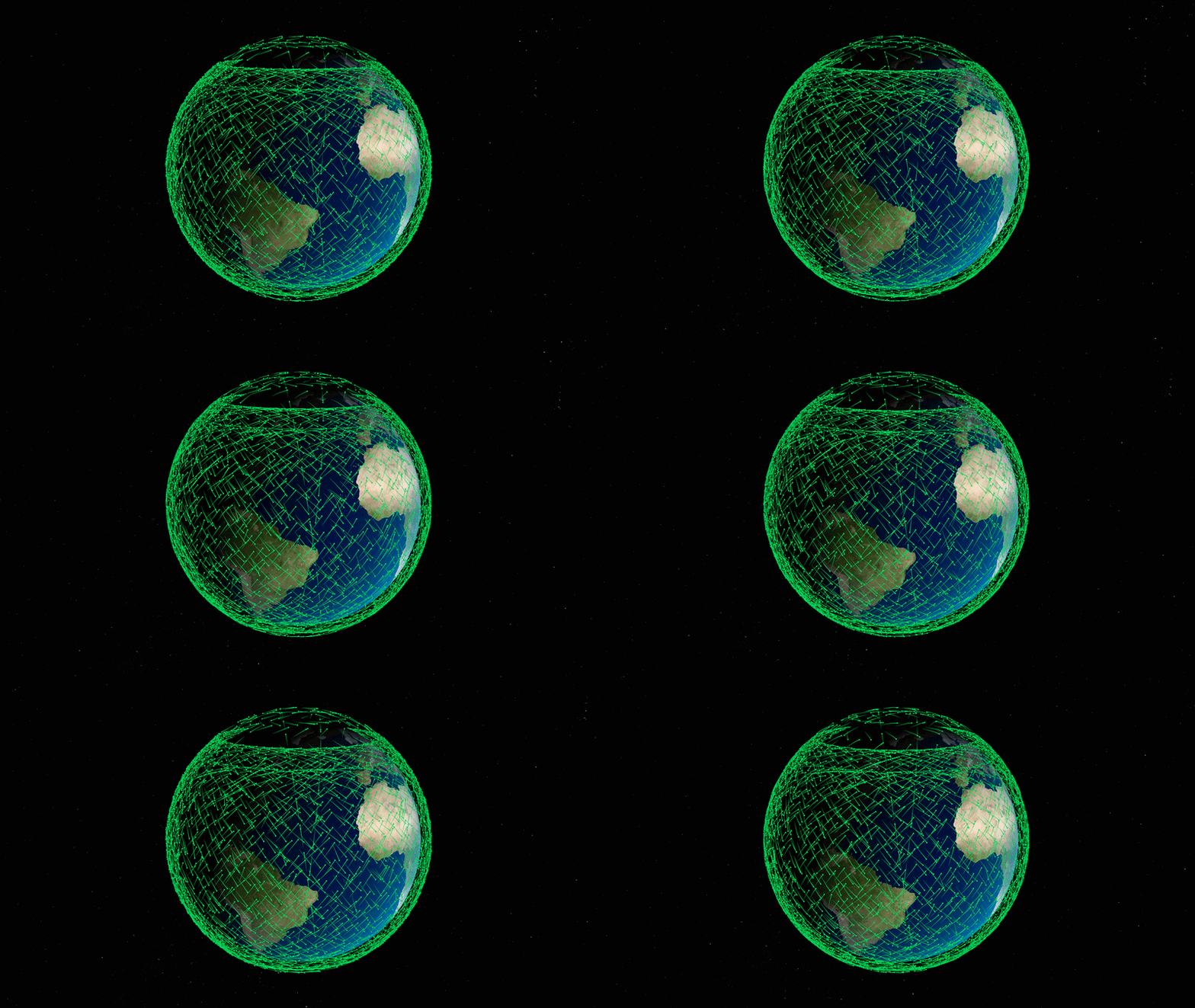
But it was the war in Ukraine that changed how governments view LEO by showing that it could be used to create resilient networks for military communication. Cables can be severed and traditional military satellites are massive stationary targets, but LEO constellations, in contrast, form a self-healing “mesh.” If an adversary shoots down or jams 50 satellites, the network simply routes the signal through the other 5,000.
This has led to a new space race, as governments realize that LEO is critical national infrastructure and that they cannot rely on a foreign trillionaire to provide it. China, Taiwan, and the European Union are all launching their own mega-constellations, seeking the same strategic autonomy that Marconi offered his state sponsor more than a century ago.
Protecting the Civilian Network
The technology may have evolved from gutta-percha and spark-gap transmitters to glass threads and orbital meshes, but the geopolitical game of whack-a-mole remains the same. Nations and corporate titans race to build monopolies, adversaries scramble for alternatives, and the pendulum swings between the ocean floor and the stars.
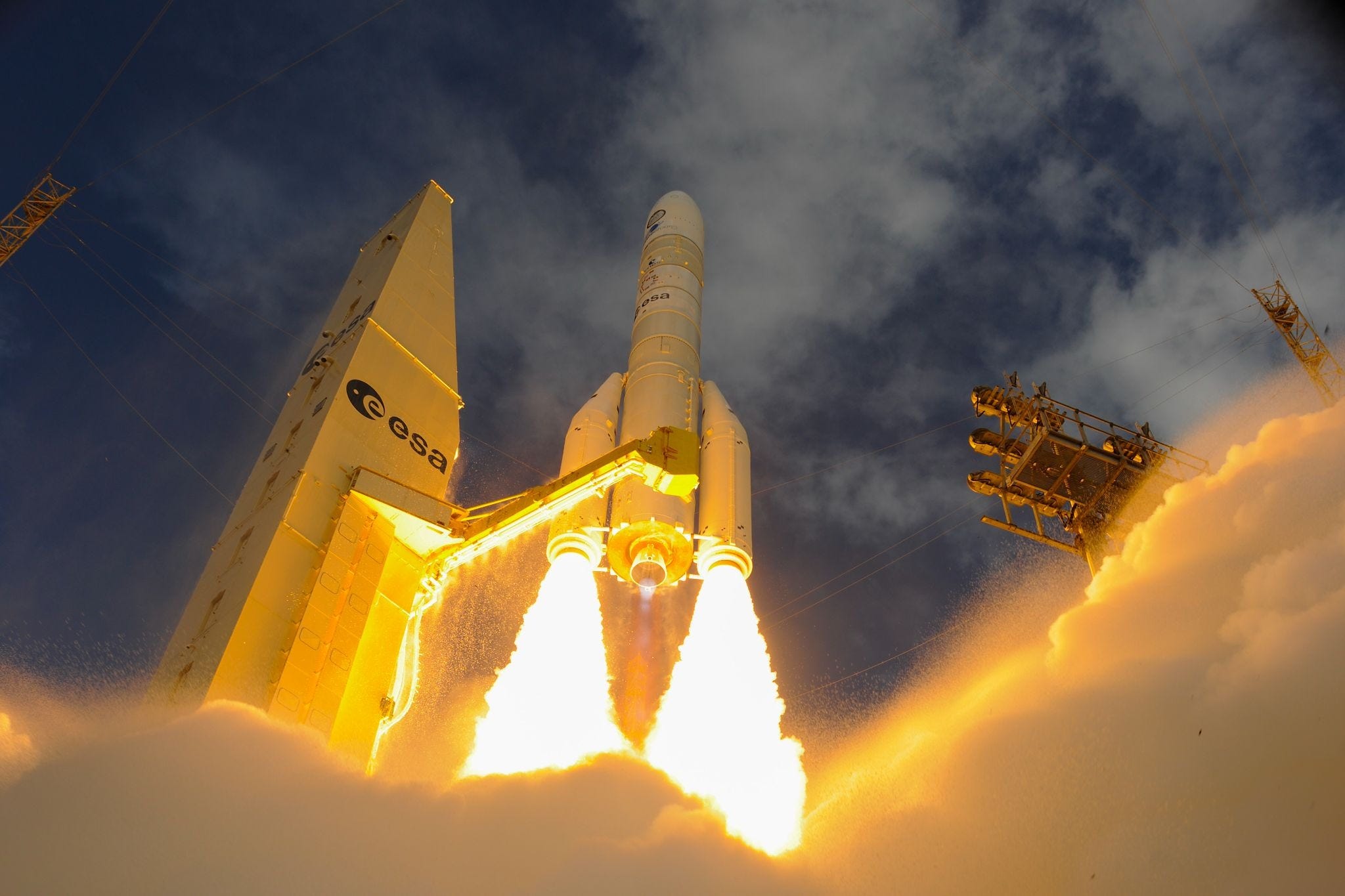
As in Marconi’s time, the appetite for multilateral solutions is limited by those who believe they have a technological lead. But while individual nations and private companies can lay cable and launch satellites, they cannot police the global commons — the international waters and shared orbits — where this fragile hardware resides.
And as the competition for connectivity militarizes the seabed and balkanizes the sky, the need for international guardrails becomes more urgent. “Whatever we’ve suffered from so far is probably just the thin end of a much bigger wedge,” Malloch-Brown warned. Our everyday lives are increasingly reliant on physical and digital choke points, with single points of failure capable of disrupting banking, transport, and water supplies.
Just as Kofi Annan convened the world to build the network, the next Secretary-General may be called upon to figure out how to protect it. “This would be a classic case where a forward-looking SG would start to convene people around this issue of civilian infrastructure protection,” Malloch-Brown said. The law of war evolved over centuries to protect civilians but now may need to shield everyday life from digital attack. It is a massive undertaking, he argued, “but it would be a critical win.”
How Can a New Secretary-General Protect the Infrastructure We All Depend On?

The cables that carry most of the world’s data, the shipping lanes that carry its energy and goods, and the satellites that keep its financial systems running were all built on the assumption that the global economy was something that most actors wanted to protect. But that assumption is now being tested.