![[Re]Group: A Playbook for Turbulent Times](https://substackcdn.com/image/fetch/$s_!PUHU!,w_120,h_120,c_fill,f_webp,q_auto:good,fl_progressive:steep/https%3A%2F%2Fsubstack-post-media.s3.amazonaws.com%2Fpublic%2Fimages%2Ff2fb4256-d509-4e61-827b-2ee678efbba9_256x256.png)
![[Re]Group: A Playbook for Turbulent Times](https://substackcdn.com/image/fetch/$s_!OvcZ!,e_trim:10:white/e_trim:10:transparent/h_182,c_limit,f_auto,q_auto:good,fl_progressive:steep/https%3A%2F%2Fsubstack-post-media.s3.amazonaws.com%2Fpublic%2Fimages%2Fa2653539-a634-4ef5-9aab-bc4a7546ebc9_1344x500.png)
![[Re]Group's avatar](https://substackcdn.com/image/fetch/$s_!w0DV!,w_108,h_108,c_fill,f_webp,q_auto:good,fl_progressive:steep/https%3A%2F%2Fsubstack-post-media.s3.amazonaws.com%2Fpublic%2Fimages%2F0517e9f8-af1c-41a5-b83c-2630660e4517_256x256.png)
By Harshani Dharmadasa, Ishaan Shah, and Lewis Broadway
This article is part of the World’s Toughest Job Decoded series produced by Our Future Agenda. To experience the full multimedia version, including archival footage, visuals, and interactive storytelling:
The role of the United Nations Secretary-General sits at the center of global expectations and global frustration. It is one of the most visible positions in international affairs yet remains widely misunderstood.
Last year we spoke to hundreds of young people about the role. Many expected the Secretary-General to be a global decision-maker, someone who can intervene, direct outcomes, or resolve crises. In practice, their role is more bounded.
That gap between perception and reality shapes how people interpret the role of the United Nations itself in moments of crisis, how they judge the UN’s effectiveness, and what they expect from its leadership. It also influences how the next Secretary-General will be assessed in a period where demands on the role are increasing.
This is the gap we set out to address through the SG Decoded series.
The series is structured around four dimensions: The Role, The Selection, The Trade-offs, and The Vision.
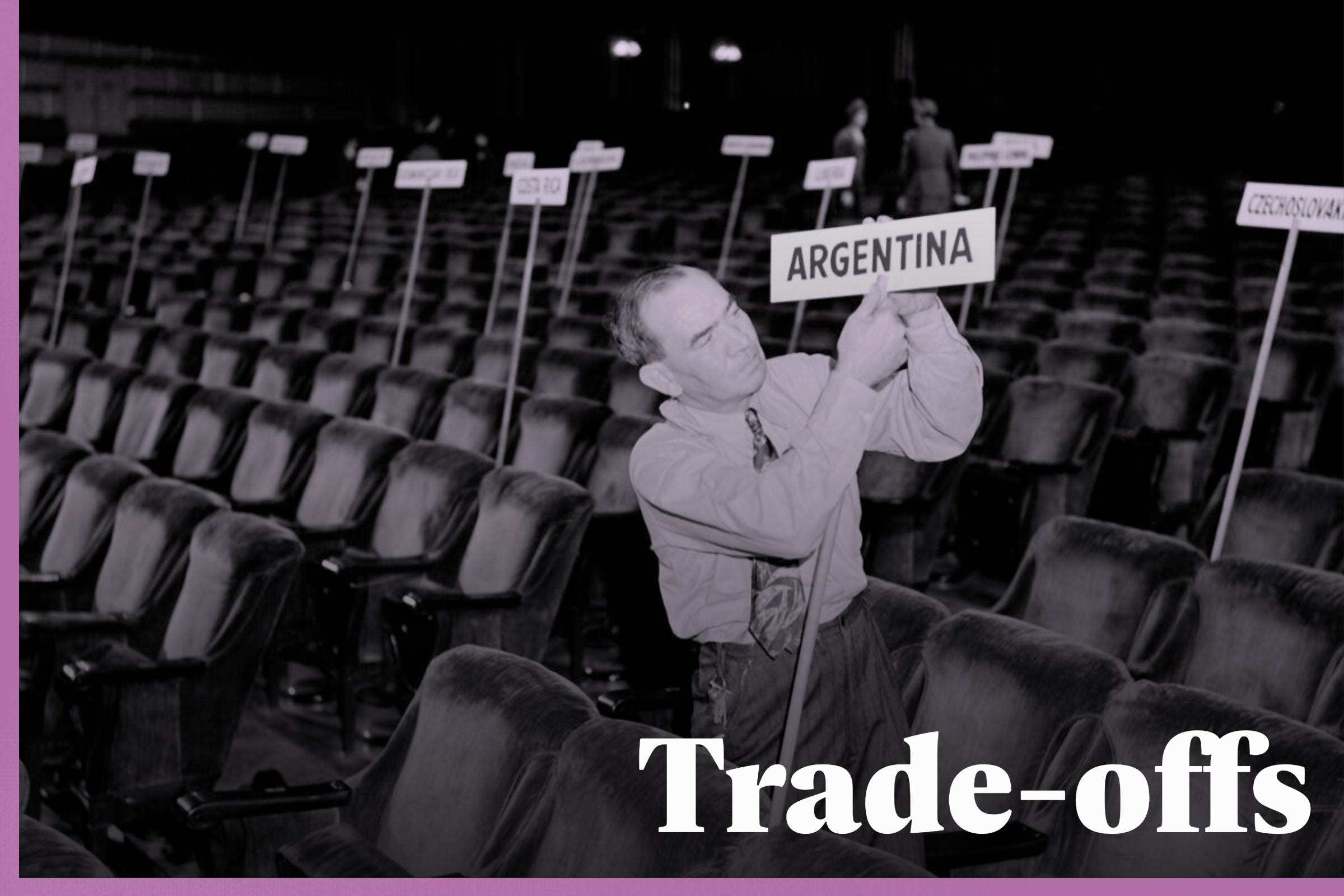
In The Trade-offs, we examine the tough decisions any Secretary-General encounters once in office.
The Secretary-General operates in a system where power is shared, consent is required, and every major decision involves competing risks. Whether to speak publicly or work quietly behind the scenes, whether to raise alarms early or wait for political space, how to balance impartiality with moral clarity, and how to coordinate a fragmented system without direct authority are not abstract tensions.
They define how the role is exercised every day. Leadership at the UN is not about executive control. It is about judgment under constraint.
About Our Future Agenda
Our Future Agenda is a United Nations Foundation program dedicated to putting young people — especially from young countries in Africa, Asia, and Latin America — at the heart of global decision-making and solving the world’s biggest challenges.
Learn more: www.ourfutureagenda.org