![[Re]Group: A Playbook for Turbulent Times](https://substackcdn.com/image/fetch/$s_!PUHU!,w_120,h_120,c_fill,f_webp,q_auto:good,fl_progressive:steep/https%3A%2F%2Fsubstack-post-media.s3.amazonaws.com%2Fpublic%2Fimages%2Ff2fb4256-d509-4e61-827b-2ee678efbba9_256x256.png)
![[Re]Group: A Playbook for Turbulent Times](https://substackcdn.com/image/fetch/$s_!OvcZ!,e_trim:10:white/e_trim:10:transparent/h_182,c_limit,f_auto,q_auto:good,fl_progressive:steep/https%3A%2F%2Fsubstack-post-media.s3.amazonaws.com%2Fpublic%2Fimages%2Fa2653539-a634-4ef5-9aab-bc4a7546ebc9_1344x500.png)
![[Re]Group's avatar](https://substackcdn.com/image/fetch/$s_!w0DV!,w_108,h_108,c_fill,f_webp,q_auto:good,fl_progressive:steep/https%3A%2F%2Fsubstack-post-media.s3.amazonaws.com%2Fpublic%2Fimages%2F0517e9f8-af1c-41a5-b83c-2630660e4517_256x256.png)
By Faith Williams, originally published on United Nations Foundation.

This article was first published in its original form on United Nations Foundation.
To experience the full version:
The entry into force of the High Seas Treaty marks a milestone for ocean governance, drawing applause from every corner of the world. Now comes the ultimate test: moving from negotiation to implementation to make the Treaty a true multilateral win for the ocean and humanity.
After 20 years of negotiations and almost two years since it was adopted, the High Seas Treaty entered into force on January 17, 2026. With more than 80 countries signed on, the world’s first legal framework to conserve and protect marine biodiversity in international waters is being celebrated as a multilateral win for the ocean and humanity.
“This is a historic achievement — for people and planet; for international cooperation and the United Nations,” UN Secretary-General António Guterres said on the milestone occasion. “The Agreement fills a critical governance gap to secure a resilient and productive ocean for all,” he said of the Treaty, officially called the Biodiversity Beyond National Jurisdiction (BBNJ) Agreement.
The ocean, Earth’s largest ecosystem, is deeply intertwined with the climate, global trade and economy, and global food systems. It sustains livelihoods, cultures, and communities. Two-thirds of the ocean exists outside of any country’s national jurisdiction (“the high seas”) without clear, holistic regulation or coordination. The BBNJ Agreement will finally deliver a path to tackle ocean governance issues that, until now, were left unaddressed.
The Agreement will be a springboard for dialogue among countries, multilateral organizations, and industries on critical and consequential priorities. It also levels the playing field, allowing all countries to have a voice in how key aspects of the Agreement will be addressed, including:
Environmental impact assessments.
Area-based management tools, including marine-protected areas.
Marine genetic resources — plus how to share their benefits fairly.
Capacity-building and technology transfer for countries to advance marine research.
Now leaders must harness determination to move the BBNJ Agreement from a celebrated negotiation to full, effective implementation to ensure all parties sustainably use and conserve the ocean.
Dive Deeper on the BBNJ Agreement
At the United Nations Foundation, our team of ocean and climate leaders has been engaging with the ocean science community, closely tracking the impacts and details of the BBNJ Agreement by exploring trends, key themes, and commentary.
Their reading list covers essential facts, leading voices, and what comes next for this landmark agreement. Check it out:
Facts, explainers, and resources from the UN’s BBNJ Hub (United Nations): Discover how the four pillars of the BBNJ Agreement will be established, monitored, and governed among relevant instruments, frameworks, and international bodies.
Game-changing International Ocean Treaty Comes Into Force (United Nations): Learn must-know information on the BBNJ Agreement, including which major economies have ratified the Treaty and what is needed to make the Treaty effective.
Small Island Developing States react to the BBNJ’s entry into force (Alliance of Small Island States): Read the reflections of a coalition of 39 small island and coastal states on their participation in shaping the BBNJ Agreement and their vision for progress and implementation.
The Hidden Natural Wonders of the World (High Seas Alliance): Explore which biodiversity hotspots in the high seas could be among the first marine-protected areas under the BBNJ Agreement.
A Path to Creating the First Generation of ‘High Seas’ Protected Areas (Pew Research Center): Uncover 10 research-based ocean sites around the world that could help safeguard biodiversity under the protection of the BBNJ Agreement.
After 20 Years, an Agreement to Safeguard the ‘High Seas’ Takes Force (World Resources Institute): Learn what the Treaty does and does not cover, and how the first BBNJ Conference of Parties (COP) will take shape.
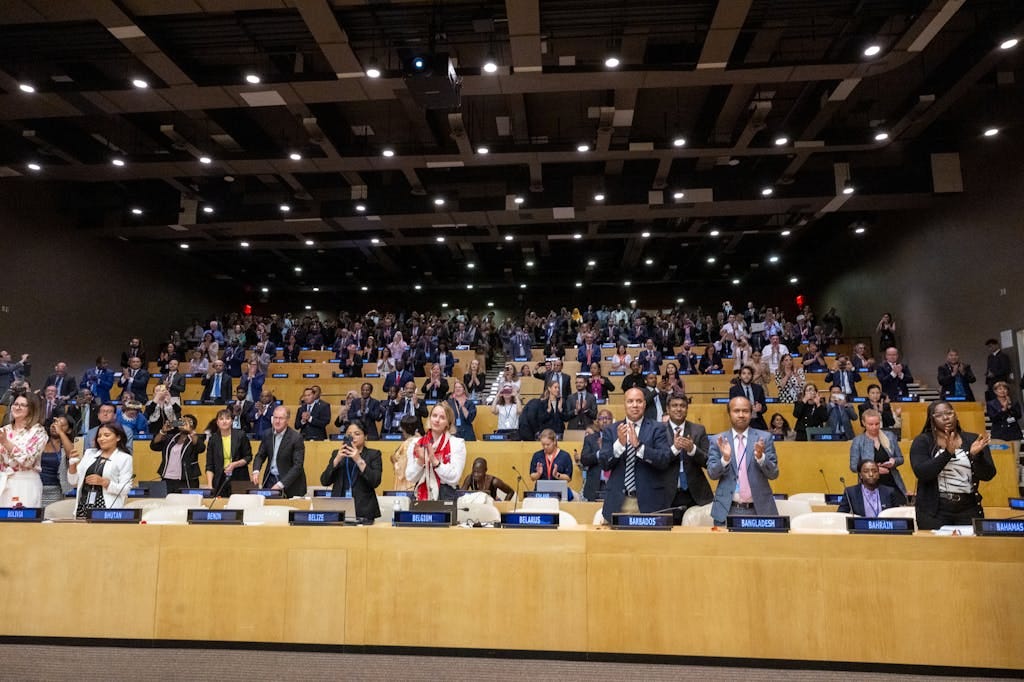
Translating the BBNJ Agreement into Action
The BBNJ Agreement represents a fundamental step forward in ensuring the ocean is treated as a shared resource, marking a shift toward international, coordinated action outside of the borders of any nation. And the calls are growing for stakeholders to work together to ensure the Treaty complements existing agreements, provides clarity to countries and organizations responsible for its implementation, and equitably supports all regions and sectors.
Over the next year, negotiators will finalize recommendations and set a date for the BBNJ Agreement’s first COP. The inaugural event will be an opportunity to bring together key actors and sectors to put real, practical actions behind the goals outlined in the Treaty. Momentum is building for more countries to ratify the agreement and prepare proposals for the first round of marine-protected areas.
There is no question that January 17, 2026, marked a historic moment to better protect the ocean and humanity. The clock is ticking on the ultimate test leaders must pass: implementation. “Now the hard work begins,” UN Environment Programme (UNEP) Executive Director Inger Andersen said. “This ambitious agreement, decades in the making, must move decisively from words to action to truly protect the high seas and the deep seabed.”
This article was first published in its original form on United Nations Foundation.
To experience the full version:
About the United Nations Foundation
For over 25 years, the UN Foundation has built novel innovations and partnerships to support the United Nations and help solve global problems at scale. As an independent charitable organization, the Foundation was created to work closely with the United Nations to address humanity’s greatest challenges and drive global progress.
Learn more: www.unfoundation.org.