![[Re]Group: A Playbook for Turbulent Times](https://substackcdn.com/image/fetch/$s_!PUHU!,w_120,h_120,c_fill,f_webp,q_auto:good,fl_progressive:steep/https%3A%2F%2Fsubstack-post-media.s3.amazonaws.com%2Fpublic%2Fimages%2Ff2fb4256-d509-4e61-827b-2ee678efbba9_256x256.png)
![[Re]Group: A Playbook for Turbulent Times](https://substackcdn.com/image/fetch/$s_!OvcZ!,e_trim:10:white/e_trim:10:transparent/h_182,c_limit,f_auto,q_auto:good,fl_progressive:steep/https%3A%2F%2Fsubstack-post-media.s3.amazonaws.com%2Fpublic%2Fimages%2Fa2653539-a634-4ef5-9aab-bc4a7546ebc9_1344x500.png)
![[Re]Group's avatar](https://substackcdn.com/image/fetch/$s_!w0DV!,w_108,h_108,c_fill,f_webp,q_auto:good,fl_progressive:steep/https%3A%2F%2Fsubstack-post-media.s3.amazonaws.com%2Fpublic%2Fimages%2F0517e9f8-af1c-41a5-b83c-2630660e4517_256x256.png)
By Claire Melamed

This article was first published in its original form on United Nations Foundation.
To experience the full version:
As AI reshapes the world, it presents both vast opportunity and profound risk. Amid competing national interests and contrasting perspectives, the UN is the only place where every country can have a say in how AI should be governed and harnessed for the good of humanity.
Artificial intelligence is the fastest-spreading technology in human history: More than 100 million people used ChatGPT in the first two months after its release in November 2022.
AI has spread so fast because it’s so useful. AI allows humans to transcend the limits of their brainpower by creating new ways to find, process, analyze, and produce information at a scale and speed that were never possible before. As AI becomes more advanced and continues to spread, it will offer unprecedented benefits to those lucky enough to have access to it: expanded economic opportunities and new ways to communicate, create, and organize. People’s lives will get better in all kinds of ways.
But like any technology, AI also has a dark side. It presents new ways for people to harm each other and creates new risks — from minor to catastrophic — for individuals, societies, and the world. AI offers better health care but lower trust; new economic opportunities but biased information; new ways to create art but also to kill each other; new ways to connect but also to distort political systems.
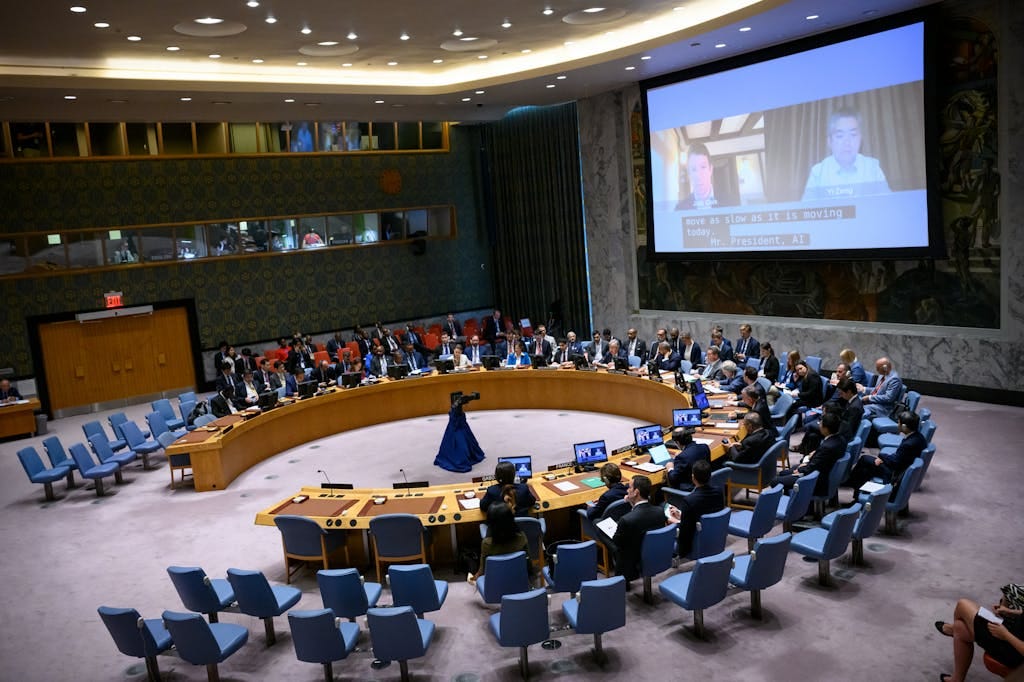
It will also create new inequalities, as it diffuses through our already unequal world, accelerating opportunity for some people and places and holding it back for others. One-quarter of the world’s population still lacks access to the internet.
This presents a set of questions and trade-offs for societies, governments, and companies. How can the benefits of new technologies be spread both fast and fairly? How can the short- and long-term risks be managed while encouraging innovation? And, most critically, how should power over and accountability for these decisions be shared among governments, companies, and individuals?

The answers to these questions have implications beyond any one country’s borders. The breakdown of our shared climate shows what happens when countries separately push ahead with competition for growth without a collective framework for managing the associated risks. The COVID-19 emergency demonstrated that when global efforts to share vital innovations are lacking, key products and services, information, and research can stay out of reach for the majority and put all of us at risk. AI is no different: The world must come together to ensure this technology is deployed safely and equitably.
Technology is fast, but politics — especially global politics — is slow. The next two years will be critical as world leaders get to grips with the new challenges of AI. In 2024, the UN passed its first resolution on AI, largely a broad statement of values, co-sponsored by 120 members and adopted by consensus. Later that year, all Member States adopted the Global Digital Compact, a wide-ranging set of commitments to ensure that the development and use of new technologies are guided by UN norms and existing agreements. And in August 2025, Member States kicked off work on AI governance in the UN by passing a further resolution that established the UN Independent International Scientific Panel on Artificial Intelligence and the first UN Global Dialogue on AI Governance. Both will start work in early 2026.
Getting this far was not straightforward, and the consensus that the UN can play a useful role in managing global AI challenges is fragile. Member States are coming into these conversations with very different ideas on what they want to achieve, what their national interests are, and what common challenges they will be tackling. Some want to focus on the existential questions of AI risk and safety and to use the forums to share information and good practices. Others see the UN as the place to discuss how to more fairly share access to innovation and where countries commit to partnerships and support to accelerate AI adoption. Underlying all of this is the way AI has supercharged competition between nations that see themselves in a race critical to their security and economic interests.
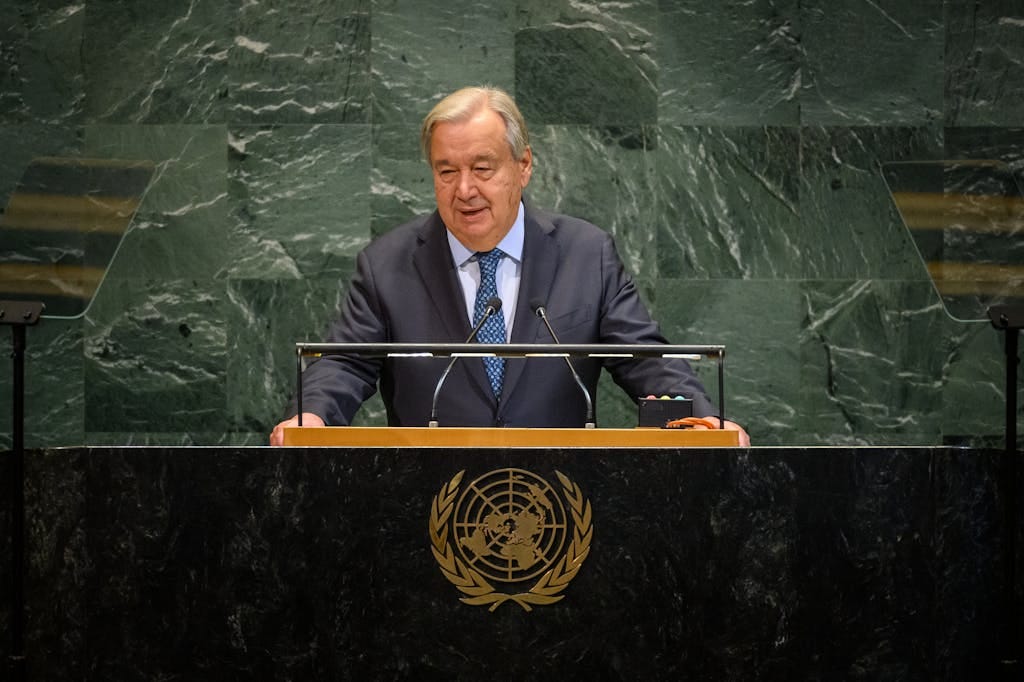
These divides will make it difficult to get consensus in the UN, but they are also the very reasons this process is needed. The UN is the only place where all these national interests and perspectives can come together. It’s the only place where the more than 100 countries not currently involved in any of the several other debates on managing AI have a seat at the table. It is the custodian of the globally agreed norms and goals — on human rights, on peace and security, and on sustainable development — that provide the common framework on which to build.
It’s a difficult moment to be looking for a new agreement: Today’s geopolitical times are not kind to multilateral ambitions and collaborative problem-solving. And we may not get another chance to solve this. Eighty years after it was founded, the UN can lead a new era of global cooperation, in the face of challenges that could not have been imagined then but must be confronted now.
As Secretary-General António Guterres said at the opening of the UN General Assembly earlier this year, “Governments must lead with vision. Companies must act with responsibility. And we — the international community — must ensure that technology lifts up humanity.”
About United Nations Foundation
For over 25 years, the UN Foundation has built novel innovations and partnerships to support the United Nations and help solve global problems at scale. As an independent charitable organization, the Foundation was created to work closely with the United Nations to address humanity’s greatest challenges and drive global progress.
Learn more: www.unfoundation.org.