![[Re]Group: A Playbook for Turbulent Times](https://substackcdn.com/image/fetch/$s_!PUHU!,w_120,h_120,c_fill,f_webp,q_auto:good,fl_progressive:steep/https%3A%2F%2Fsubstack-post-media.s3.amazonaws.com%2Fpublic%2Fimages%2Ff2fb4256-d509-4e61-827b-2ee678efbba9_256x256.png)
![[Re]Group: A Playbook for Turbulent Times](https://substackcdn.com/image/fetch/$s_!OvcZ!,e_trim:10:white/e_trim:10:transparent/h_182,c_limit,f_auto,q_auto:good,fl_progressive:steep/https%3A%2F%2Fsubstack-post-media.s3.amazonaws.com%2Fpublic%2Fimages%2Fa2653539-a634-4ef5-9aab-bc4a7546ebc9_1344x500.png)


AI is both enhancing and disrupting people’s lives around the world. A new report, “People, Power, and AI: Rethinking Development for the New Era,” presents a framework for the policy choices needed if AI is to support sustainable and equitable development, and ensure a prosperous future for people and planet.
Artificial intelligence has firmly escaped the lab and landed squarely in the middle of arguments about growth, power, governance, and the future of society. Most public debate swings between two familiar extremes. On one side are the warnings about rogue superintelligence and existential risk. On the other is the glossy optimism: AI will cure disease, turbocharge productivity, and bring prosperity to everyone lucky enough to have a decent internet connection.
Both stories contain some truth, but neither captures what is really happening.
The biggest effects of AI are not lurking in the future. They are unfolding now, inside labor markets, public institutions, information systems, and the physical environment — and across education, medicine, science, arts, and just about every other area of human activity. They are shaped by a persistent digital divide, which must be an urgent priority to overcome, and by the choices governments and companies are making now to drive and respond to AI’s impacts. Today’s actions and decisions will to a great extent determine whether the more dramatic futures — for good or for ill — even arrive at all.
A more grounded approach is to look at AI in terms of its impact on human well-being. In a new paper, we use the Sustainable Development Goals (SDGs) as a way of organizing that discussion. Not because the SDGs offer a ready-made AI playbook (they do not) but because they reflect a broad, hard-fought global agreement about what people everywhere generally want from society: economic security, functioning public services, trustworthy institutions, and a livable environment.

AI’s Opportunity and Challenge for Sustainable Development
From our perspective, AI presents big risks, as well as opportunities, for sustainable development. Which risks or opportunities prevail will depend on choices made by governments in the next few years across four major pressure points.
The first is growth, poverty, and inequality (SDGs 1, 8, 9, and 10). AI is creating productivity gains in a few sectors and locations. At the same time, labor markets are beginning to warp. Work once done by junior lawyers, analysts, designers, coders, and researchers is now increasingly being automated or compressed, which will have an impact on labor markets for years.

The AI industry itself is highly concentrated, with a small number of firms and countries dominating the entire AI stack: chips, cloud infrastructure, training data, frontier models, and products. The unfolding economic consequences of AI are unlikely to end in some smooth, neutral redistribution of opportunity. Without deliberate policy choices, AI will reward those who already own infrastructure, capital, and skills. Beyond technological disruption, the risk is a world in which productivity rises but large parts of the population feel increasingly disposable.
The second pressure point is public services (SDGs 2, 3, 4, and 11). AI is already spreading through health systems, schools, welfare administration, agriculture, and city management. In many cases, it can improve efficiency and expand access. Governments facing shrinking budgets and rising expectations welcome the opportunity to do more for less.
But there is a catch. The more institutions rely on opaque systems to shape decisions, the harder it becomes to explain those decisions to the public. That matters because public services depend as much on legitimacy as they do on efficiency. People can tolerate difficult decisions better than those that are incomprehensible. If an AI-assisted system denies benefits, flags someone to the police, or prioritizes some patients over others, someone — a real person — still has to answer for it. Otherwise, institutions risk drifting into what might be called an accountability recession: decisions everywhere, responsibility nowhere.
“The more institutions rely on opaque systems to shape decisions, the harder it becomes to explain those decisions to the public.”
Claire Melamed and Paul Ladd
The third area is governance, information, and trust (SDGs 5 and 16). AI has driven the cost of generating persuasive content toward zero. Text, images, audio, and video can now be produced instantly and on an industrial scale by almost anyone with online access. The result is not only more misinformation but also a slow destabilization of shared reality itself. Courts, elections, journalism, science, and democratic politics all depend on a basic assumption that public debate is anchored in evidence. AI strains that assumption. When people lose confidence that anything can be verified, trust in institutions begins to corrode long before those institutions formally fail. This is bigger than a content moderation problem –– it is a fundamental infrastructure problem for democracy and social cohesion. Media literacy alone is unlikely to solve it. Asking exhausted citizens to spend their lives verifying every image, quote, and video clip is not a serious long-term strategy for governing an AI-saturated information system.
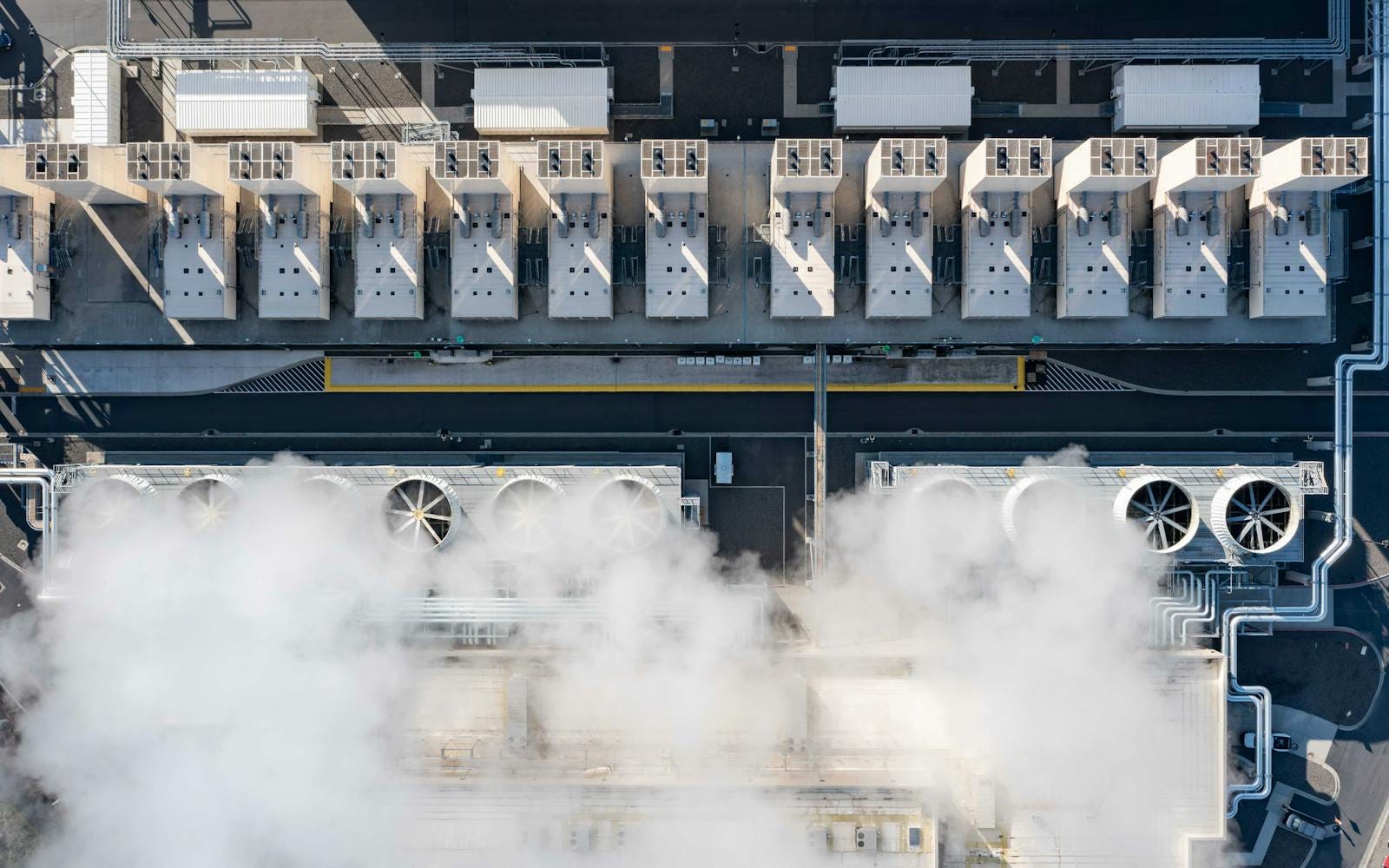
The fourth pressure point is resources and the environment (SDGs 6, 7, 12, 13, 14, and 15). AI is often spoken about as if it floats weightlessly in the cloud. In reality, it is intensely physical. Data centers consume huge amounts of electricity and water. Hardware depends on minerals extracted from fragile ecosystems and politically unstable regions. And demand for both is accelerating rapidly. There is a real risk that governments, desperate to attract investment and stay competitive, will relax environmental standards in the name of AI expansion. The irony would be sharp: a technology marketed as futuristic and frictionless driving a new scramble for land, water, energy, and raw materials.
Across all four areas, the same underlying themes resurface. Inequality deepens unless gains are deliberately shared. Accountability weakens when decision-making becomes automated and outsourced. Trust erodes as information systems become polluted and unstable. Environmental pressures intensify if AI’s material footprint is treated as someone else’s problem.

Shaping the AI Future
None of this amounts to an argument against technological progress. AI adoption is not going to stop, nor should it. The questions are what kind of societies emerge around it, and the role policy choices play in shaping that transition so it supports human well-being.
For the past decade, digital transformation mostly ran on a simple formula: expand access, build skills, and let innovation work its magic. While the digital divide remains an urgent injustice that must be overcome, that approach now looks incomplete. Skills alone may not absorb labor displacement, innovation alone may not disperse power, and faster adoption alone may not produce healthier societies.
A more deliberate politics of AI is needed. This means paying closer attention to how economic gains are distributed; building public institutions capable of managing increasingly complex relationships among states, companies, and citizens; protecting information systems as a form of public infrastructure; and aligning AI investment with environmental realities rather than pretending those limits do not exist.
The Global Goals as a Blueprint
The SDGs were not written for the AI age. However, they contain a useful reminder that development is ultimately about human lives, not technological capability. As we advance our understanding of AI, the ability to quickly adapt to meet the challenges of tomorrow and prioritize human well-being remains an anchor. AI changes the terrain for achieving our collective goals, but it does not — and should not — change our agreed destination: a better future for all.
Explore: A Road Map for AI and Human Well-being
“People, Power, and AI: Rethinking Development for the New Era” offers a road map for developing AI that contributes to sustainable development, building a future where technological progress benefits everyone everywhere.

